A01 - Digital Network Technologies between Specialization and Generalization Photo: Rattanathip | stock.adobe.com | 771307475 | Generated with AI
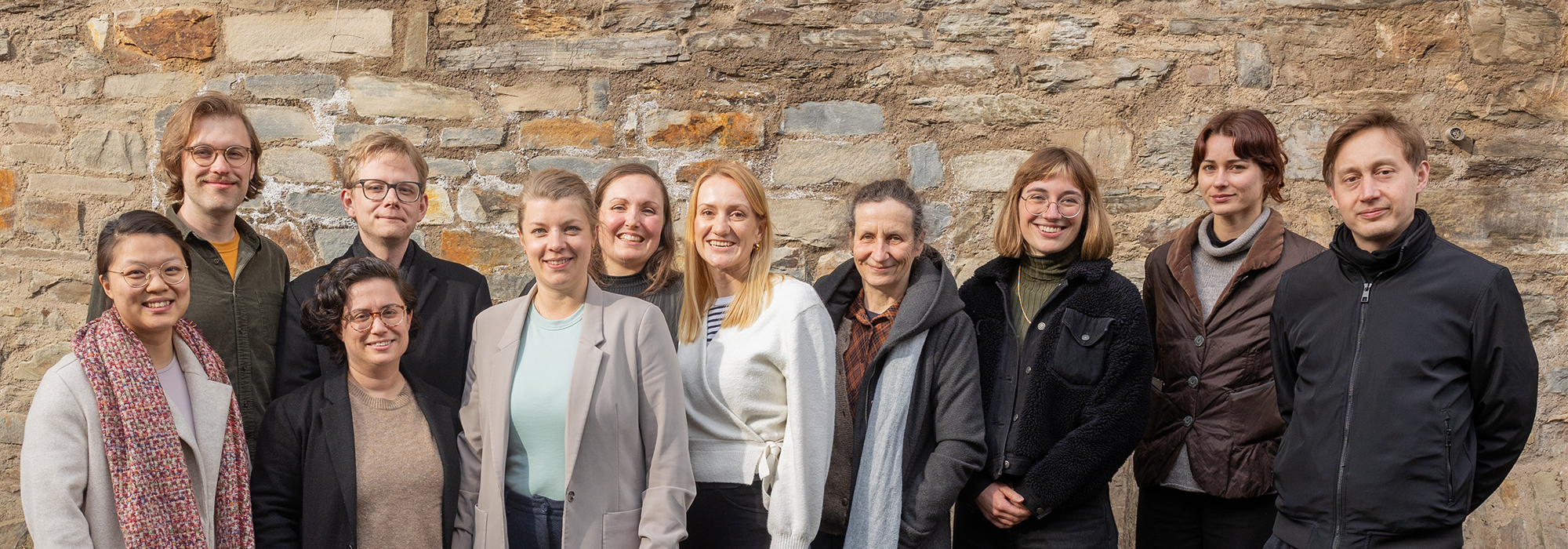
MGK - Integriertes Graduiertenkolleg Photo: Katrin Staudt | CRC 1187
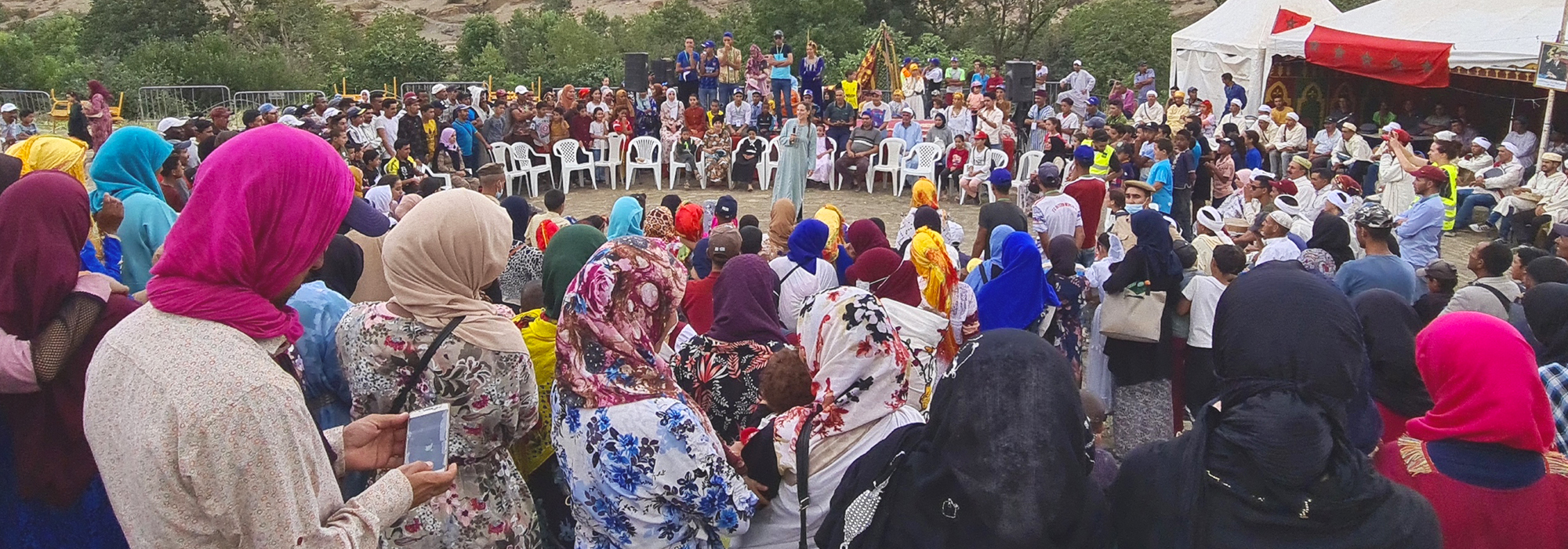
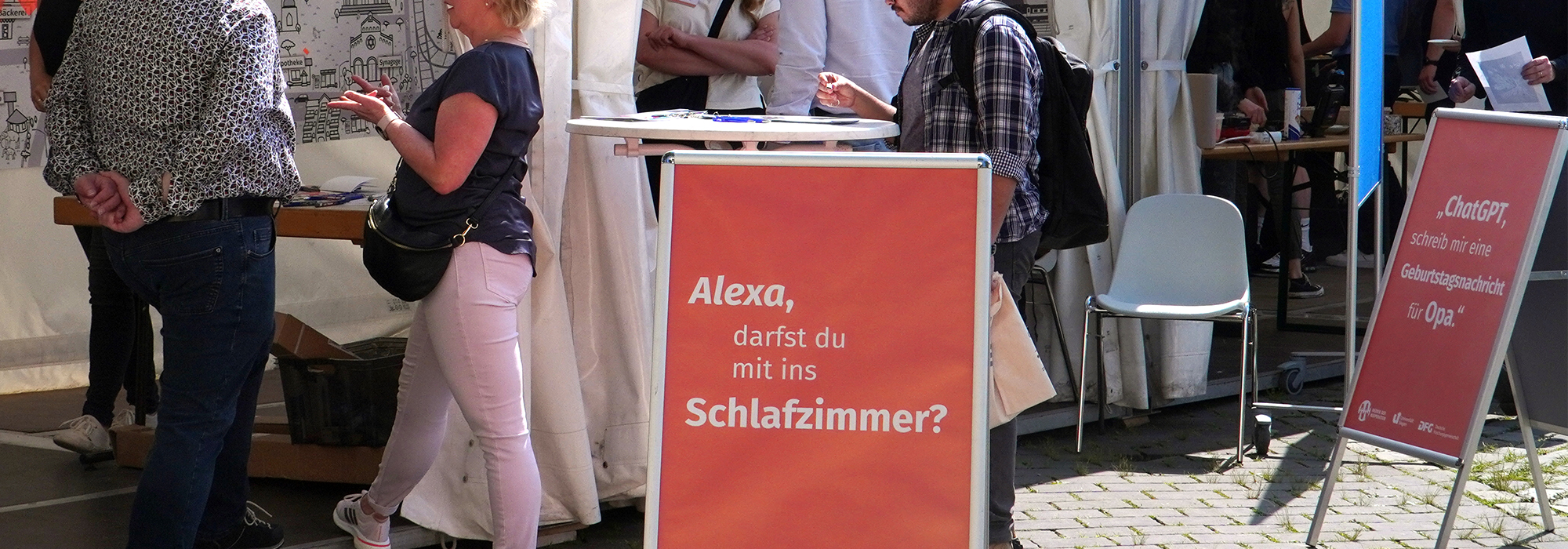
Ö - Public relations: cooperative research and design Photo: Astrid Vogelpohl | CRC 1187
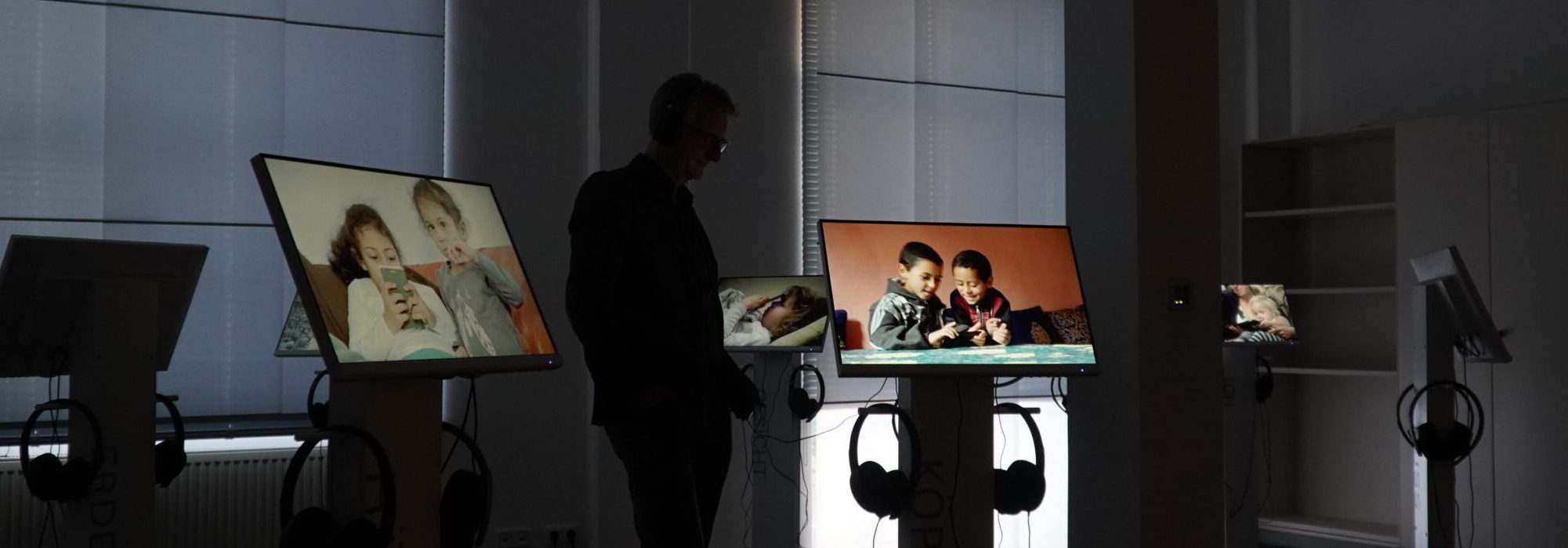
B05 - (Early) Childhood and Smartphone. Family Interaction Order, Learning Processes and Cooperation Photo: Astrid Vogelpohl | CRC 1187
Collaborative Research Centre 1187
Welcome to the web page of the Special Collaborative Research Centre (CRC) 1187 “Media of Cooperation” at the University of Siegen.
The CRC is an interdisciplinary collaborative research centre consisting of 19 subprojects and more than 60 researchers from media studies, ethnology, sociology, computer science, linguistics, ubiquitous computing, science and technology studies, education, law and engineering.
The Collaborative Research Centre 1187 has been funded by the German Research Foundation (DFG) since 2016. The research centre studies digital media, which have emerged as cooperative tools, platforms and infrastructures on a broad front, and approaches them as cooperatively accomplished means of cooperation. In the first funding phase (2016-2019), the CRC focused on the relevance of social media and platforms, while the second phase (2020-2023) centered on data-intensive media and data practices. Phase 3 (2024-2027) inquires the interplay between sensor media and artificial intelligence.
New Working Paper “The Multiple Returns of Connectionism: Theory and History of Artificial Intelligence” (No. 42) released (Copy)
What if you weave your own story? Curating Authorship in WE ARE NOT CARPETS
by Tahereh Aboofazeli (Universität Köln, SFB)
How do collaborative research and exhibition practices challenge traditional notions of authorship in global carpet weaving? In this working paper, Tahereh Aboofazeli examines the project WE ARE NOT CARPETS: I Tell You My Story as a targeted intervention into the socially organized anonymity of carpet weavers. The paper analyzes how this anonymity is sustained by an epistemology of ignorance and the scopic economy of the carpet trade, investigates the emergence of a multimodal curatorial practice through Rancière’s concepts of the distribution of the sensible and dissensus, and outlines a reconfiguration of the relations among weaver, viewer, and researcher to relocate authorship as an interruption of established regimes of meaning and power.
This article examines the collaborative research and exhibition project WE ARE NOT CARPETS: I Tell You My Story as an intervention into the socially organized anonymity of carpet weavers. The article argues that this anonymity is not simply a gap in knowledge, but a field of active not-knowing sustained by an epistemology of ignorance and by the scopic economy through which carpets circulate as cultural and narrative commodities. Against a regime of curiosity directed toward pattern, region, authenticity, technique, and price, but rarely toward the weaver, the project asked weaver-collaborators: What if, instead of weaving the market’s pre-given designs, you wove your own story?
Drawing on the carpets, the weavers’ writings and reflections, collaborative curatorial practice, and audience responses across exhibitions in Cologne and Siegen, the article traces three interconnected displacements: the emergence of the weaver in an authorial position; the development of a multimodal curatorial practice that holds social recognition together with aesthetic indeterminacy; and the formation of a new literacy that reconfigures the relations among weaver, viewer, researcher, and curator. Reading through Rancière’s concepts of the distribution of the sensible and dissensus, the article argues that authorship operates here not as the addition of a missing voice, but as an interruption of the scene that separates making from the authority to determine meaning, form, circulation, and interpretation. Curating, in turn, becomes a practice of care for the circulation, return, and negotiation of meaning across the unstable seams between these positions.
About the Author
Tahereh Aboofazeli is currently a PhD candidate in Social and Cultural Anthropology at the A.R.T.E.S. Graduate School for the Humanities at the University of Cologne. Her work explores multimodal knowledge production, collaborative storytelling and arts-based research. Her practice is driven by a commitment to inclusive and decolonizing approaches to knowledge-making. Her academic and artistic work is grounded in long-term engagement with marginalised communities, particularly women workers, migrant women and children. Her doctoral research, developed through *Weaving Memories*, critically examines the marginalisation and exploitation of weavers within the handmade carpet industry, particularly in relation to Persian carpets, and investigates how regimes of authority, gender, and social domination shape authorship, agency, and the conditions of knowledge production. Working collaboratively with weavers, the project explores carpets as medium for storytelling where memory and political relations are woven together.
About the Working Paper Series
The Working Paper Series of SFB 1187 “Media of Cooperation” brings together current contributions from the field of interdisciplinary and transdisciplinary media research. The SFB Working Paper Series offers the opportunity for pre-publication and rapid dissemination of research work currently being carried out at the SFB or related to it. The aim of the series is to make SFB research accessible to a broader research community. Publication in the Working Paper Series does not preclude the publication of revised versions of the same contribution in other journals. Contributions from postdocs and established researchers are welcome. The series is intended as a publication forum for the researchers represented in the SFB, their projects, and their ongoing research. Contributions are published in open access and in a limited print edition. If you would like to publish an article in the Working Paper Series, please submit your topic proposal in the form of an abstract (max. 300 words) together with a short CV (max. 50 words). For manuscript submission, please refer to our styleguide.
Funded by the German Research Foundation (DFG) – Project number 262513311 – SFB 1187. Editorial responsibility: Karina Kirsten, University of Siegen & SFB 1187 Media of Cooperation.
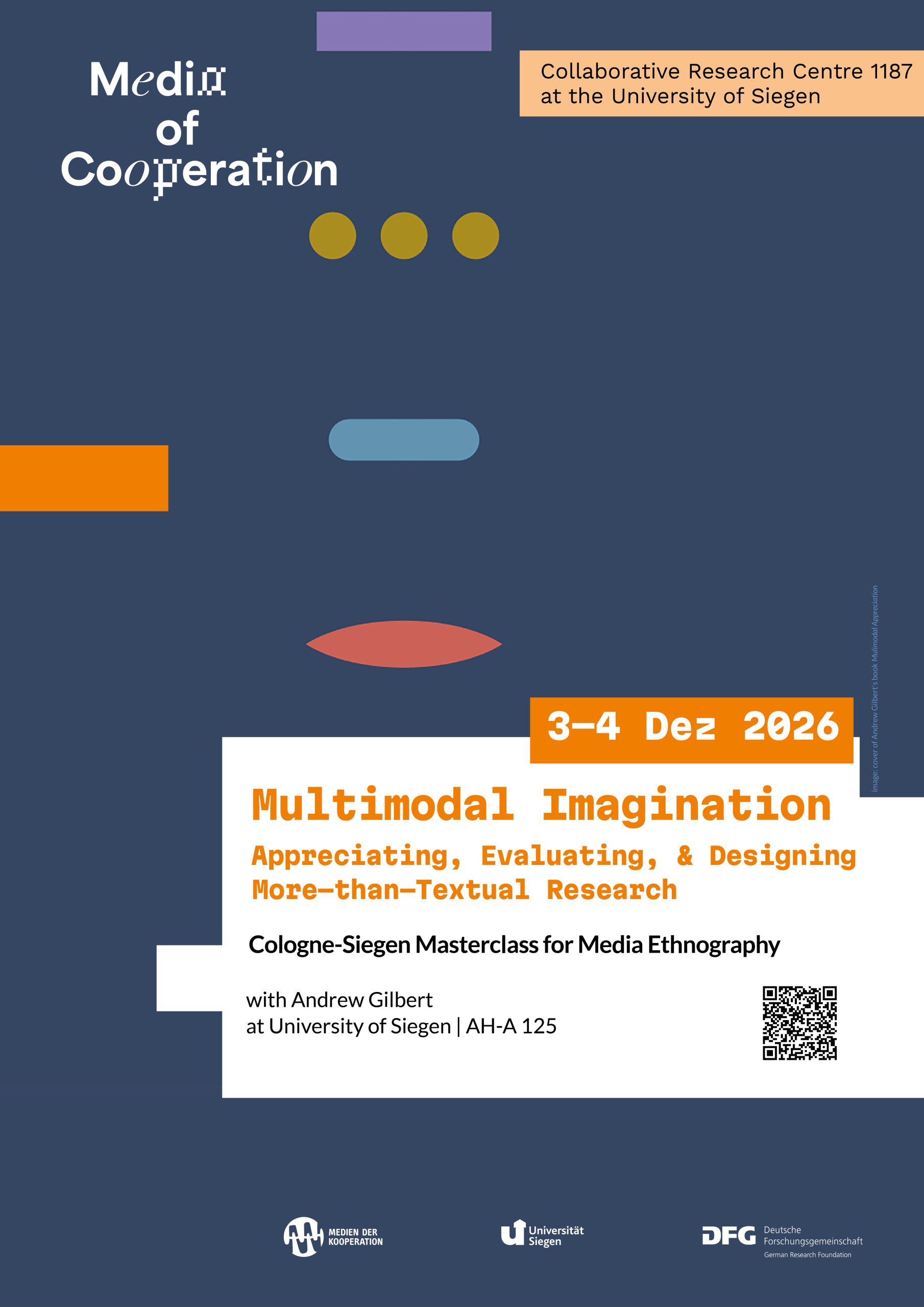
Call for Participation: Master Class for Media Ethnography (Siegen, December 3-4)
„Multimodal Imagination: A Workshop in Appreciating, Evaluating, and Designing More-than-Textual Research in Anthropology and Beyond“
December 3, 2026 10:00-17:00 / December 4, 2026 10:00-13:00
Are you a maker of multimodal works—a film, a game, a performance, a comic, a city walk, a web platform, an exhibit, a sound installation— but concerned about their legitimacy in institutional contexts that privilege text-based formats? Is it possible for us to appreciate and evaluate a multimodal work as academically relevant without becoming an expert in the specific affordances of each media format? What kind of pitfalls and risks exist when conceptualizing and practicing multimodal research, and are there ways to anticipate or even avoid them?
This workshop will draw upon the recently published Multimodal Appreciation Kit (Albrecht, Criado, Farias, Gilbert and Maier, 2025), and feature sessions devoted to identifying and articulating the value of multimodal works, as well as planning for and designing more-than-textual research. It will be of interest to those who have a multimodal practice, those who are considering incorporating multimodality into their research, as well as those who are curious about more-than-textual research and how to evaluate it.
Andrew Gilbert is a sociocultural anthropologist specializing in multisensory and multimodal ethnography, experimental and collaborative research design, and the politics of social transformation in contexts of historical upheaval. He is professor of design anthropology at the Burg Giebichenstein University of Art and Design in Halle, and former co-director of the Stadtlabor for Multimodal Anthropology at Humboldt University in Berlin.
Participation
The master class has 15 spots. Please register with Astrid Vogelpohl by November 15.
If you are currently working on a multimodal project and would like to present it in the master class, please indicate this when you register.
About the series „Masterclass for Media Ethnography“
The use of audiovisual media has sparked an increasingly diverse methodological debate within the history of ethnographic research approaches. This has provided innovative impetus for the reciprocal collaborative relationships that are developing between ethnographic researchers, research participants, the audience of ethnographic research findings, and the various media involved. In the Cologne-Siegen Masterclass in Media Ethnography, leading figures in visual ethnology will present their work and research approaches and discuss their respective research material with the participants.
Venue
University of Siegen
AH-A 125
Herrenmgarten 3
Siegen
How do digital technologies transform society and (international) politics, and what are the practices and options for resistance?
Annual Conference of the Collaborative Research Centre „Media of Cooperation“ examines digital power and new forms of democratic action
AI, wars, and the shift to the extreme right are raising pressing questions today. All of these issues are linked to digital media technologies. The annual conference asks about the relationship between social media, robotics, and artificial intelligence with (geo)political developments and resistance practices.
The Collaborative Research Centre “Media of Cooperation” investigates the role of media and digital technologies in social cooperation. This year’s annual conference of the centre is titled “Politics of Cooperative Sensing: Techfascism, War, Geopolitics, and Resistance” and brings together scholars, filmmakers, journalists, and activists to focus on the political conditions of digital cooperation.
Social networks and artificial intelligence (AI) shape how political events are reported and public debates are conducted. Digital platforms are used to spread disinformation and exert political influence. Their technical structures are particularly conducive to (algorithmic) discrimination as well as extremist-right-wing, racist, or anti-feminist disinformation campaigns. The conference examines these developments as well as the possibilities for countering them through protest and political engagement.
Digital media have long been more than just tools of communication. They influence what information becomes visible and who can shape public debates. At the same time, they rely on technical infrastructures that consume limited resources and raise questions about climate impacts and surveillance. The speakers therefore explore not only new forms of digital power but also how people can use or engage with technology critically.
In seven presentations, three workshops, two film screenings, and a lecture performance, contributors from Siegen, Cologne, Bochum, Dortmund, Duisburg, Essen, Weimar, Hamburg, Mariupol, Kyiv, Tehran, Dublin, and Berlin will discuss various aspects of these topics. The international conference brings together perspectives from media studies, theater studies, cultural studies, education, and sociology with insights from documentary film and investigative journalism. The political and social consequences of digital technologies are thus discussed from a variety of academic disciplines.
Highlights of the program include the lecture performance “Fault Line: Survival as Unrest” by Azadeh Ganjeh, as well as two panel discussions on current political and social issues, such as the interplay between technology corporations and fascist movements, and the question of how geopolitical conflicts and wars are portrayed and negotiated through various media technologies. The first panel, “Technocooperations,” examines how digital platforms, infrastructures, and AI are transforming working conditions, political debates, and social relationships. The second panel, “Sensory Conflicts and Mediated Wars,” focuses on topics such as surveillance, visibility practices, and digital infrastructures in the context of Russia’s war of aggression against Ukraine.
Two film screenings complement the program by offering personal and documentary perspectives on war, violence, and resistance. “War Songs” is a documentary musical directed by Sashko Protyah that uses songs and melodies to tell the story of war and pacifism in Mariupol. “Teen Angst”, directed by Inga Pylypchuk, follows nine young Ukrainian women who use their smartphones to document their daily lives during Russia’s war of aggression. Through personal stories of fear, separation, hope, and resilience, the film offers insights into coming of age under wartime conditions.
Another special event will be the farewell lecture by Prof. Dr. Erhard Schüttpelz, which will include a laudatory address by Prof. Dr. Rembert Hüser.
Invitation to the defense of Yarden Skop’s doctoral thesis
The SFB cordially invites you to the oral examination in the doctoral examination proceedings of Yarden Skop. The dissertation defense will take place on Thursday, 10 December 2026, from 13:00 p.m. to 15:00 p.m.
During the defense, Yarden Skop will present and academically defend the findings of the dissertation before the examination committee. The title of the dissertation is: “Making Online Speech Governable: Problematizations, Platforms, and Publics in Algorithmic Moderation Infrastructures”.
How is problematic speech online turned into something a machine can detect? Drawing on multi-sited ethnographic fieldwork across content moderation teams on news websites, fact-checking organizations and EU-funded AI consortia, Yarden Skop examines how counter-hate speech and counter-disinformation initiatives problematize speech in distinct ways in order to operationalize these definitions through ML technology. The media studies project follows four cases: Google’s Perspective API, Meta’s Third-Party Fact-Checking program, Full Fact and its Alpha tool, and the EU Horizon-funded VeraAI project. It draws on interviews, event ethnography and on participant observation of participatory design workshops.
At its core are the research questions:
Who and what constitutes speech problems online, such as disinformation and hate speech – where did they come from, what are their specific constructions in the domains in which they are problematized?
Second, What forms of governing practices and social regulation are enabled when defining the problems as such?
Third, How are these governing practices executed in the building of software and machine learning tools for mediating said problems?
The central thesis of the dissertation is that definitions of problematic speech are not settled before technologies are built but are enacted, narrowed and stabilized in the tools, data practices and funding arrangements that claim to only apply them. These decisions are not neutral, and taken together, these projects can be seen as “moral infrastructures” built to define, identify and enforce the boundaries of acceptable speech.
The dissertation project is part of the SFB’s Integrated Graduate School and Skop is a member of project A07: “The Industry of Personal Data”.
New Working Paper “The Multiple Returns of Connectionism: Theory and History of Artificial Intelligence” (No. 42) released
The Multiple Returns of Connectionism: Theory and History of Artificial Intelligence
by PD Dr. Sebastian Gießmann (Universität Siegen, SFB)
How do the historical returns of connectionism reshape our understanding of artificial intelligence, media, and cultural techniques? In this working paper, Sebastian Gießmann examines the theoretical and historical foundations of artificial intelligence from the perspective of media theory and history of technology. The paper analyzes how the shifts between symbolic AI and inductive connectionist neural networks influence our media environments, explores the extent to which data-intensive and statistically operationalized networks challenge our anthropological and semiotic structures, and proposes a genealogy to resituate AI between nature and cultural techniques.
In light of the recent boom in artificial intelligence, what future and what new environments should research in media and cultural techniques focus on? This article returns to a fundamental question posed by Marcel Mauss regarding the constitution of techniques between specific and general purposes.
First, it offers a brief description of the current state of machine learning and recent AI developments between specialization and universalization. Second, I propose a genealogy of artificial intelligence between nature and cultural techniques. It inquires into the historical recurrence of connectionist practices, algorithms, and styles of thinking and acting as a condition of current AI technologies. How could biological neurons become artificial neural networks that work as the infrastructural foundation of artificial intelligence? Third, what is at stake here are the notions of media and mediation themselves. Due to the naturalization and habitualization of connectionist AI, they are becoming statistically operationalized, data-intensive networks.
The Working Paper Series of SFB 1187 “Media of Cooperation” brings together current contributions from the field of interdisciplinary and transdisciplinary media research. The SFB Working Paper Series offers the opportunity for pre-publication and rapid dissemination of research work currently being carried out at the SFB or related to it. The aim of the series is to make SFB research accessible to a broader research community. Publication in the Working Paper Series does not preclude the publication of revised versions of the same contribution in other journals. Contributions from postdocs and established researchers are welcome. The series is intended as a publication forum for the researchers represented in the SFB, their projects, and their ongoing research. Contributions are published in open access and in a limited print edition. If you would like to publish an article in the Working Paper Series, please submit your topic proposal in the form of an abstract (max. 300 words) together with a short CV (max. 50 words). For manuscript submission, please refer to our styleguide.
Funded by the German Research Foundation (DFG) – Project number 262513311 – SFB 1187. Editorial responsibility: Karina Kirsten, University of Siegen & SFB 1187 Media of Cooperation.
New publication: “Ambient Amplification: Memecry Across Platforms”
A Special-themed collection with the journal Platforms & Society
Out now! Special-themed collection “Ambient Amplification: Memecry Across Platforms,” with Platforms & Society, edited by Elena Pilipets and Marloes Geboers and including 10 individual articles
What comes into focus when we approach memes through the affective interplay of user practices and algorithmic systems? The editorial introduction to Volume One situates the collection’s ten methodological and conceptual reflections around a series of shifts that “foreground the background” of contemporary platform cultures: from viral events toward surrounding adaptations and remixes; from metrics to affinity-based algorithmic approximation; from memes as content to vibe-based riffing on affective orientations; and from visibility to ambiguity resistant to quantification.
Please find links to the individual articles below. Happy reading, and stay tuned for the forthcoming call for contributions to Volume Two!
The CRC’s main location is at the University of Siegen. Further nodes in our research network are located at universities in Cologne, Hagen, Bochum, Frankfurt/Oder, Bonn, Constance, and Luxembourg. There are also close collaborations with renowned international scholars and research institutions in Chicago, Warwick, Basel, Waltham, and Lviv.