As part of this year’s Spring School, students, civil society representatives, and scholars worked together for two and a half days to explore conflicts surrounding the topic of extractivism using creative methods such as waterscaping, collages, and mapping. In addition to local extraction sites and stories from the Ruhr region, this year’s event addressed international extraction regions and practices “above and below ground.” Understood as a system of exploitation, extractivism leaves the Earth with no means of regeneration and brings with it social upheaval and conflicts, including human rights violations. Extractivism is one of the greatest transformers of the Earth through mining, but also through extractive infrastructure. Extractivism is also largely responsible for the climate crisis. A focus was placed on developments in the field of artificial intelligence, which will massively exacerbate the consequences of extraction in the future.
Extractivism and AI
The presentations by international guests focused on fossil fuels, which still shape the Ruhr region today—but also on minerals and rare earths used in digital technologies. In addition to rare earths for batteries, chips, and other devices, the discussion also critically examined AI infrastructure, such as data centers. Due to the implementation of AI bots and geopolitical conflicts worldwide, AI is an urgent issue not only socially but also ecologically. The enormous consumption of water and energy by the data centers that form the basis of artificial intelligence, as well as the contested minerals required to manufacture the necessary computing chips, make AI one of the fastest-growing consumers of resources worldwide. Speakers and participants critically discussed both the perspective of global extractivism and the local impacts of such tech infrastructures. Data centers, which have a massive impact on water consumption, and so-called click-work centers, where content moderation, data labeling, and other low-paid tasks are carried out, are often outsourced to the Global South, but can also be found in Germany and the Ruhr region. Globally, they contribute to local extractive structures. Postcolonial and feminist perspectives on mining, labor, resources, and sacrifice zones are therefore indispensable for understanding the issue of extractivism through AI infrastructure.
Through this broad perspective on the practices of extractivism, the many social sectors affected by the consequences of extractivism were able to be connected with one another in the workshops. Media studies, through this climate-just and extractivism-critical perspective, is also brought back to its material foundations in the sense of the media geology of theorist Jussi Parikka (see also Noam Gramlich’s work on this).
The first evening opened with an introduction to the topic of extractivism and media, followed by three keynote speeches and a panel discussion on the topics of “Revier Noir” by Frederike Lange from the German Mining Museum, “Queerness in Historical Mining between the Ruhr Region and Upper Silesia” by Bochum-based artist Julia Nitzschke, and “Air and Extractivism” by cultural studies scholar and filmmaker Marietta Kesting. In the subsequent panel discussion with the speakers, moderated by media scholar Oliver Leistert, the focus was on the damage caused by data centers, for example, and on how local populations—such as those in the U.S.—are already fighting back against them today.
On the second day, the program continued with hands-on practical workshops: one on the Emscher River led by Natalie Pielok; one on film and climate catastrophe led by Matthias Grotkopp and Maike Reinerth; one on waterscaping led by Rémi Willemin and Alisa Kronberger; and one on the infrastructures of extractivism led by Petra Löffler, Marlene Helling, and Jakob Claus. It became clear in many presentations that extractivism entails long-term costs that still require complex solutions in the Ruhr region as well, such as the disposal of toxic mining residues or the long-term pumping of water from former coal mines.
In addition to academic contributions, artistic explorations were also central, such as in Azadeh Ganjeh’s lecture-performance on gold extractivism and the associated social conflicts as well as political (online) protests in Iran. A photo exhibition in the Quartiershalle by Sara Bahadori raised participants’ awareness of exclusion and marginalization within the climate movement. In a workshop on the “white gaze” on climate issues, the speaker explored the topic in greater depth with a critical and reflective approach.
Impressions from the Spring School
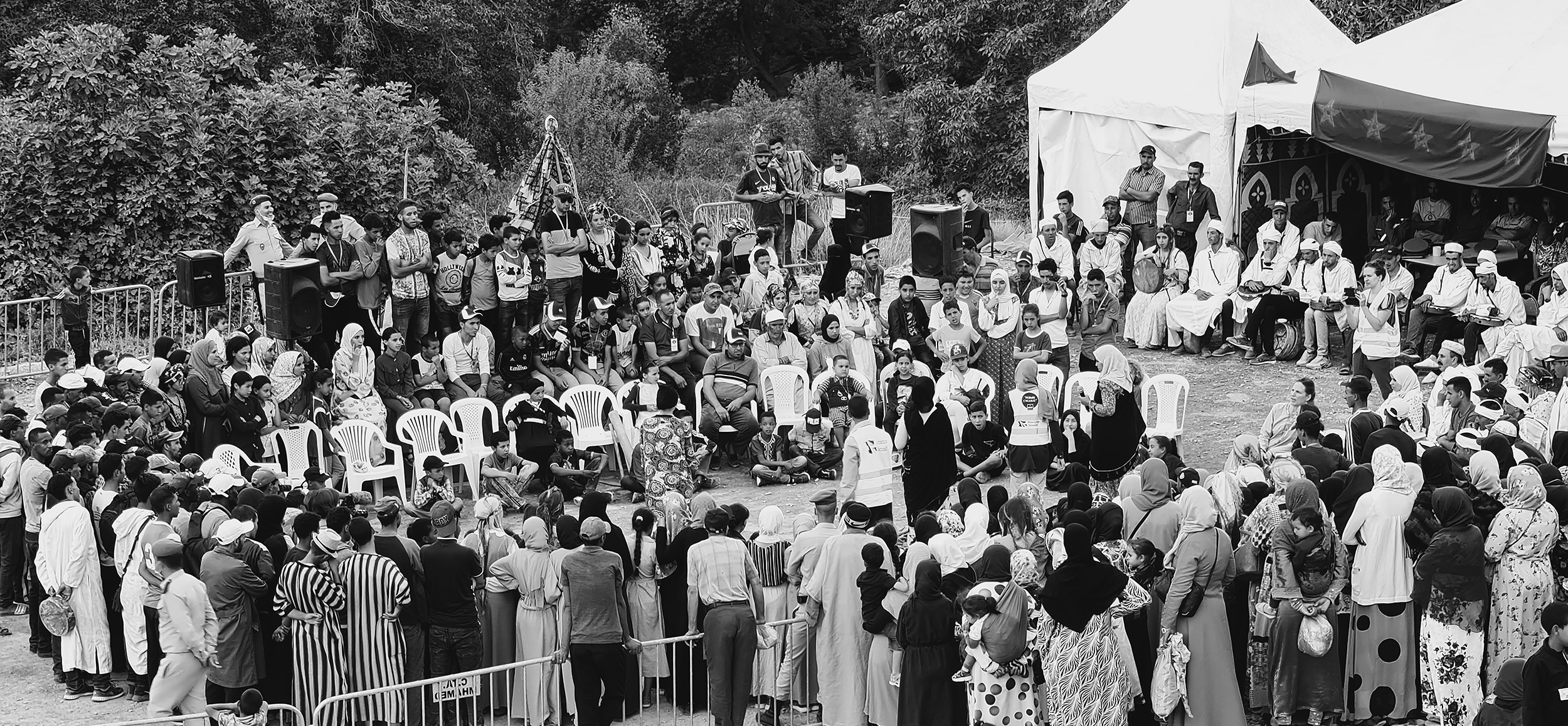
Around 100 participants actively took part in workshops on water, AI, and mining history, as well as in a decolonial city tour of Bochum, led by Marie Sprenger and Florian Trompke. Finally, in a workshop on climate-just teaching on Sunday morning, faculty and students developed content and methods for a future inter-university curriculum on the topic.
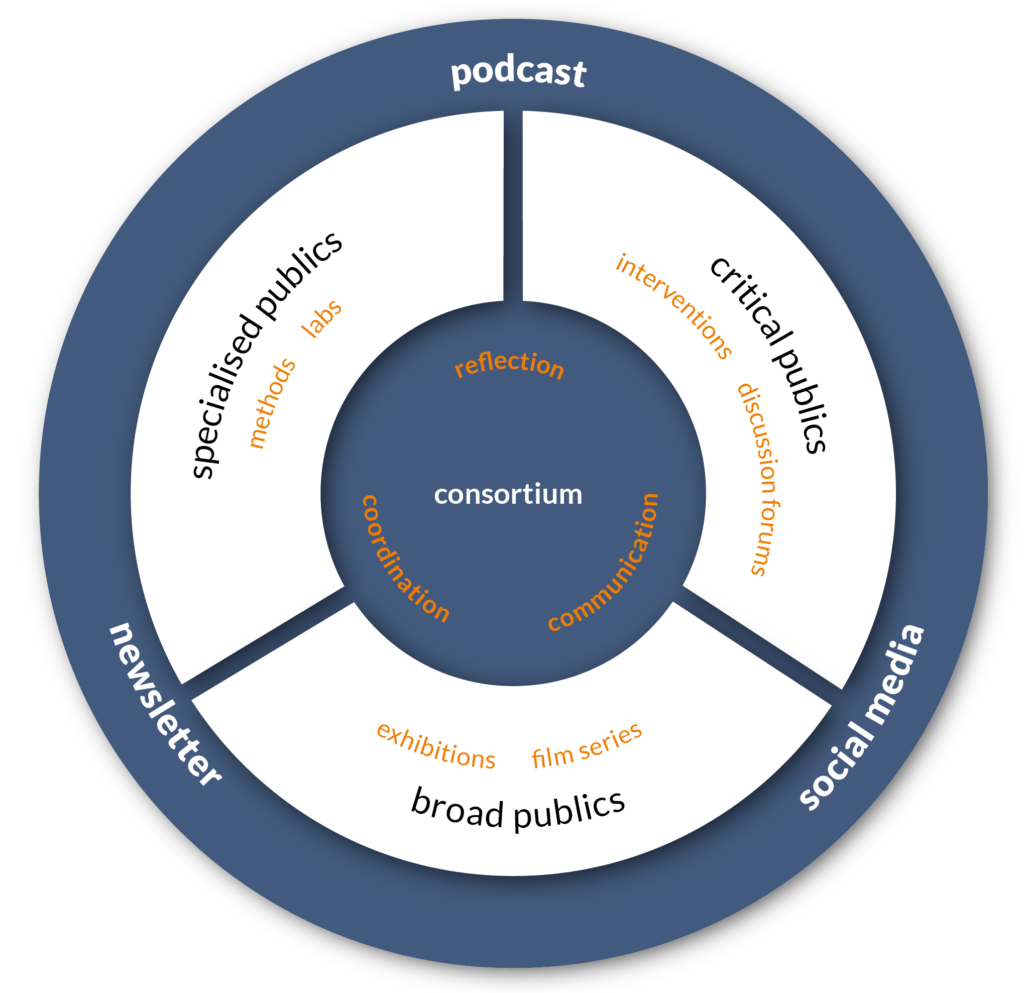
The Spring School is an event of the “Public Sphere” project within the SFB Media of Cooperation and creates a public sphere comprising artists, scholars, journalists, and engaged civil society around the contentious issue of the climate catastrophe.
The third Spring School of the MediaClimateJustice working group was organized by Julia Bee, Gerko Egert, Alisa Kronberger, and Julia Reinermann and was made possible, among other things, through funding from the SFB Medien der Kooperation and Ruhr University Bochum. The goal of the Spring Schools on Media and Climate is to anchor the topic of climate more firmly in media studies and society.