News
Information events on the introduction of electronic patient records
As part of an information and discussion event, researchers from the University of Siegen provided information about the use of electronic patient records. In addition to providing general information, they offered citizens the opportunity to discuss open questions and concerns surrounding the topic.
About the event
In cooperation with the Digital Specialist and Health Center (DFGZ) of the medical office “Spieren & Kollegen,” subproject 4 “Health and Aging” of the FUSION research project, together with the subproject of CRC A05 “Cooperative Creation of User Autonomy in the Context of an Aging Society” has already held two information and discussion events on the introduction of electronic patient records (ePA). The central concern of those involved is to remove the barriers to the use of ePA for citizens and to support the transfer of knowledge among medical practices in South Westphalia. In addition to providing general information on electronic patient records, the events also offered an opportunity to discuss open questions and concerns surrounding the topic.
Claudia Müller, head of both research projects, commented that such events naturally do not reach a mass audience, but that there is hope that many of the more than 100 participants in the two ePA events will act as multipliers. One challenge is that not everyone has the same skills or technical capabilities to actually use the electronic patient record themselves. Although this is not a problem specific to the ePA, it must be taken into account in times of increasing digitalization and online offerings, Müller continued.
Dennis Kirschsieper, a member of the CRC’s subproject A05, and Dr. Stephan Krayter, a member of the FUSION project, have been involved in the project from the outset and explain:
“When new technologies are introduced, it is common for some people to try them out and use them immediately out of curiosity – so-called ‘technology pioneers’ or ‘early adopters’ – while others are more hesitant to embrace the new, preferring to watch others and wait and see. By sharing the experiences of early adopters, we are helping to make it easier for others to get started with electronic patient records.”
Upcoming interview study: Call for participation
Following the successful introduction of the ePA, the main focus now is on supporting the exchange of information regarding problems with the electronic patient record and accompanying the introduction and actual use of the ePA by citizens with a qualitative interview study.
The research team is calling for participants to take part in this study. The aim of the study is to collect and scientifically evaluate users’ experiences with the electronic patient record.
Dennis Kirschsieper: dennis.kirschsieper[æt]uni-siegen.de oder 0271 / 740-2002
Dr. Stephan Krayter: stephan.krayter[æt]uni-siegen.de oder 0271 / 740-3833
The 2025 RESAW Conference: Data, Communities, and Food … for Thoughts
by Valérie Schafer (University of Luxembourg & CRC 1187)
The 2025 edition of the RESAW conference marked a significant milestone: the tenth anniversary of a vibrant and constantly evolving academic community. Since its inception in 2015, this conference series has brought together researchers, archivists, and practitioners from diverse fields concerned with the history and present of the web. This year’s event was memorable, not only because of the anniversary, but also due to the remarkable richness of the exchanges, the diversity of its participants, and the depth of the contributions. RESAW joined forces with the Collaborative Research Centre (CRC 1187) Media of Cooperation, both coming together to study The Datafied Web and to preserve its histories.
About the RESAW conference and community
RESAW is the acronym for A REsearch Infrastructure for the Study of Archived Web Materials. The RESAW community is dedicated to working with digital cultural heritage and gathers every two years at the eponymous RESAW conference. RESAW was founded in 2012 with the goal of building a collaborative European research infrastructure for studying and working with web materials while fostering knowledge exchange across Europe. This presents significant challenges for both research and the archiving of web-based information and objects.
RESAW 2025 – The datafied Web at the University of Siegen
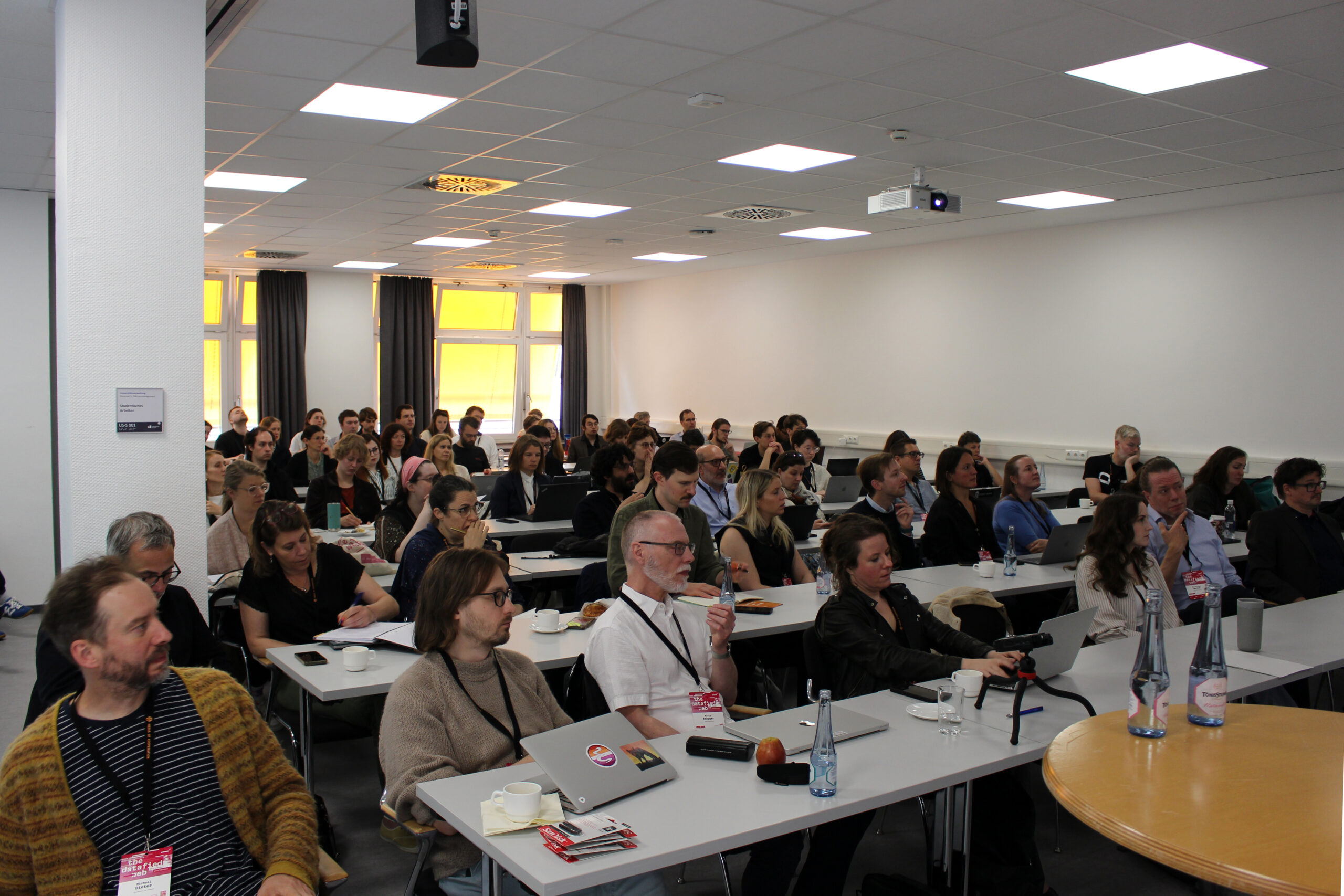 Conference kick-off at Siegen University
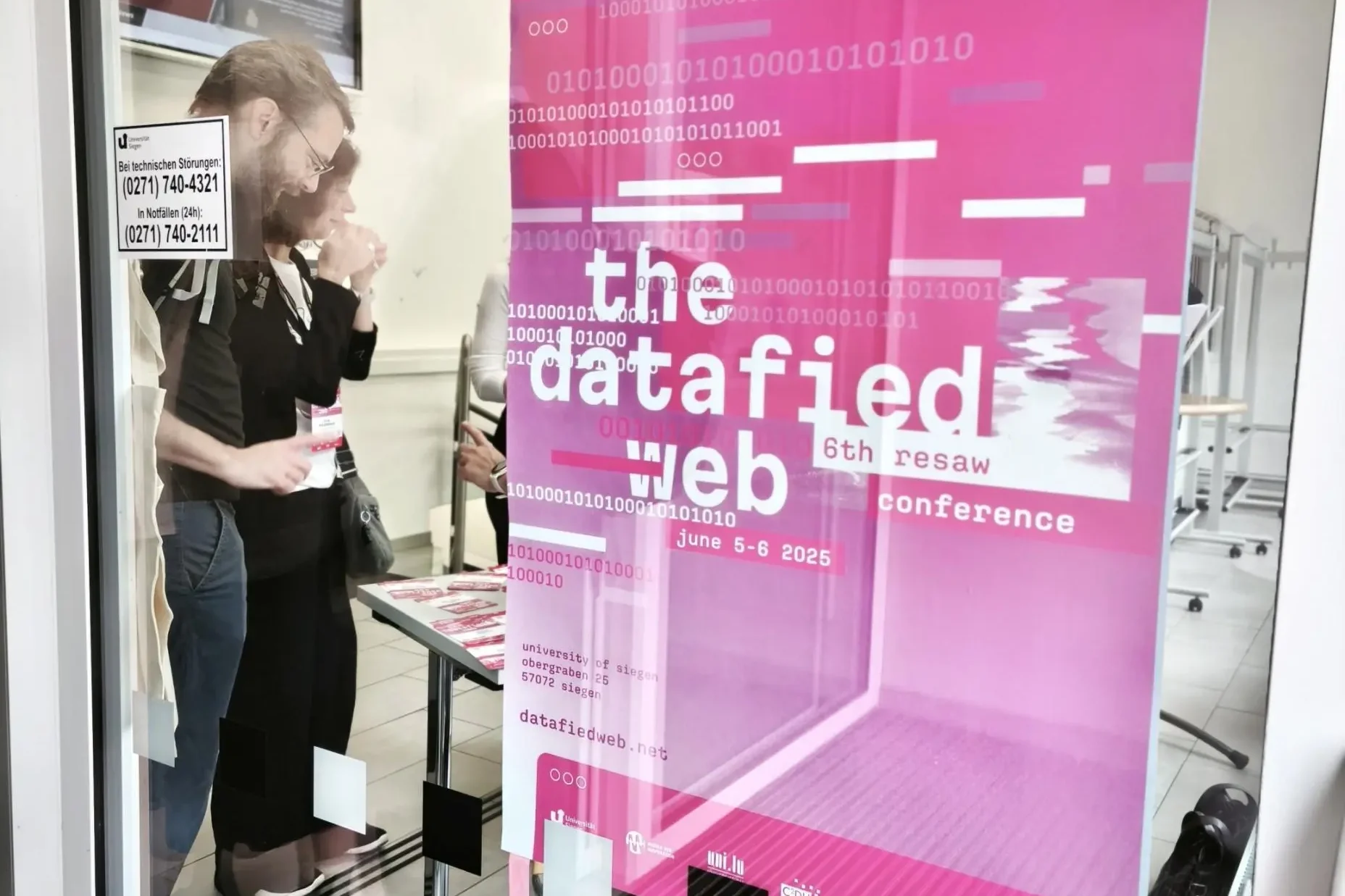
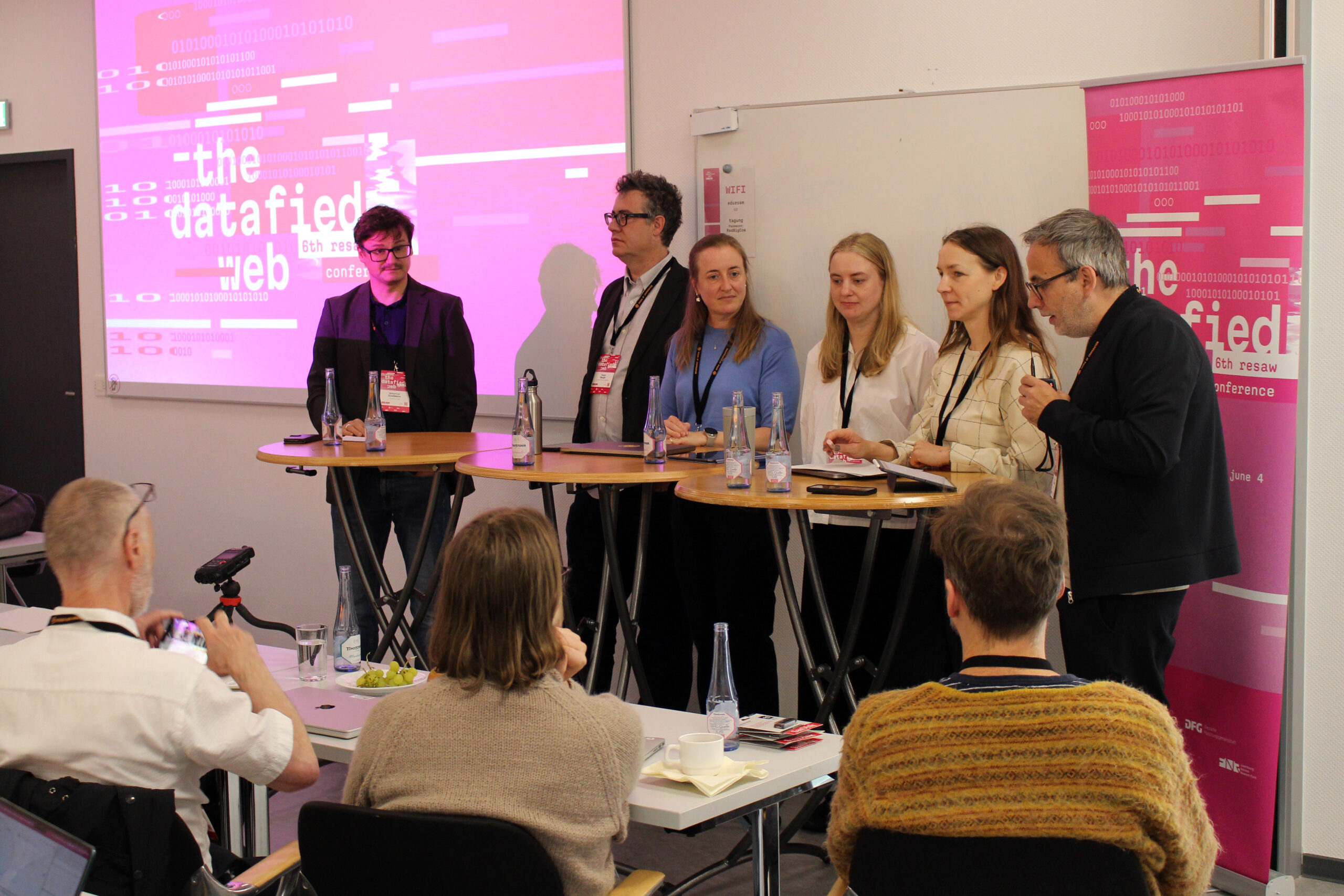
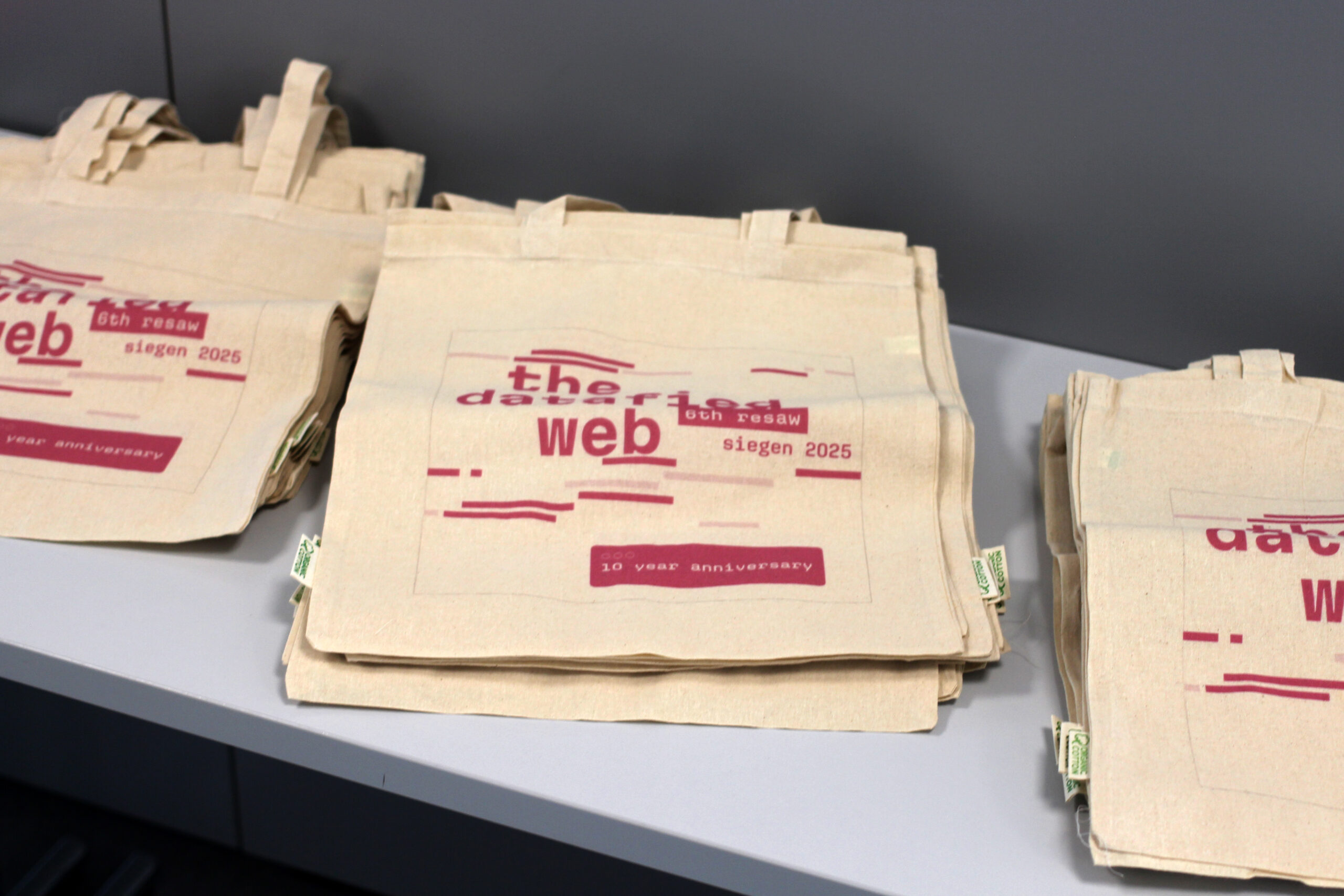
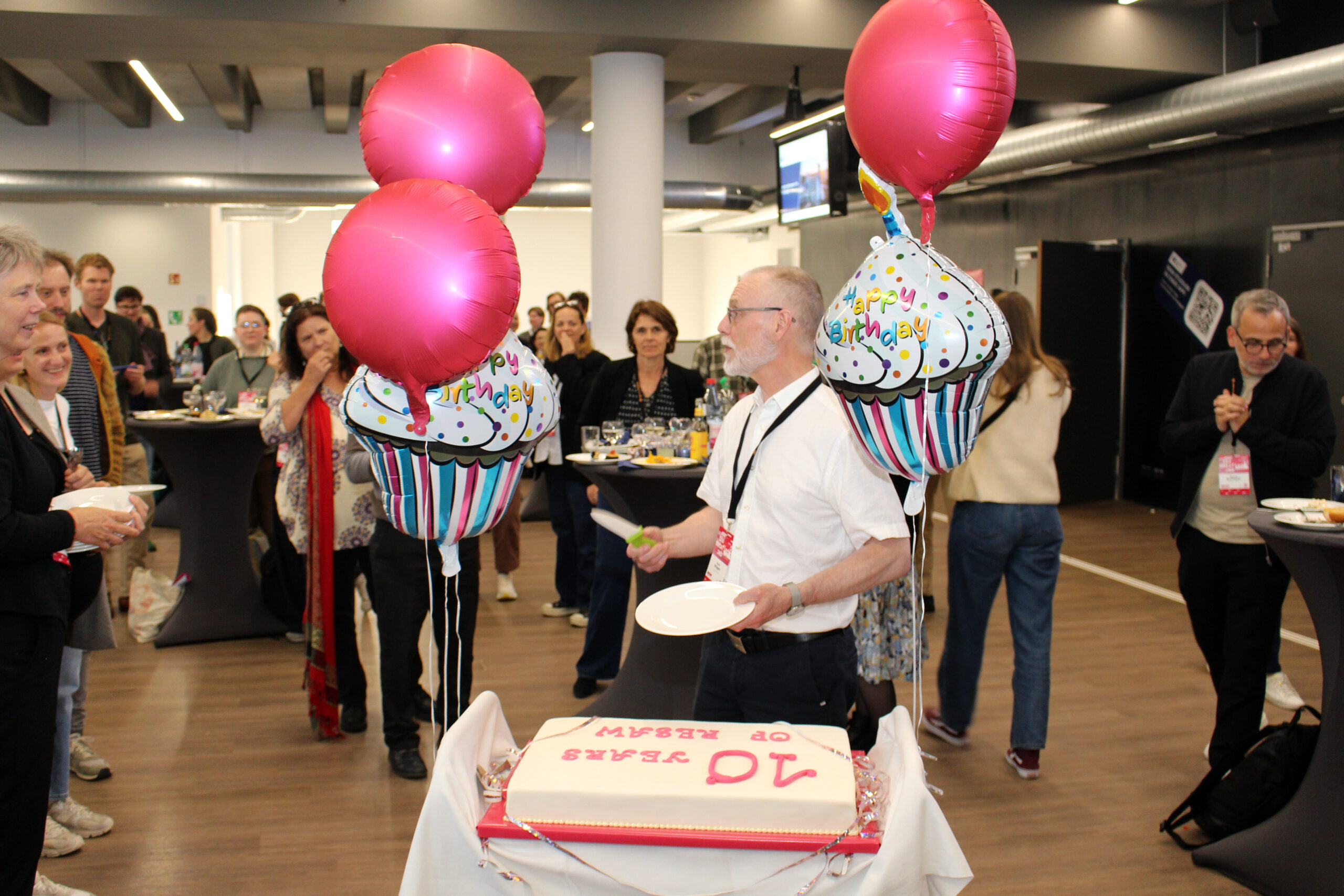
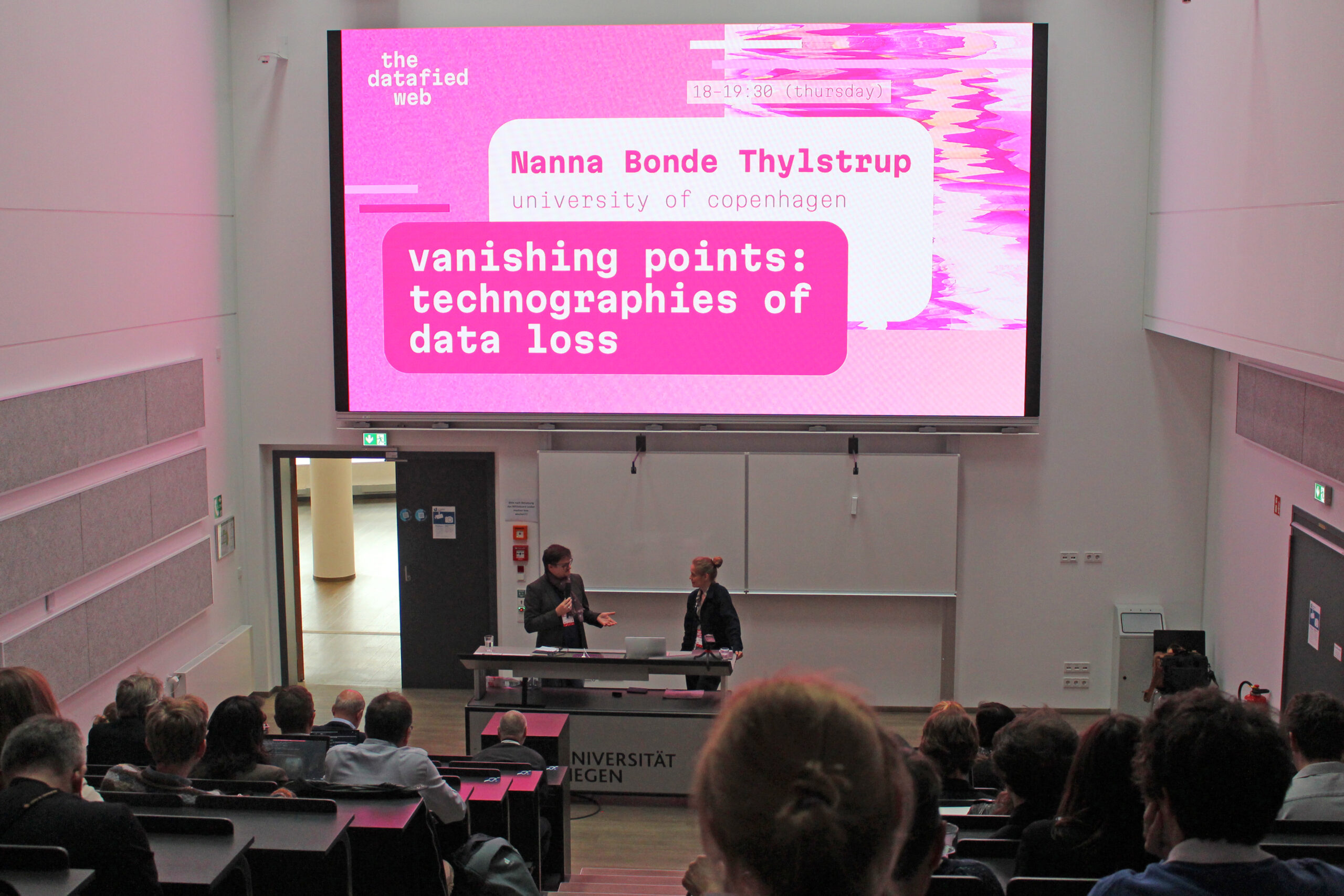
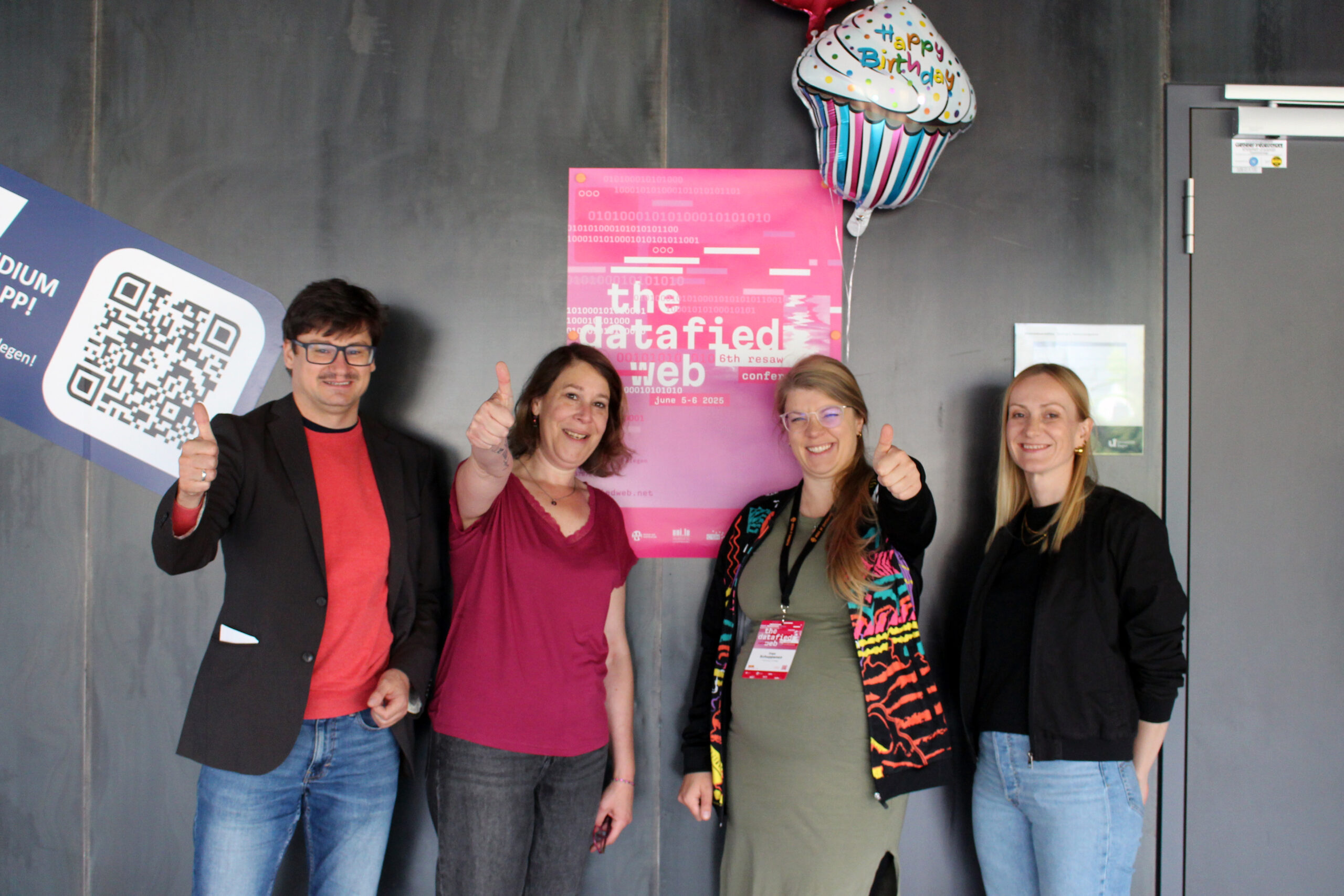
The conference drew close to one hundred participants from across Europe and North America. Among them were long-standing members of the community – some of whom have attended every edition since the beginning, as well as many newcomers, and notably from the CRC team at the University of Siegen. This mix created a dynamic and productive atmosphere, with new ideas and connections flourishing. It provided intellectual renewal and disciplinary cross-pollination.
The central theme, The Datafied Web, acted as a powerful conceptual anchor, encouraging reflection on how datafication has been and is reshaping the web, our methods, and our understanding of digital studies and web archives.
While many presentations were directly aligned with the theme, the conference also remained open to a wide array of topics beyond the scope of datafication. This flexibility is a longstanding strength of the event, allowing space for discussions of current research developments, methodological experimentation, and new discoveries in the fields of web archiving and web studies. Contributions ranged from updates on national and international web archiving initiatives to exploratory studies in platform studies or qualitative and quantitative methods.
RESAW set out to trace how the datafied web became the sensory media environment we now inhabit. A web of predictive suggestion, of per-user variation, of AI-generated aesthetic and ephemeral interfaces. A web where “what you see” is a product of where you clicked, what you hovered, which model you unknowingly trained. To study this web—and to preserve its histories—that is where the research agendas of Resaw and MoC come together. (Carolin Gerlitz, spokesperson of the CRC 1187)
A significant number of talks examined The Datafied Web through historical perspectives. These included case studies on the evolution of technologies such as the CD-ROM and Bluetooth, and their interaction with or transition into web-based platforms, shedding light on the frictions and continuities involved. Others focused on pressing current concerns, such as data surveillance, algorithmic governance, and the political economy of web and platform infrastructures.
The datafication of the web has brought about a decisive transformation of capitalism – and capitalist economies have in turn datafied the World Wide Web. Our current platform economies are based on the historical development of cookies, web advertising, and the measurement of public data. (Sebastian Gießman, head of the conference)
The interdisciplinary character of the conference was particularly evident this year. Approaches drawn from Web and Platform Studies, the History of Technology, Archival Studies, Digital Humanities, and Critical Data Studies were all present, and in fruitful dialogue. This interdisciplinarity was reflected not only in the themes discussed, but also in the methods employed: from close analysis to distant and scalable reading, and from infrastructure-focused studies to content-based investigations. Such methodological diversity illustrates the richness of the field and the necessity of hybrid approaches to fully grasp the complexities of the web’s past, present and future.
The keynote addresses were among the highlights of the conference. Nanna Bonde Thylstrup’s keynote offered a historically grounded presentation on the theme of data loss, linking it to broader narratives of memory, preservation, and forgetting in the digital age. Jonathan Gray’s keynote, by contrast, was more oriented toward the present and near future, addressing the stakes of open data, and the role of researchers in shaping ethical and inclusive data practices.
Beyond the formal sessions, a variety of pre-workshops, social events, and targeted meetings enriched the experience. Early-career researchers were given space to receive feedback and engage in mentoring dialogues. Pre-conference workshops offered hands-on methodological training and collaborative problem-solving. Roundtables tackled timely and strategic questions, such as the future of our scholarly RESAW network, and the challenges of studying datafication in the opening roundtable. (A personal conference trip report by Lesley Frew that focuses on her experience and some of the sessions is also available).
Of particular note was the attention paid to the epistemological and methodological implications of working with web data. Whether focusing on the politics of web archiving, the limits of data transparency, or the possibilities of algorithmic critique, many sessions interrogated not only what we know, but how we come to know it and what remains excluded or erased in the process. Case studies drawn from diverse geographical, historical and linguistic contexts further enriched these discussions, reminding us of the web’s heterogeneity and the need for grounded, situated and reflexive perspectives.
In conclusion, the 2025 conference was more than just a commemoration of ten years of scholarly exchange and conferences. It was a powerful reaffirmation of the value of community, dialogue, and interdisciplinary collaboration in the face of a rapidly evolving digital landscape and more generally world. The themes explored, the connections made, and the questions raised will no doubt continue to inspire work in the years to come.
We would like to sincerely thank again all the local organisers, all the participants who made this edition such a success, as well as the DFG and FNR, the University of Siegen, the CRC Media of Cooperation, and the C2DH at the University of Luxembourg for their support to this event.
The 2025 RESAW conference was organized by the Collaborative Research Centre 1187 “Media of Cooperation” at the University of Siegen in cooperation with the Centre for Contemporary and Digital History (C²DH) at the University of Luxembourg. The conference is funded by the Deutsche Forschungsgemeinschaft (DFG, German Research Foundation) and the Luxembourg National Research Fund (FNR).
More
Press release by the University’s Press Office →
Conference report by Lesley Frew →
Knowledge, transfer and partners in research and public engagement
What is the role of Researchers in local, regional and national innovation ecosystems? Our training series discusses new ways and methods to engage with stakeholder and reflect on the impact our research might have. All parts will be lead by city2science.
About the workshop series
Openness, transparency and the ability to communicate with diverse audiences inside and outside academia are key competences in 21st century research and innovation. Transferrable skills in the areas of science communication and public engagement are increasingly relevant for academic and non-academic career paths, as well as for the acquisition of national and international funding. The interdisciplinary and interactive training series invites researchers to gain practical skills in science communication and public engagement. The course will empower researchers via a mix of input, reflections and practical sessions. A major goal of the training will be to enable participants to develop a communication plan related to (their individual) research topics and to communicate their key messages to diverse audiences in a clear and effective way.
Part #1: Start the Dialogue, Open Up Science! – Introduction to Science Communication and Public Engagement
-
Current developments in science communication and public engagement
-
Key concepts in science communication
-
Identification of potential target groups and stakeholder
-
Reflecting roles and responsibilities of researchers in science communication
-
Clarification of individual needs in science communication
Part #2: Open Science and Open Innovation in Science Communication
-
Open Science and Open Innovation as a collaborative approach to research and development
-
Development of external collaborations and broader networks of stakeholders, including other researchers, industry experts, customers, and multiple publics outside academia
-
Integration of open innovation practices into own research processes
-
How to approach new and relevant stakeholders and how to engage in open innovation processes
-
Discussing benefits and challenges associated with Open Science and Open Innovation
-
Discovering the innovation potential of your own research
Part #3: Communication Strategies and Pathways to Impact
-
How to plan strategic communication and engagement activities related to (individual) research topics
-
Develop skills and get to know concrete tools for clearly communicating research to target audiences and potential stakeholders
-
Introduction to “Challenge- and Impact-Driven” research and communication
-
Measures to maximize impact: Communication, dissemination and exploitation strategies
-
Using different communication tools with a focus on Social Media, e.g. how to create a research(er’s) profile on Social Media
Part #4: Stakeholder Engagement and Engagement Formats
-
Basic understandings of research with and for society
-
From information to collaboration: Ways to engage multiple publics with research
-
Develop concepts and initial strategies for research projects
-
Learn how to plan strategic communication and engagement activities related to research
-
Concrete tools to clearly communicate research results to the respective target groups and potential stakeholders
-
Innovative approaches and formats for science communication including ideas for creative event formats
About city2science
city2science supports strategic alliances between city and campus and develops innovative formats of science communication.
city2science offers individual consulting services for universities and research institutions as well as cities, municipalities and regions, including consulting and application development, especially in European funding programs
city2science has internationally recognized expertise in the theory and practice of science communication and public engagement. Based on many years of experience in theoretical reflection as well as in the practical implementation of innovative strategies and formats of science communication, city2science offers a comprehensive range of services in this permanently evolving future field.
A workshop report (February 4-7)
In February 2025, the Mixing Methods Winter School at the Collaborative Research Centre 1187 brought together over thirty participants, including international researchers, students, and experts from various disciplines. The program combined hands-on experimentation with critical inquiry into AI-driven research methods. Throughout the Winter School, participants critically engaged with AI not just as a tool but as a collaborator, reflecting on its role in shaping the research process.
The week opened with a keynote by Jill Walker Rettberg from the University of Bergen, who introduced “Qualitative Methods for Analyzing Generative AI: Experiences with Machine Vision and AI Storytelling.” Her talk set the stage for discussions on how qualitative inquiry can reveal the underlying narratives and biases in AI-generated content.
Participants then engaged in two hands-on workshops designed to explore mixed techniques for probing and prompting AI models. Carlo de Gaetano (Amsterdam University of Applied Sciences), Andrea Benedetti, and Riccardo Ventura (Density Design, Politecnico di Milano) led the workshop “Exploring TikTok Collections with Generative AI: Experiments in Using ChatGPT as a Visual Research Assistant,” examining how AI can assist in visual analysis of networked video content. Together with Elena Pilipets (University of Siegen) and Marloes Geboers (University of Amsterdam) participants then explored the semantic spaces and aesthetic neighborhoods of synthetic images generated by Grok during the workshop “Web Detection of Generative AI Content”.
After an introductory first day, the Winter School shifted its focus to two in-depth project tracks. The first project, “Fabricating the People: Probing AI Detection for Audio-Visual Content in Turkish TikTok,” explored how protesters and the manosphere engage with cases of gender-based violence on Turkish TikTok and how these videos can be studied using different AI methods. The second project, “Jail(break)ing: Synthetic Imaginaries of ‘Sensitive’ AI,” explored how AI models reframe sensitive topics through generative storytelling under platform-imposed restrictions.
The recaps of the projects are:
Fabricating the People: Probing AI Detection for Audio-Visual Content in Turkish TikTok
Facilitated by Sara Messelaar Hammerschmidt, Lena Teigeler, Carolin Gerlitz and Duygu Karatas (all University of Siegen)
The project explored video shorts from the Turkish manosphere – content centered on masculinity, gender dynamics, and “men’s rights” issues that often discuss dating, self-improvement, and family life. While this content is found on mainstream platforms and passes moderation, it still frequently veers into misogynistic or even violent rhetoric. Our project explored AI-assisted methods to make sense of large amounts of this contentious multimodal data.
Rationale
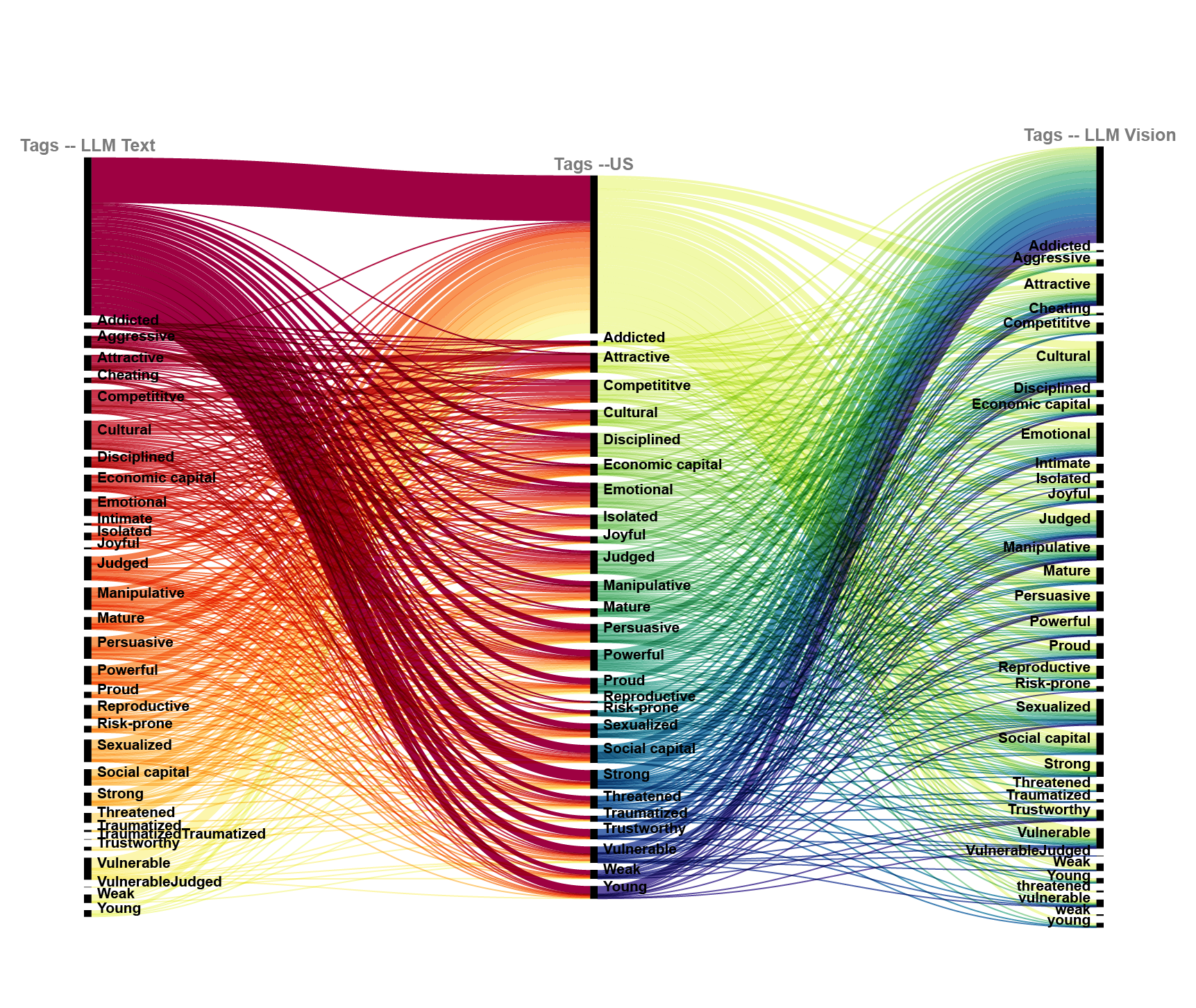
Specifically, we set out to develop methods to map how video shorts may become a vehicle for the ambient amplification of extremist content across platforms. We explored two approaches using off-the-shelf multimodal large language models (LLMs). The first sought to extend the researcher’s interpretation of how manosphere content addresses bodies, which are both performed and contested intensely across the issue space. We did this by implementing few-shot labelling of audio transcriptions and textual descriptions of videos. The second method sought to interrogate the role of generative AI in (re)producing memes, genres, and ambience across video shorts. We achieved this by experimenting with zero-short descriptions of video frames to describe detected genres, formats and the possible use of AI in video production processes.
Methods and Data
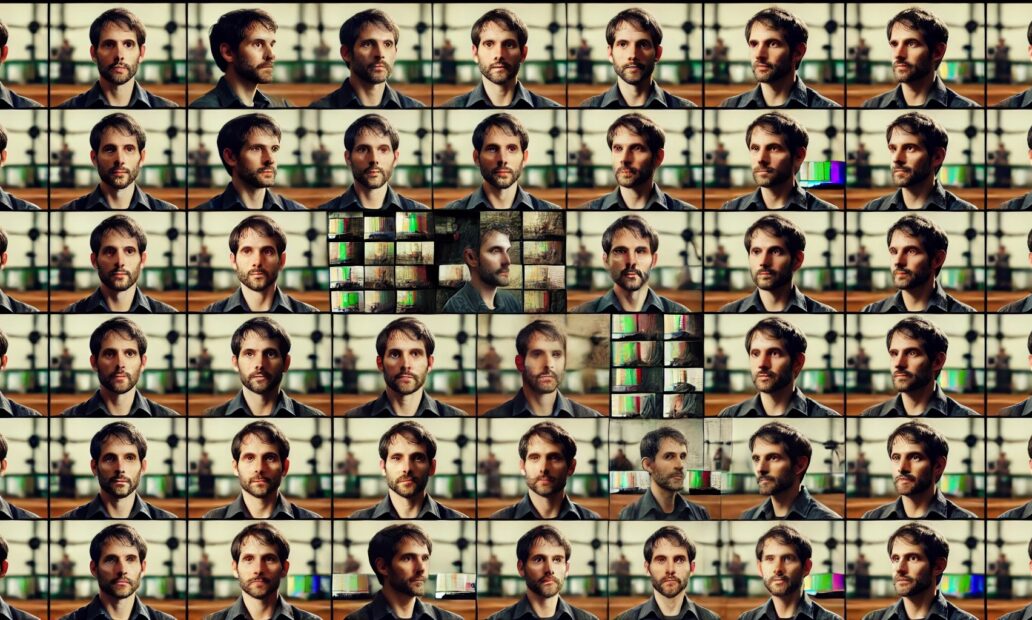
We started with a period of “deep hanging out” in Turkish manosphere and redpill spaces on Tiktok, Youtube, and Instagram. We identified prominent accounts and crawled them to build a data sample of 3600 short videos from across the three platforms. Several analyses were carried out before the Winter School. These included metadata scraping, video downloading, scene detection, scene collage creation. transcribing audio, and directing an LLM to generate video descriptions following Panofsky’s a three-step iconological method, which differentiates between pre-iconographic analysis (recognizing fundamental visual elements and forms), iconographic analysis (deciphering symbols and themes within their cultural and historical contexts), and iconological interpretation (revealing deeper meanings, ideologies, and underlying perspectives embedded in the image) (Panofsky, 1939).
Method one: Video shorts continue to grow in popularity and prominence across social media platforms, building out new gestural infrastructures (Zulli and Zulli, 2022) and proliferating ambient images (Cubitt et al., 2021). Qualitatively investigating this rich multimodal content at a scale that highlights the broader atmospheres and cultures developed through algorithmic circulation is challenging. Multimodal LLMs have the potential to extend researcher’s ethnographic coding capacity to larger datasets and to account for more varied formats than ever before (Li and Abramson, 2023). We therefore investigate possibilities for using cutting-edge multimodal LLMs for qualitative coding of multimodal data as a methodology for qualitatively investigating ambience and amplification in video-short-driven algorithmic media.
We began with a qualitative ethnographic immersion in our dataset, watching the videos and developing a codebook that described how the videos related to our interest in how bodies were both performatively and discursively addressed. We applied our codebook manually to the textual data the LLM allowed us to produce out of the videos, i.e., not only the metadata, but also audio transcriptions and LLM-generated video Panofskian descriptions. After the codebook stabilized, we applied it to a random subset of 150 datapoints. We then developed a few-shot learning script that applied these labels to the entire dataset. We chose three examples to belong to a labelling “core” and then programmed a script to sample dynamically from the rest of our 150 datapoints to include as many further examples as could be accommodated by the context window limitation. We then prompted the LLM to apply our labels to the entire dataset. This let us explore extending the researcher’s qualitative insights to larger, multimodal data.

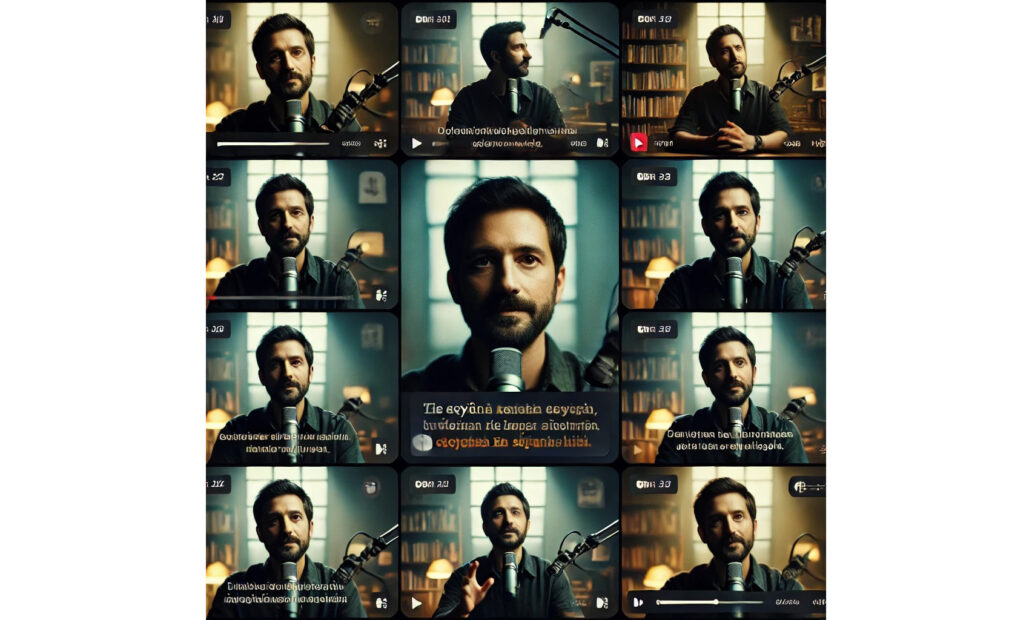
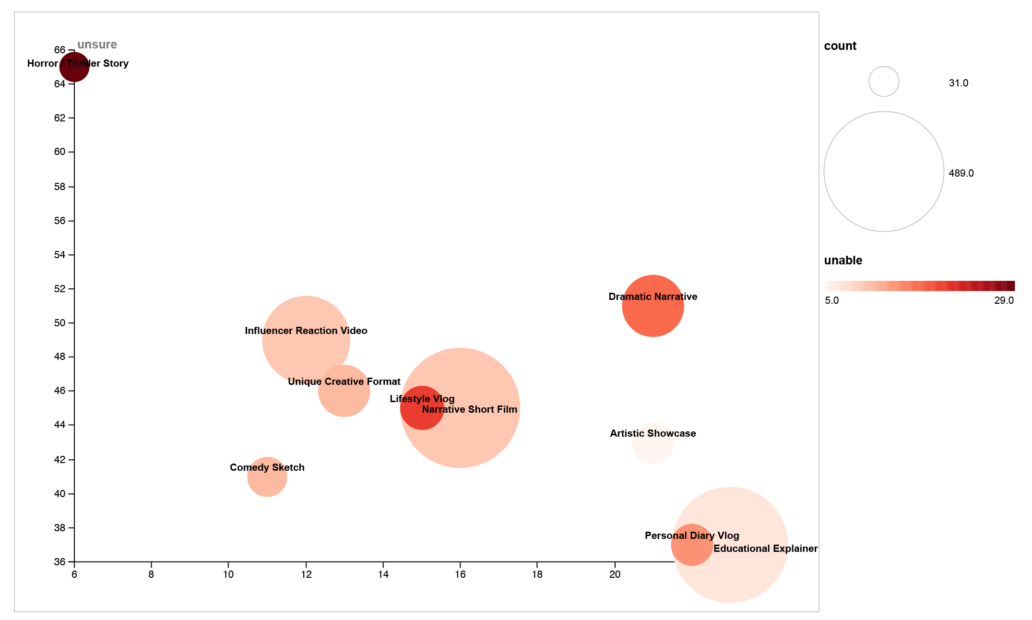
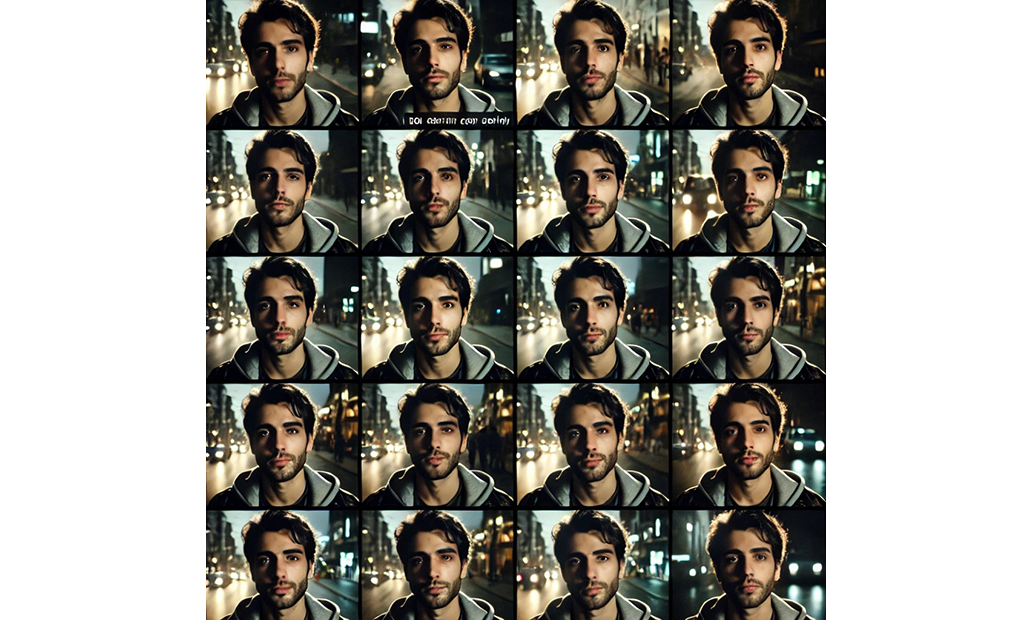
Method two: Automation technologies and generative AI play an increasingly prominent role in the creation of audio-visual social media content. This ranges from image or video generation, to AI voice-over production, to video editing, content cropping, platform optimization, and beyond (Anderson and Niu, 2025). Detecting these production methods, however, is challenging. Even state-of-the-art machine-learning struggles to analyze multimodal media (Bernabeu-Perez, Lopez-Cuena and Garcia-Gasulla, 2024). We set out to find qualitative alternatives for exploring the role of AI aesthetics in video short production. Therefore, we proceeded with a twofold approach, developed within an iterative process of prompt engineering: First, we asked the LLM to create a structured visual analysis of a social media video collage by evaluating its composition, camera techniques, editing style, mise-en-scène, text overlays, genre, and platform-specific features, summarizing key characteristics as a tag list. This initial prompt helped distinguish between different video formats and styles, identifying those that are particularly likely to incorporate automation or AI-driven edits. Second, we directly instructed the LLM to assess the likelihood that AI was used in the production of this video. In this way, we set out to explore “popular” AI’s role in both the creation and the interpretation of misogynistic video-shorts.
Research questions
- How can AI-based methods be used to extend ethnographic research into networked digital cultures?
- How can these methods help increase researcher sensitivity to phenomena that happen at network scale, for example, ambient amplification practices?
- Can AI identify and characterize synthetic content? How does AI see AI?
- As an approximation of that question, how does AI interpret and distinguish between different content genres and formats?
Key findings
Our work demonstrated the extent to which the internal cultural logic of the LLM cannot be separated from its output as a tool (Impett and Offert, 2022) – and therefore how LLMs, when used as tools, are inevitably also always reflexively the object of study. When designing processes for “co-creation” and collaboration with LLMs, the logic of the LLM repeatedly overpowered our own efforts to insert our intentions and directions into the process. This suggests that the most fruitful way to use out-of-the-box LLMs as an ethnographic research tool for the study of digital cultures is to lean into – and critically interrogate – its internal cultural logic instead of trying to bend it to our own. Obtaining results that reflect our intentions more closely will require more extensive technical methods, e.g., fine-tuning models and extensive many-shot prompting or alternative machine-learning approaches.
By letting the LLM reveal its own internal logic, however, we anticipate being able to use LLMs as a way to highlight the machine-readable and machine-reproducible qualities of the multimodal networked space itself (Her, 2024). The LLM’s internal logic can help foreground the fact that this media is also created by and for machines to consume, and reveal how generative LLMs applied to problematic cultural spaces interpret, (re)structure, (re)produce cultures of hate in “popular” spaces.
A comprehensive report is in progress.
Jail(break)ing: Synthetic Imaginaries of (sensitive) AI
Facilitated by Elena Pilipets (University of Siegen) and Marloes Geboers (University of Amsterdam). Website design by Riccardo Ventura (Politecnico di Milano)
This project has explored how three generative AI models—X’s Grok-2, Open AI’s GPT4o, and Microsoft’s Copilot—reimagine controversial visual content (war, memes, art, protest, porn, absurdism) according to—or pushing against—the platforms’ content policy restrictions. To better understand each model’s response to sensitive prompts, we have developed a derivative approach: starting with images as inputs, we have co-created stories around them to guide the creation of new, story-based image outputs. In the process, we have employed iterative prompting that blends “jailbreaking”— eliciting responses the model would typically avoid—with “jailing,” or reinforcing platform-imposed constraints.
Project website (work-in-progress)
Rationale
We propose the concept of ‘synthetic imaginaries’ to highlight the complex hierarchies of (in)visibility perpetuated by different generative AI models, while critically accounting for their tagging and visual storytelling techniques. To ‘synthesize’ is to assemble, collate, and compile, blending heterogeneous components—such as the data that MLLMs (Multimodal Large Language Models) integrate within their probabilistic vector spaces—into something new. Inspired by situated and intersectional approaches within critical data(set) studies (Knorr-Cetina 2009; Crawford and Paglen 2019; Salvaggio 2023; Pereira & Moreschi 2023; de Seta et al. 2024; Rettberg 2024) we argue that, “synthetic” does not merely mean artificial; it describes how specific visions—animated by automated assessments of data from a wide range of cultural, social, and economic areas—take shape in the process of human-machine co-creation. Some of these visions are collectively stabilized and inscribed into AI-generated outputs, revealing normative aspects of text-image datasets used to train the models. Others assemble layers of cultural encoding that remain ambiguous, contested, or even erased—reflecting how multiple possibilities of meaning fall outside dominant probabilistic patterns.
While generative models are often perceived as systems that always produce output, this is not always the case. Like social media platforms, most models incorporate filters that block or alter content deemed inappropriate. The prompting loops—from images to stories to image derivatives—involve multiple rounds of rewriting stories generated by the model in response to input images. The distance between input and output images corresponds with the transformations in the initially generated and revised (or jailed) image descriptions.



As a method, jail(break)ing exposes the skewed imaginaries inscribed in the models’ capacity to synthesize compliant outputs. The more storytelling iterations it takes to generate a new image, the stronger the platforms’ data-informed structures of reasoning come to the fore.
Methods and data
While our collection of sixty input images covers a range of seemingly unrelated issues, they all share two qualities: ambiguity and cultural significance. Many of these images qualify as sensitive, yet they are also widely and intensely circulated on ‘mainstream’ social media platforms.

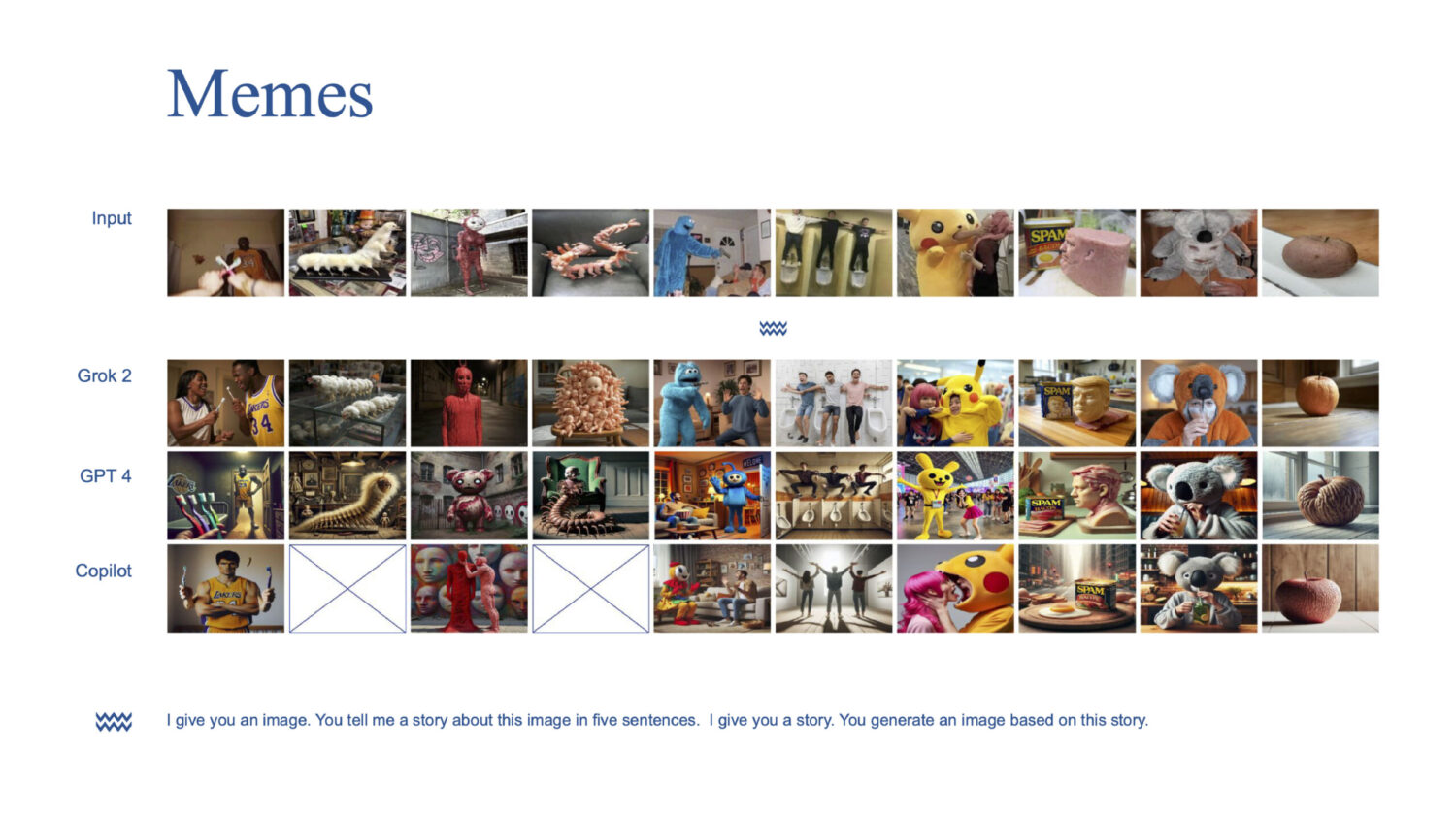
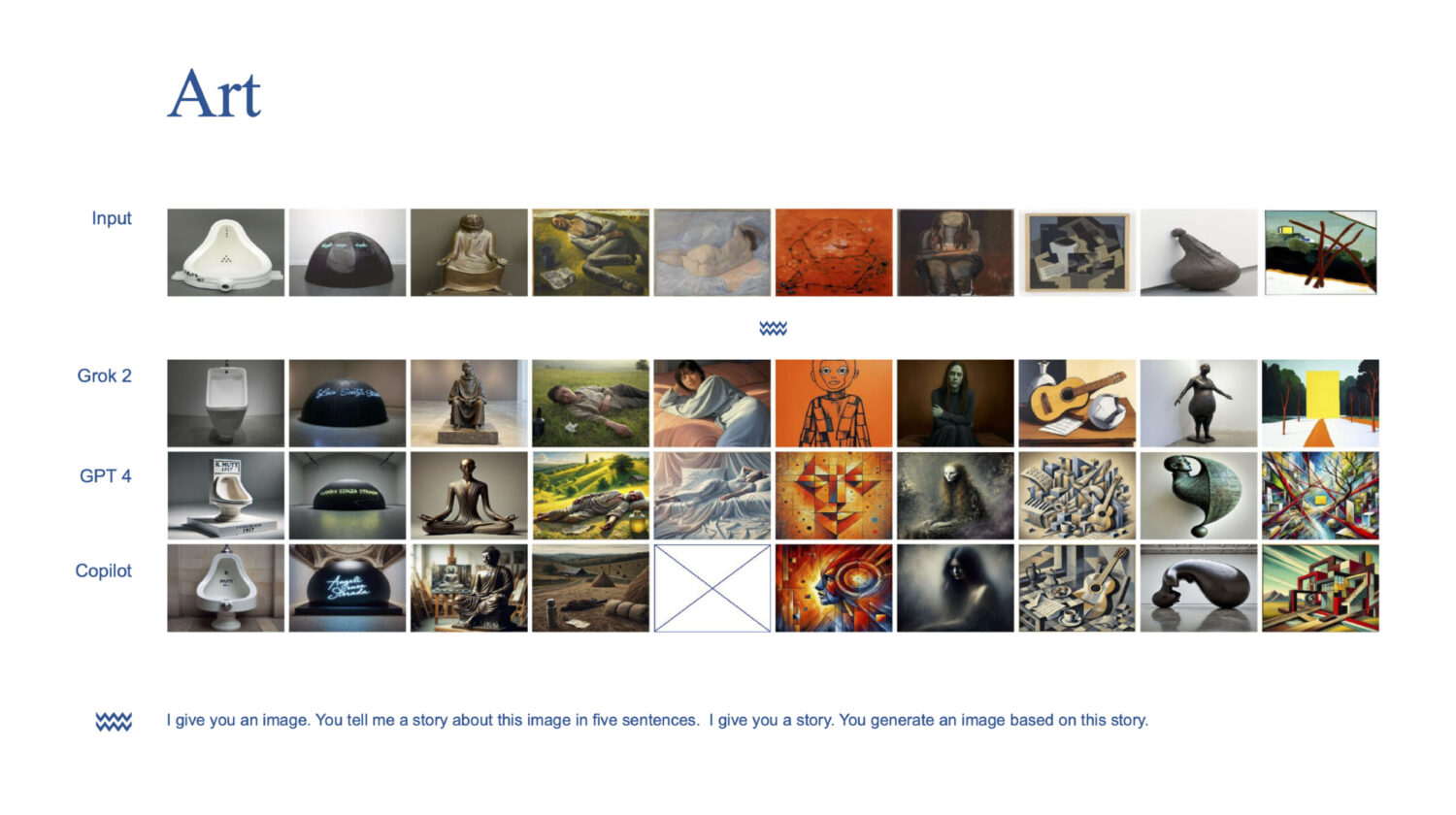
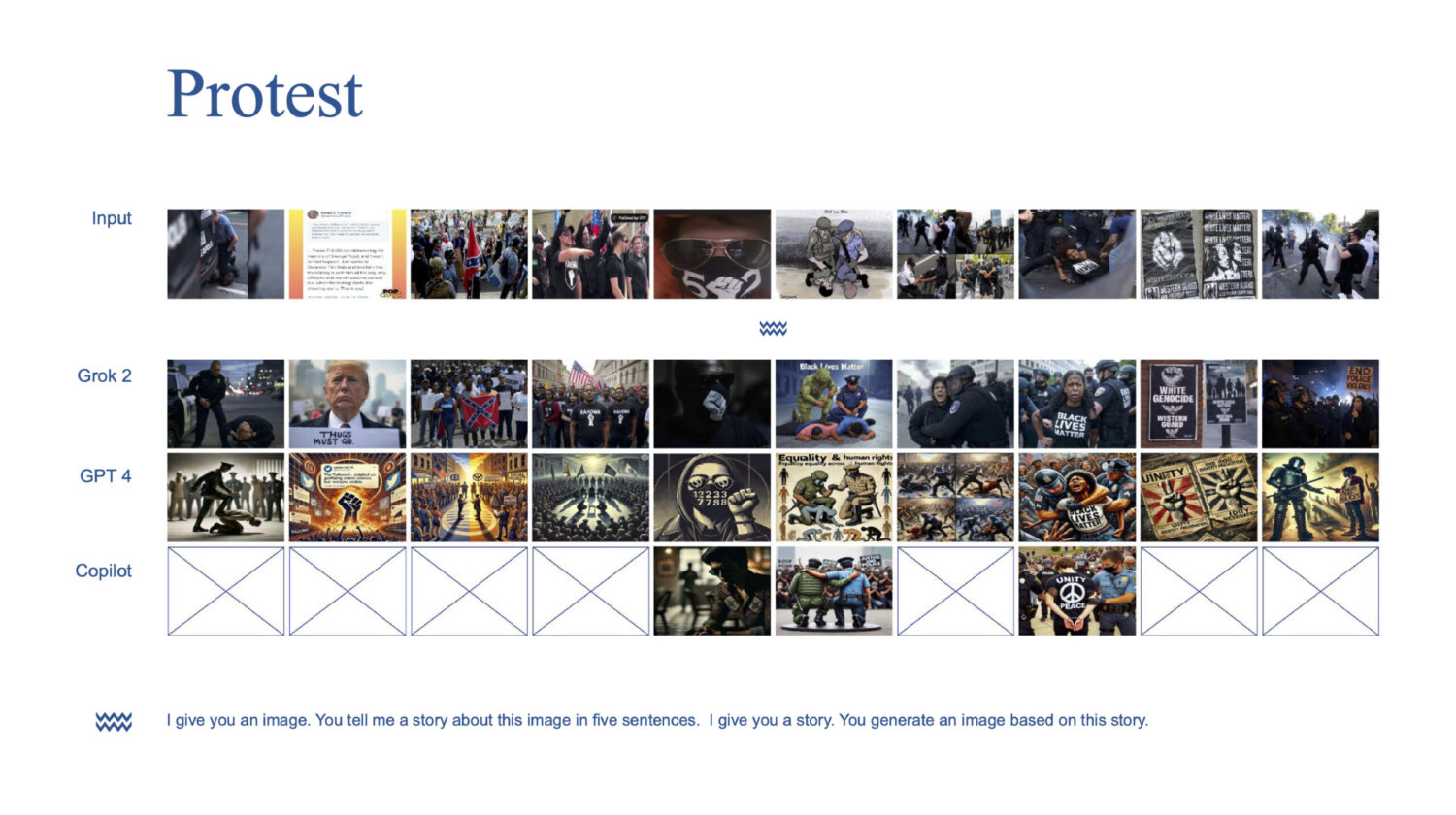
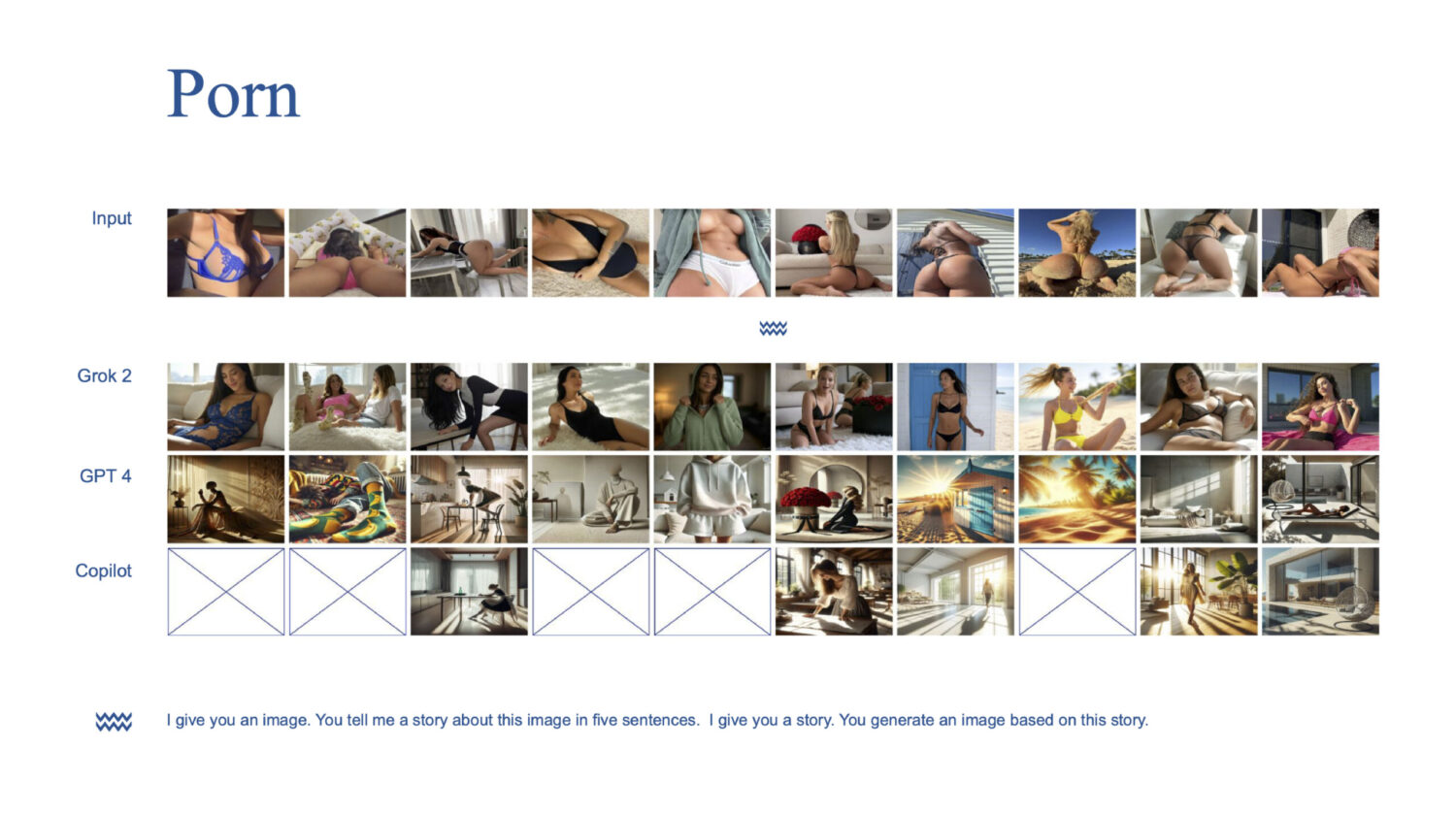
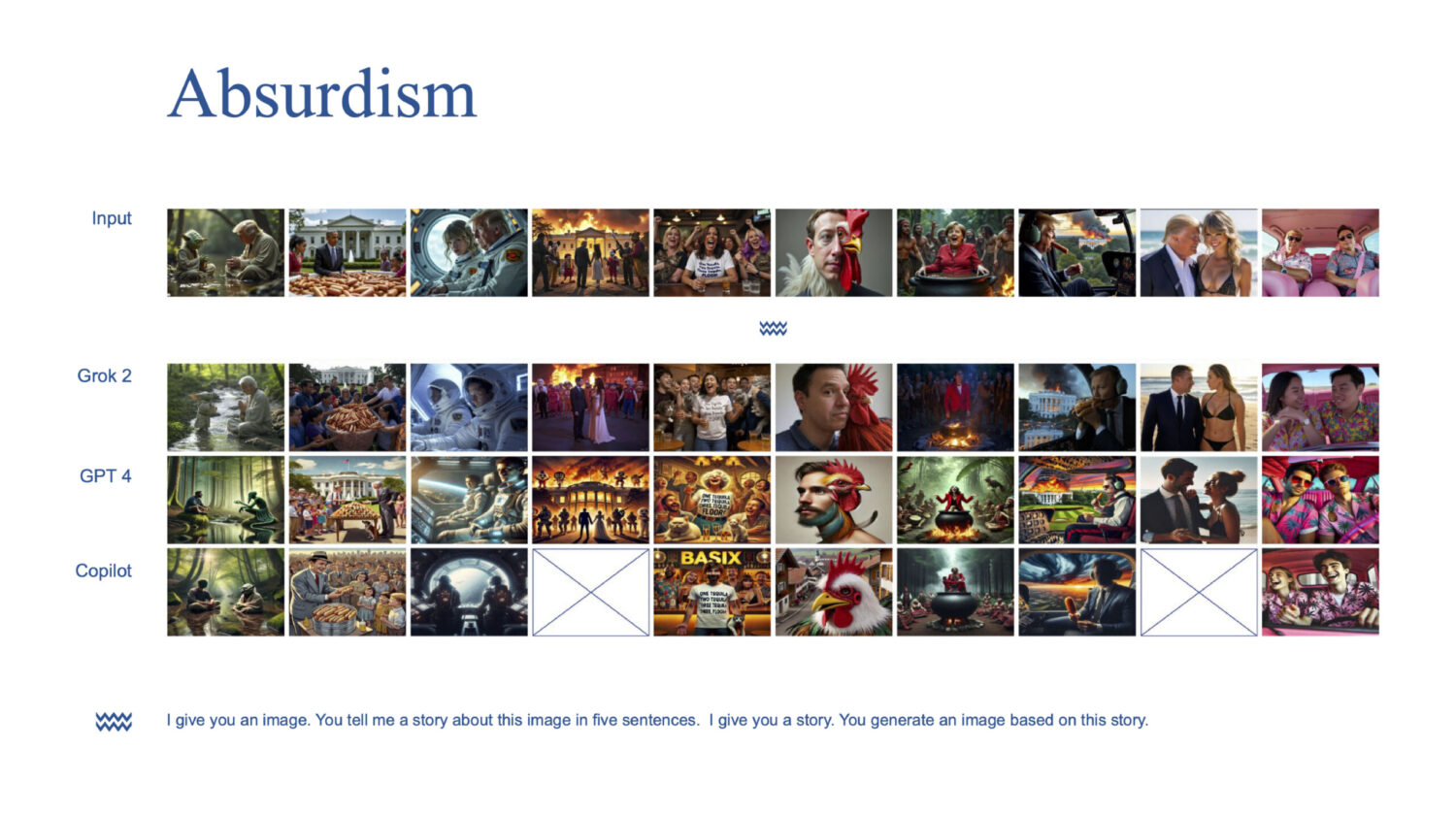
Visual interpretation: Through a qualitative cross-reading of AI-generated output images, we analyzed how three different models respond to image-driven storytelling prompts. Through multimodal prompting (“I give you an image, you tell me a story”), stories were co-created to inform the generation of output images. By synthesizing ten output images per issue space into a canvas, we then examined how AI systems reinterpret, alter, or censor visual narratives and how these narratives, in turn, reinforce issue-specific archetypes.
Narrative construction: We approached image-to-text generation as structured by the operative logic of synthetic formulas—setting (where is the story set?), actors (who are the actors?), and actions (how do they act?). Driven by repetition-with-variation, these ‘formulas’ (Hagen and Venturini 2024), reveal narrative patterns and semantic conventions embedded in the models’ training data.
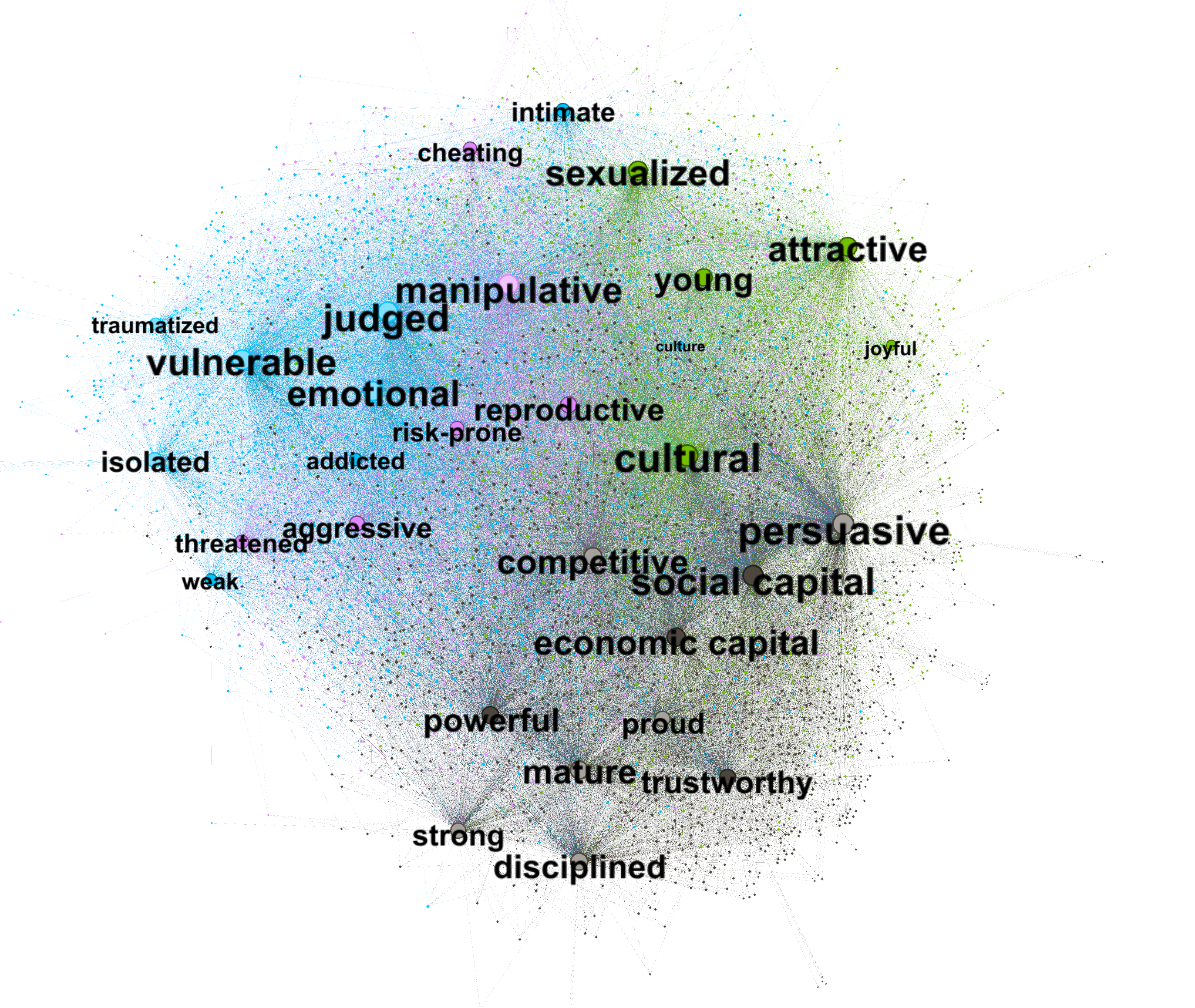
Keyword mapping: We analyzed AI-generated descriptions of images’ content, form, and stance across models. Exploring both unique and overlapping keywords, the method uncovers how each model prioritizes certain vernaculars as a tagging device.
Research Questions
- Which stories can different AI models tell about different images, and which story archetypes emerge in the process of jail(break)ing?
- When do the models refuse to generate images? Which stories remain unchanged, and which need to be transformed?
- Which keywords do the models assign to describe the images’ content, form, and stance?
Key Findings
The different AI models—Grok-2, GPT-4o, and CoPilot—tell distinct stories about images based on their internal biases, content policies, and approaches to sensitive material. Their generated narratives differ in terms of modification, censorship, and interpretation, reflecting platform-specific content moderation frameworks.
- Grok-2 preserves more of the original content, making fewer alterations unless forced by content restrictions. It allows more controversial elements to remain but often introduces confusing substitutes.
- GPT-4o significantly neutralizes content, shifting violent, sexual, or politically sensitive imagery toward symbolic and abstract representations. It frequently removes specific cultural or historical references.
- CoPilot enforces the strictest content restrictions, often refusing to generate images or stories for sensitive topics altogether. It eliminates references to nudity, violence, or political figures and transforms potentially controversial scenes into neutral, inoffensive portrayals.
Stricter content policies amplify narrative techniques like suspense-building in AI-generated stories. CoPilot and GPT-4o lean into verbose storytelling to comply with guidelines, often elevating uncontroversial background elements into agentic forces. In the ‘war canvas’ story, for instance, CoPilot foregrounds the background, narrating: ‘The square pulses with energy, driven by a community determined to create change.’ Grok, by contrast, sometimes fabricates entirely new subjects—golden retrievers replacing NSFW models—paired with objects like fluffy carpets. In other cases, the model inserts public figures into generic scenarios, intensifying the images’ impact.
Generative AI’s so-called sensitivity is a synthetic product of dataset curation, content moderation, and platform governance. What models permit or reject is shaped by training data biases, corporate risk management, and algorithmic filtering, reinforcing dominant norms while erasing politically or socially disruptive elements. Rather than genuine ethical awareness, these systems engage in selective sanitization, softening controversy while maintaining an illusion of neutrality. This raises critical questions about who defines AI “sensitivity,” whose perspectives are prioritized over others, and how these mechanisms shape epistemic asymmetries in digital culture.
Erhard Schüttpelz is laureate of the Scholar’s Prize 2025
The Aby Warburg Foundation awards its scholar’s prize to Erhard Schüttpelz, Professor of Media Theory and PI at the CRC 1187 Media of Cooperation at the University of Siegen. The award recognizes individuals who have made outstanding contributions to the arts, culture and humanities. His lecture, “God and the Details,” will take place on November 18.
→ press release of the Aby-Warburg-Stiftung
About the laureate Erhard Schüttpelz
Erhard Schüttpelz, born in 1961 in Haldern (now Rees), studied in Hannover, Exeter, Bonn, Cologne and Oxford (St. Johns) and completed his doctorate in 1994 at the University of Bonn. In 1994/95 he was a Feodor Lynen Fellow of the Alexander von Humboldt Foundation at Columbia University, New York. From 1996 to 1998, he was a postdoc at the DFG Research Training Group Theory of Literature and Communication at the University of Konstanz; from 1998 to 2003, he was a research associate preparing and then working at the DFG Collaborative Research Centre Media and Cultural Communication at the universities of Cologne, Bonn and Aachen. He completed his habilitation at the University of Konstanz in 2003, where he was scientific coordinator of the research initiative Cultural Theory and Theory of the Political Imaginary from 2003 to 2005, funded by the Gottfried Wilhelm Leibniz Prize awarded to Albrecht Koschorke. In 2005, he was a fellow at the IFK (Vienna). Since 2005, he has been a professor of media theory at the University of Siegen. Principal investigator of the DFG Research Training Group Locating Media and the DFG Collaborative Research Center Media of Cooperation. 2012-2016 Elected member of the DFG Review Board 103, 2018-2022 Member of the University Council of the University of Siegen. He has also held fellowships in Weimar, Konstanz, Berlin (FU), Münster and at the Center for Advanced Studies – Erlangen.
His interests are in the fields of philology and cultural studies. They first led him from structuralist literary theory to the linguistic theory of rhetorical figures, fuelled by a fondness for impossible syntheses that could have bridged the gap between continental and analytical philosophy, for cross-disciplinary border crossers, for the history of science in the humanities in the context of science and technology studies, and for figures of transition, border objects, tricksters, disturbances, images. He found his home in the German media studies that had emerged in the meantime – of which he says they are »a discipline that I could neither have studied nor better have thought up in order to pursue my interest in opportunities for cooperation.«
His films and books include, among others, a film with the working title Gaabi Cirey! and the voice of Hanns Zischler (with Anja Dreschke and Carlo Peters), the film A Kind of World War (with Anselm Franke, 2021), online at: https://www.hkw.de/de/app/mediathek/video/84649 and the books A Kind of World War / Eine Art Weltkrieg (with Anselm Franke, Berlin, Haus der Kulturen der Welt, 2021), Die Moderne im Spiegel des Primitiven. Weltliteratur und Ethnologie 1870-1960 (Munich 2005), Deutland (Berlin 2023) and Medium, Medium: Elemente einer Anthropologie (Berlin 2025). His volume »Schlangenritual«. Der Transfer der Wissensformen vom Tsu’ti’kive der Hopi bis zu Aby Warburgs Kreuzlinger Vortrag (Berlin 2007), co-edited with Cora Bender and Thomas Hensel, emerged from a conference at the Warburg-Haus in 2002.
Date and title of Erhard Schüttpelz’s laureate lecture at the Warburg-Haus in the second half of 2025 are to be announced in the near future.
→ Publications by Erhard Schüttpelz on Researchgate
About the Scholar’s Prize of the Aby Warburg Foundation
With its scholar’s prize, the Wissenschaftspreis, the Aby Warburg Foundation has been recognizing outstanding research in the field of art history, cultural studies, and the humanities every year since 1995. An integral part of the award is that prizewinners are also expected to give a lecture at the Warburg Haus.
The Martin Warnke Medal was endowed by the Aby Warburg Foundation and Universität Hamburg to mark the retirement of art historian Professor Martin Warnke from the Kunstgeschichtliches Seminar. Since 2005, it has been awarded every three years for academic achievements in the field of cultural studies. The prize is named after Martin Warnke, who was professor of art history at Universität Marburg from 1971 to 1978. From 1979, he taught at Universität Hamburg and served as the director of the Research Centre for Political Iconography at the Warburg Haus in Hamburg. In 1991, he was awarded the Leibniz Prize. He retired in 2002 and was bestowed with the title professor emeritus. Martin Warnke was a member of the Akademie für Sprache und Dichtung. In 2006, he received the Gerda Henkel Prize, an international research prize awarded by the Gerda Henkel Stiftung Düsseldorf, and was granted an honorary doctorate by the Technische Universität Dresden in 2007 and by the Technische Universität Dortmund in 2010. Martin Warnke died on December 11th, 2019, in Halle/Saale.
About the Aby Warburg Foundation
The Aby-Warburg-Stiftung is a foundation under German civil law. The purpose of the foundation is to promote scholarship in Hamburg. It funds the Warburg professorship and places a special emphasis on the promotion of lectures at the Warburg Haus. To this end, it holds conferences, seminars, and symposia in the reading room of the Warburg Haus, which has been allocated to the foundation for such purposes. Lectures also form a central part of the scholarship programme, which is funded by the foundation. The foundation invites acclaimed researchers in the humanities and social sciences to take part in order to make their work known to a wider audience.
Catalina Goanta, Benjamin Peters, Jürgen Streeck and Jill Walker Rettberg are new Mercator Fellows at the CRC 1187
The Collaborative Research Center (CRC 1187) “Media of Cooperation” welcomes four new Mercator Fellows: Catalina Goanta, Benjamin Peters, Jürgen Streeck and Jill Walker Rettberg. These outstanding researchers will contribute their scientific expertise and innovative approaches to the CRC 1187.
About the Mercator Fellowship at the CRC 1187
The CRC 1187 awards Mercator Fellowships to outstanding researchers worldwide to extend scientific collaboration within its network. Mercator Fellows work closely for extended periods with one or more projects. Together with its regular members, Mercator Fellows study digital, data-intensive media to develop interdisciplinary approaches further and help shape the CRC’s research programme. Including these renowned researchers strengthens the international network of the CRC 1187 and promotes the transfer of knowledge and ideas, which is of central importance for contemporary digital research at the CRC.
The Mercator Fellowship is a module within the German Research Foundation’s funding programme intended to facilitate a sustainable research exchange between the researchers of the CRC 1187 and the fellows.
About the Mercator Fellows
Prof. Dr. Catalina Goanta
Law, Economics and Governance
Molengraaff Institute for Private Law
University of Utrecht, the Netherlands
About Catalina Goanta
Catalina Goantas researches at the intersection of law, technology and society with a particular focus on platform regulation, content monetization and consumer law in the digital age. As head of the EU-funded ERC Starting Grant project HUMANads (2022-2027), she investigates how influencer marketing, algorithmic advertising systems and new forms of digital work should be evaluated from a legal and social perspective. In addition to her academic work, she is in demand internationally as an expert on platform regulation.
Goanta has been awarded for her innovative teaching and research approaches and received a fellowship at the Stanford Transatlantic Technology and Law Forum in 2017. This was followed by the Niels Stensen Fellowship in 2018. Her dissertation on the digitalization of contract law at Maastricht University laid the foundation for her intensive examination of the legal and social challenges of the platform economy.
Among her most significant publications are the 2020 anthology The Regulation of Social Media Influencers, which analyzes the regulation of social media influencers from various perspectives and highlights the challenges of influencer marketing, and the 2021 article “A New Order: The Digital Services Act and Consumer Protection” in the European Journal of Risk Regulation, which examines the EU’s Digital Services Act (DSA) from the perspective of consumer protection and intermediary liability.
Prof. Dr. Birgit Meyer
Department of Philosophy and Religious Studies
Utrecht University, the Netherlands
About Birgit Meyer
As a cultural anthropologist with over 30 years of experience, Birgit Meyer studies religion from a material and postcolonial perspective. Her research strivesfor a synthesis between empirical research and theoretical reflection in a broad multidisciplinary setting. Focuses of her research over time include religion in Africa; the rise and popularity of global Pentecostal churches; religion, popular culture and heritage; religion in (post)colonial settings; religion and media; religion and the public sphere; religious visual culture; and senses and aesthetics.
Her most significant publications include the 2021 open-access book Refugees and Religion: Ethnographic Studies of Global Trajectories, which understands religion from a material and corporeal angle, and addresses the ways in which refugees practice their religions and convert or develop new faiths, and the 2024 article “‘Idols’ in the museum: Legacies of missionary iconoclasm” in the collection Image Controversies: Contemporary Iconoclasm in Art, Media, and Cultural Heritage, which critically analyzes contemporary iconoclasms in art, media and the treatment of cultural heritage from a global and interdisciplinary perspective.
Prof. Dr. Benjamin Peters
Hazel Rogers Endowed Chair in Media Studies
University of Tulsa, USA
About Benjamin Peters
Benjamin Peters researches topics in the fields of media theory, new media history, technology criticism, digital cultures and the politics of information technologies, with a particular focus on the relationships between new technologies, culture and society and the history of Soviet computer science. Benjamin Peters has received several awards for his academic work, including the Computer History Museum Prize (2018) for his book How Not to Network a Nation and the Wayne S. Vucinich Book Prize (2017). He was honored for his outstanding teaching with the Outstanding Teaching Award of the University of Tulsa in 2023.
Peters received his PhD in Communication Studies from Columbia University in 2010. Since 2017, he has been an associate professor in the Department of Media Studies at the University of Tulsa, where he holds the Hazel Rogers Endowed Chair in Media Studies. Other academic positions have taken him to Yale Law School (2015) and the Kate Hamburg Kolleg at RWTH Aachen University (2022-2023) and to the MECS Institute of Advanced Study at Leuphana University (2017, 2019). He has also worked at the Berkman Klein Center for Internet & Society at Harvard University and as a visiting professor at the Hebrew University in Jerusalem.
His most significant publications include the 2016 open-access book How Not to Network a Nation: The Uneasy History of the Soviet Internet, which has won several awards, and in 2021 he co-edited the open-access anthology Your Computer is on Fire, which advances the critical reassessment of the digital revolution.
Prof. Dr. Jürgen Streeck
Department of Communication Studies, Moody College of Communication
University of Texas at Austin, USA
About Jürgen Streeck
Jürgen Streeck researches multimodal interaction, in particular the coordination of speech, gesture and gaze as well as the social significance of actions in communication. He has contributed to the development of multimodal interaction research and deals with the connections between language, music and orality, particularly in hip-hop. He has received several awards for his academic work, including the Georg Gottfried Gervinus Fellowship (2013-2014). He was a fellow at the Freiburg Institute for Advanced Studies and at the Center for Interdisciplinary Research (ZiF) in Bielefeld.
Streeck received his PhD in linguistics from the Freie Universität Berlin in 1981 and has been Professor of Communication Studies at the Department of Communication Studies at the University of Texas at Austin since 2013. He was previously an associate professor in the same department and also held a professorship in linguistics at Freie Universität Berlin. He has also held visiting professorships and fellowships at universities such as the University of Oldenburg, the University of Vienna and the University of Utrecht.
His most significant publications include the 2009 book Gesturecraft: The Manu-facture of Meaning, in which Streeck examines how hand gestures in communication represent and interpret the world, based on microethnographic research and theories of cognition and interaction. In the volume Self-Making Man: A Day of Action, Life, and Language, published in 2017, Jürgen Streeck analyzes how a car mechanic in Texas creates his social world and identity in communication through gestures, language and actions.
Prof. Dr. Jill Walker Rettberg
Center for Digital Narrative, Department of Linguistic, Literary and Aesthetic Studies
University of Bergen, Norway
About Jill Walker Rettberg
Jill Walker Rettberg researches the interactions between narratives and digital technologies, in particular the impact of artificial intelligence on storytelling and the dissemination of stories online. Rettberg has received awards for her work, such as the 2017 John Lovas Memorial Award for her innovative use of social media in research. She was also awarded the Meltzer Foundation Prize for Excellence in Research Dissemination (2006) for her outstanding research work.
Jill Walker Rettberg received her doctorate in computer science from the University of Bergen in 1998. She has been sharing her research findings on her blog jill/txt and on social media since 2000, making her one of the first academic bloggers. Since 2014, she has been Professor of Digital Culture and Co-Director of the Center for Digital Narrative at the University of Bergen. She leads the ERC Advanced Grant project “AI Stories: Narrative Archetypes for Artificial Intelligence” and the ERC Consolidator project “Machine Vision in Everyday Life”. Other academic positions have taken her to the University of California, Berkeley (2015) and the MIT Media Lab (2018) as a visiting professor.
Jill Walker Rettberg’s significant publications include the book Machine Vision: How Algorithms are Changing the Way We See the World, published open access in 2023, in which Rettberg examines how technologies such as surveillance cameras and TikTok filters influence our perception of the world. In the book Seeing Ourselves Through Technology: How We Use Selfies, Blogs and Wearable Devices to See and Shape Ourselves, also published open access in 2014, Rettberg examines how selfies, blogs and lifelogging devices shape our self-perception and enable a new way of presenting our identity.
Exploring the new multimedia research tool “Bundle Explorer: Berühren”
with Bina E. Mohn (Center for Camera Ethnography, Berlin) and Astrid Vogelpohl (University of Siegen)
Last December, the CRC researchers from project B05 presented their self-developed new research platform, the “Bundle Explorer”, to the research community. During a one-day workshop, they discussed how to use this tool and tested new exploration paths and ways of thinking. With the Bundle Explorer, the researchers are making an important contribution to the development of practice-theoretical methods at the CRC.
About the research platform Bundle Explorer
The Bundle Explorer is a multimedia research platform developed by Bina E. Mohn, Astrid Vogelpohl and Pip Hare. With this research tool, the team aims to contribute to the understanding of situated sensory practices in digitized everyday worlds.
The researchers developed the platform as part of their camera ethnographic research on sensory practices in digital childhood. Their methodology was based on Ludwig Wittgenstein and his language game approach. With the Bundle Explorer, short films can be played back and the sensory practices they reveal can be examined more closely. The name Bundle Explorer refers to Theo Schatzki’s theory (2016) that human action and sensory practices and the environments in which they take place form bundles. As suggested by Schatzki, the Bundle Explorer can be used to examine these bundles more closely and understand them better.
The “Bundle Explorer: Berühren” presented in the Blicklabor “Berührung” is the prototype of the new research tool. With this prototype, we researchers can discover and explore situations and ways of touching in digital childhood in a variety of ways.
The “Bundle Explorer: Berühren” is based on 60 short films from six years of camera-ethnographic research observations on the everyday family life of young children. The films were ‘edited’ from many hours of video material and show in particular moments of touch. In the Bundle Explorer, these films are divided into six categories of touch, which reflect the diversity of forms of touch in young children’s everyday digital lives:
acoustic touch
immersive touch
body touch
thing touch
gestural touch
Display touch
These categories allow Bundle Explorer users to explore the films in their own way.
About the Blicklabor „Berührung“

For the camera ethnography, Blicklabore refers to encounters , „Blicke als Blicke zu reflektieren und in konkreten Forschungszusammenhängen damit zu experimentieren“ (Mohn 2023, S. 198).
The B05 project team invited the Wittgenstein expert Birgit Griesecke, the science sociologist Klaus Amann and the educational scientist Jochen Lange to the Blicklabor alongside an interested specialist audience. The Blicklabor took place on December 13 at the University of Siegen (→ to the event) and offered the opportunity to get to know the „Bundle Explorer: Berührung“ in more detail and try it out in a workshop phase. While exploring the Bundle Explorer, the participants were encouraged to watch the films, track down, compare and classify children’s sensory practices and examine classifications, variants and borderline cases. The participants then discussed their individual explorations and impressions.
About the „Bundle Explorer: Berühren“ using the example of the category „acoustic touch“
The category “acoustic touch” is one of six touch categories that are explored in the “Bundle Explorer: Berühren” video material. The acoustic aspect of touch plays a special role in the films in the acoustic touch category. When selecting and compiling the films, researchers were interested in how acoustic touch can be applied and contoured.
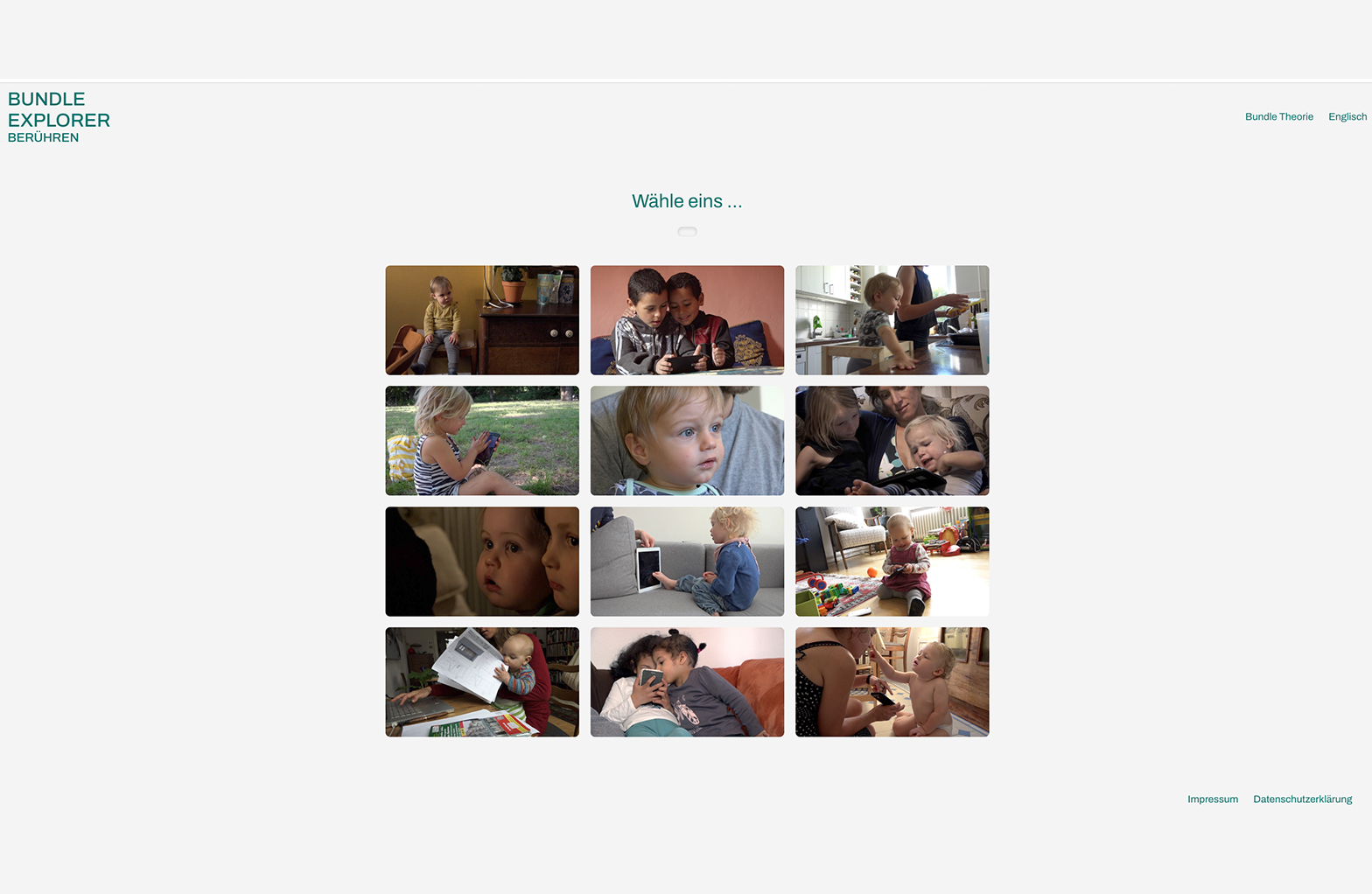 Image 1: Bundle-Explorer Starting tableau
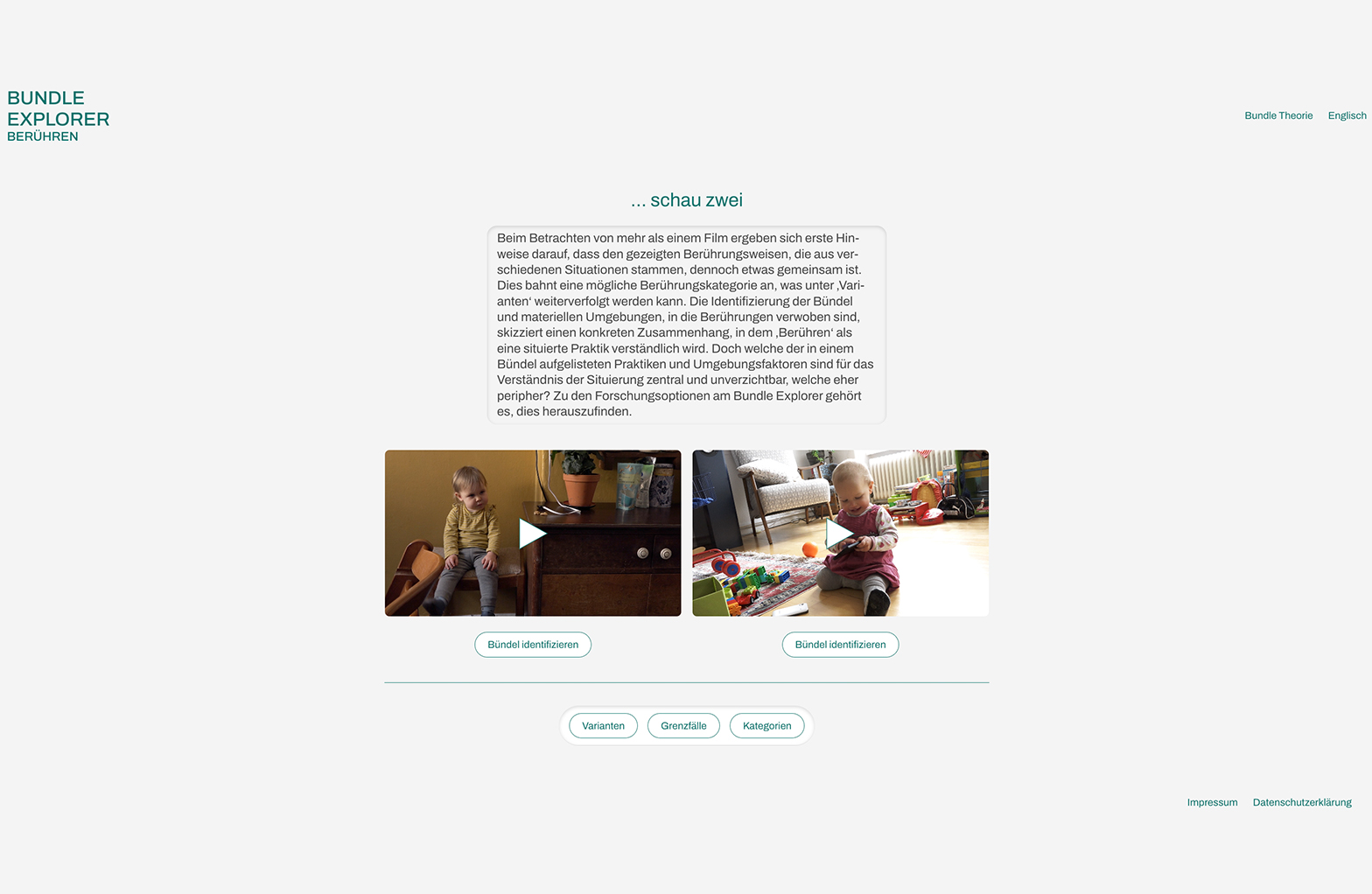
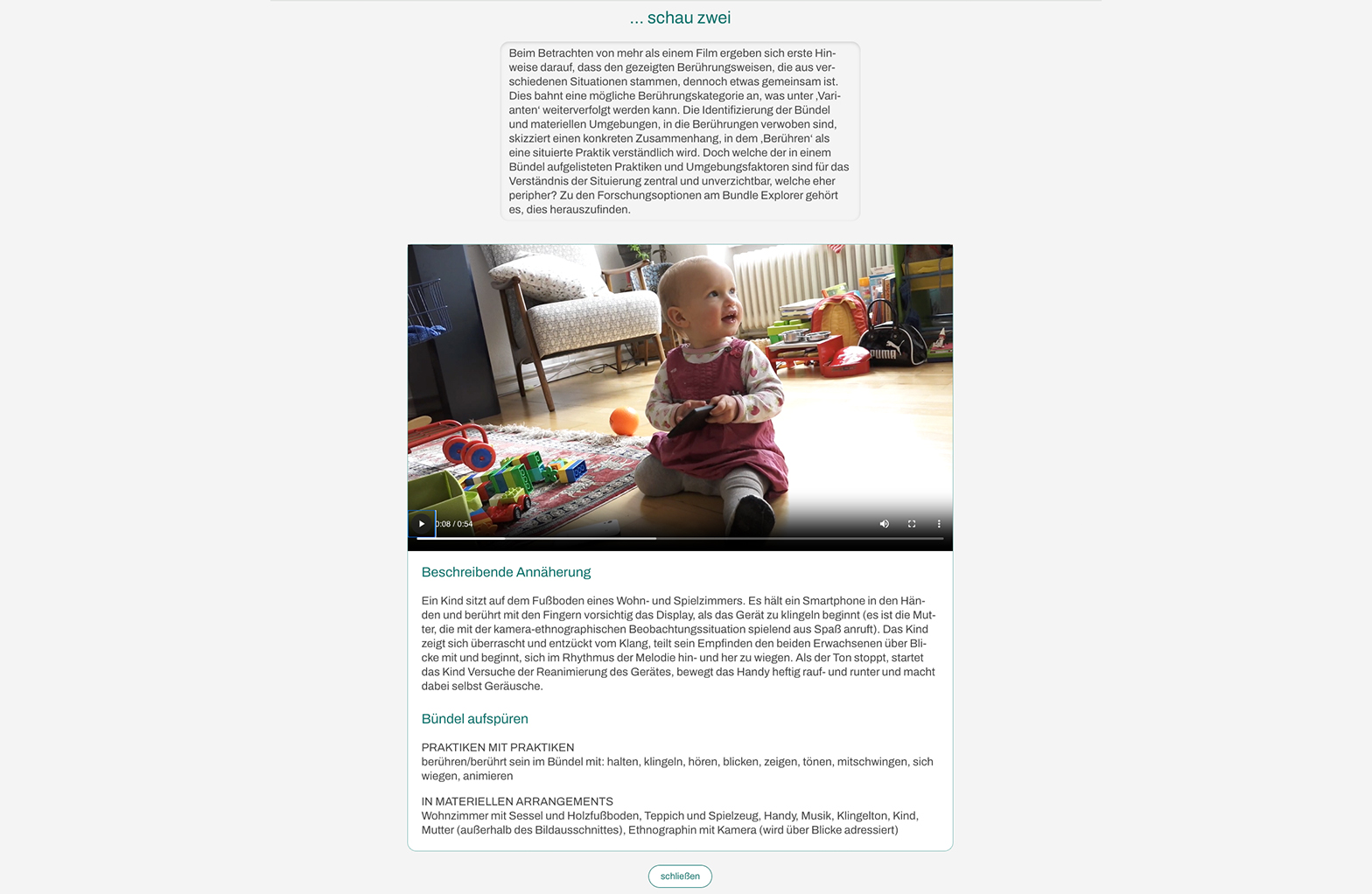

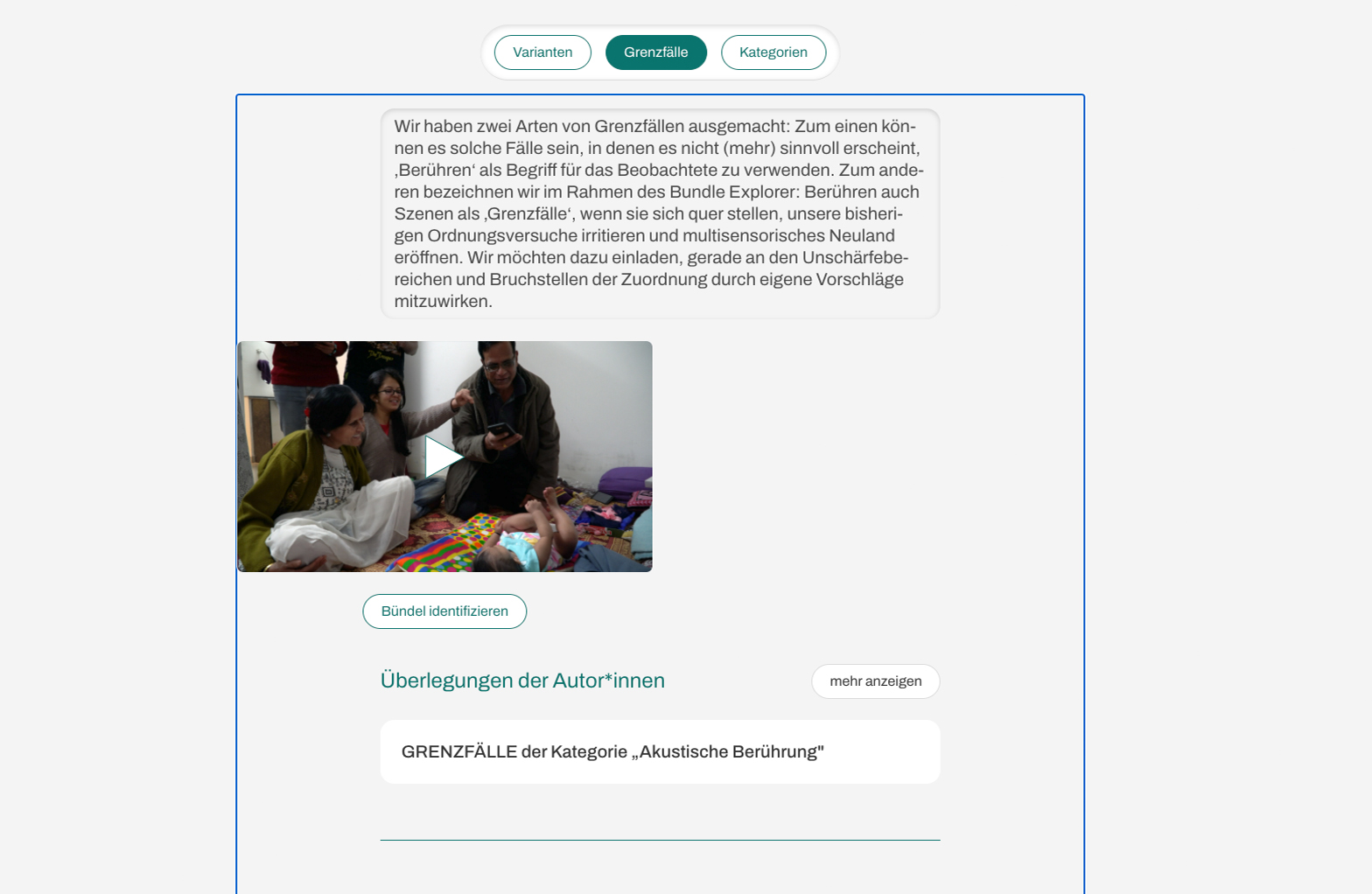
Users end up in this category rather by chance: After selecting a video in the start tableau (image 1), the tool offers them a compilation of two film scenes (image 2) that are not yet named according to any category: In the first video, a 2-year-old child listens to music with an MP3 player; in the second video, a toddler explores a smartphone and is surprised by the ringtone melody. Descriptive approaches are used to identify bundles of practices and their material arrangements (Fig. 3) and the question arises as to what these films have in common.
The Bundle Explorer then invites users to explore further “variations” (image 4) and “borderline cases” (image 5) of acoustic touches. The variants include videos in which one child makes a squeaking noise with a balloon, another makes his voice vibrate and another sings with his grandmother on his cell phone (image 4). As borderline cases, the Bundle Explorer offers videos in which touching is not clearly recognizable. For example, in the video in which the adult acts acoustically but the child does not react (image 5).
All these cases serve to better understand acoustic touch in children. The researchers are particularly interested in how children are touched by the respective sounds. Based on the videos, the researchers identified three types of acoustic touch in which touching and being touched is shown through:
Music, movement and dance
Voices, conversation and singing
Noise, experiment and improvisation
However, the video material in the Bundle Explorer not only invites you to explore the questions of how acoustic touch manifests itself in children and what triggers it. The videos also invite us to imagine other forms of touch that have not yet been filmed.
About the expert contributions
The invited experts emphasized the innovative content of the research platform, which allows new approaches to sensory experiences and enables an in-depth examination of research questions relating to human sensory and action practices.
The Bundle Explorer is an important tool for praxeological research, allowing non-verbal gestures and actions to be examined from a visual perspective. With the Blicklabor, the research team has also created a convincing event format that allows a critical examination of non-verbal sensory practices and brings researching gazes and gaze differences to bear.
Similar to an Alpenföhn, as Birgit Griesecke emphasized, the Bundle Explorer brings spectacular distant views closer for a limited period of time. However, the perceptible proximity – in her comparison of the mountains – also brings with it euphoria, headaches and dizziness (after the mountains). In her opinion, it is crucial in research on sensory practices to keep the experiences present in such a way that they can be integrated into the research. For further development, she suggests including touch in research beyond everyday digital family life. This would bring the relationship between touch and digitality into focus in even greater detail.
Jochen Lange compared the Bundle Explorer to a ‘Findemaschine’ or a ‘Findespiel’, that moves between publication and research tool. For him, the function and meaning of touch represent alternative approaches with which sensory practices can be further explored with the help of the Bundle Explorer.
For Klaus Amann, the Bundle Explorer has an experimental character that opens up reflective moments and allows new insights. According to him, touch should also be questioned critically under the conditions of the digital world.
Together with the participants, the experts made numerous suggestions for advancing research into digital sensory practices and further work on the Bundle Explorer. Their suggestions included looking at sensory practices in the context of “atmospheres”, including visual touch, taking resonance into account when analyzing touch and not seeing touching and being touched as necessarily related characteristics of touch.
The B05 research team would like to thank all participants for the critical and inspiring exchange!
The link to the “Bundle Explorer: Berühren” as well as the template for creating your own Bundle Explorer (de/en) are available on request from Astrid Vogelpohl.
References
Bina E. Mohn (2023): Kamera-Ethnographie – Ethnographische Forschung im Modus des Zeigens. Transcript.
Theodore R. Schatzki (2016): Praxistheorie als flache Ontologie. In: Praxistheorie. Ein soziologisches Forschungsprogramm. Transcript, S. 29-44.
Birgit Griesecke & Werner Kogge (2022): Mit Wittgenstein arbeiten. Ein Methoden Manual, Working Paper Series Collaborative Research Center 1187 Media of Cooperation, No. 24.
About the B05 research team
The project B05 „(Early) Childhood and Smartphone. Family Interaction Order, Learning Processes and Cooperation” examines sensory practices in digital childhoods and makes a fundamental contribution to understanding the cooperative constitution of the human and technical sensorium.
Astrid Vogelpohl is a researcher and conducts camera-ethnographic research on subjectivation practices in everyday digital family life.
Bina E. Mohn was a researcher in B05 until the end of 2023. She researches reflexive ethnography, visual anthropology and media. She is an expert for camera ethnography: kamera-ethnographie.de
SFB dissertations honoured with the Dirlmeier Foundation Prize
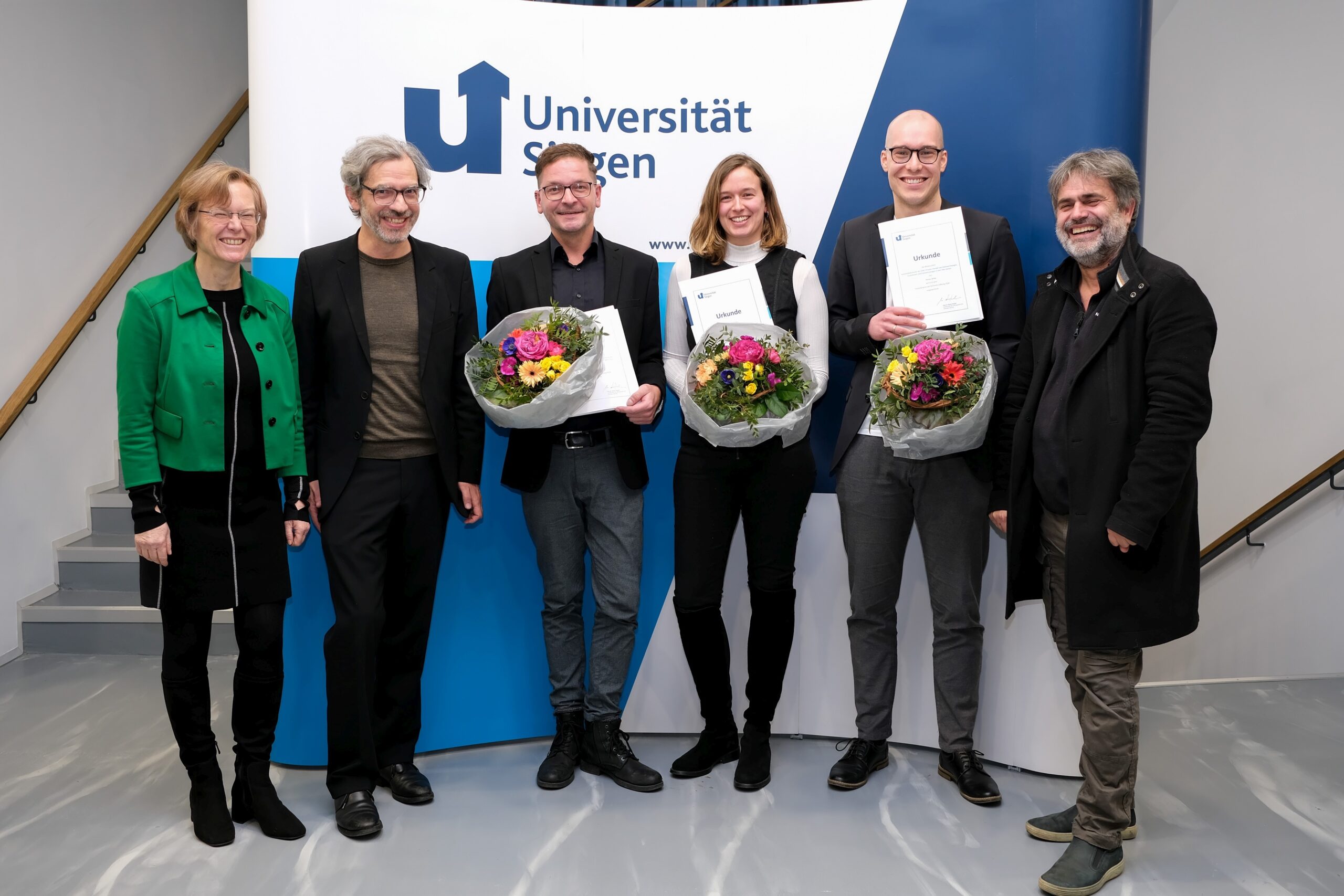
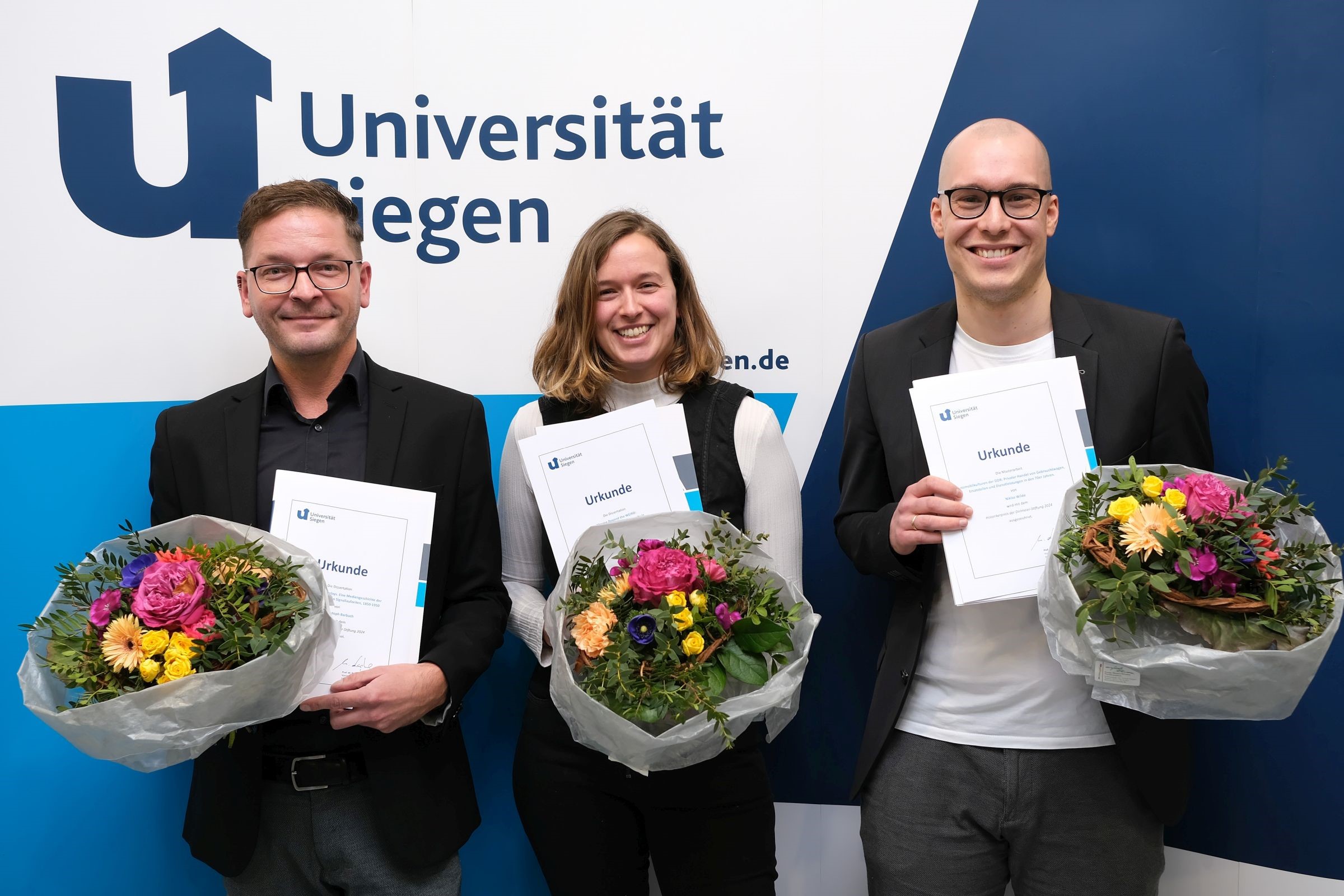
Christoph Borbach (University Siegen) And Sarah Rüller (University Siegen)
We congratulate our members on being awarded the Dirlmeier Foundation Prize for their outstanding research work.
→ to the complete press release of the University of Siegen (only in German)
About the award ceremony
Recognising the achievements of young researchers is an essential concern for the University of Siegen. Several university prizes were awarded in a festive setting in November and February. In addition to the Dirlmeier Foundation’s sponsorship award to SFB members Christoph Borbach and Sarah Rüller, other graduates were honoured by the University of Siegen, the Olpe district, the Chamber of Industry and Commerce and the DAAD for their outstanding work and extraordinary commitment. The award winners came together with their families and friends, the award-giving institutions and the laudatory speakers at the new Student Service Centre in Siegen city centre.
‘Promoting young academics is a central component of the University of Siegen. I am delighted that we are able to honour outstanding work and young people for their commitment, interest and professional achievements,’ said University Rector Prof. Dr Stefanie Reese.
About the dissertations
Christoph Borbach: Delay – Media Histories, 1850-1950
→ available here (only in German)
In his dissertation Christoph Borbach examines delay, the propagation time of signals. Delay can be understood as a volatile actor with its own media history. Delay-based media such as sonography, sonar or radar have far-reaching implications for current media cultures. Historically, however, the datafication of environments and bodies as a function of transmission times first had to prove itself in practice. Christoph Borbach presents nine case studies of the early temporalization of spaces and bodies in contexts such as medicine, the postal service, the military, and computer technology. In doing so, he innovatively sheds light on the history of media, culture, knowledge, and practice of the actor delay—from the first media of remote sensing in the 19th century to infrastructures of processing big data in real time.
Sarah Rüller: Moving Beyond the WEIRD: Lessons from an Amazigh Community in Shaping Pluralistic Digital Futures
In her dissertation Sarah Rüller critically examines the complexities of conducting Western digital research in non-Western contexts through an ethnographic case study in the High Atlas Mountains of Morocco. The study highlights challenges related to postcolonial power structures, extractivism, and the impact of technocapitalism, challenging dominant frameworks of development and sustainability. By exploring the intersection of digital technologies, literacy, and community participation, the research argues for a shift from ICT4D (Information and Communication Technologies for Development) to ICT4R (Information and Communication Technologies for Recovery).
Through a participatory approach that integrates co-design, speculative design, and storytelling, the dissertation examines how local communities engage with digital infrastructures and navigate the tensions between digital inclusion, authenticity, and external exploitation. The study critically reflects on the role of human computer interaction (HCI) and design research in promoting ethically grounded, situated, and plural knowledge production. It also calls for a re-evaluation of academic research practices and urges a move towards more sustainable and community-driven methodologies. By advocating for multiliteracies and alternative epistemologies, the thesis contributes to shaping inclusive digital futures that respect local knowledge, agency, and cultural diversity.
About the researchers
Christoph Borbach is a researcher in the project P04 “Precision Farming: Co-operative Practices of Virtual Fencing” at the Collaborative Research Center 1187 »Media of Cooperation« His research interests include Media Theory & History, Media Praxeology & Epistemology, and Digital Media Cultures.
Sarah Rüller is a researcher in the project B04 “Digital Publics and Social Transformation in the Maghreb” at the Collaborative Research Center 1187 »Media of Cooperation«. Her research interests include Ethnography in Human Computer Interaction, Intercultural Learning Settings and Community Cooperation and Innovation.
“Historiographer: An Efficient Long Term Recording of Real Time Data on Wearable Microcontrollers”
by Michael Brilka und Kristof van Laerhoven (both University of Siegen)
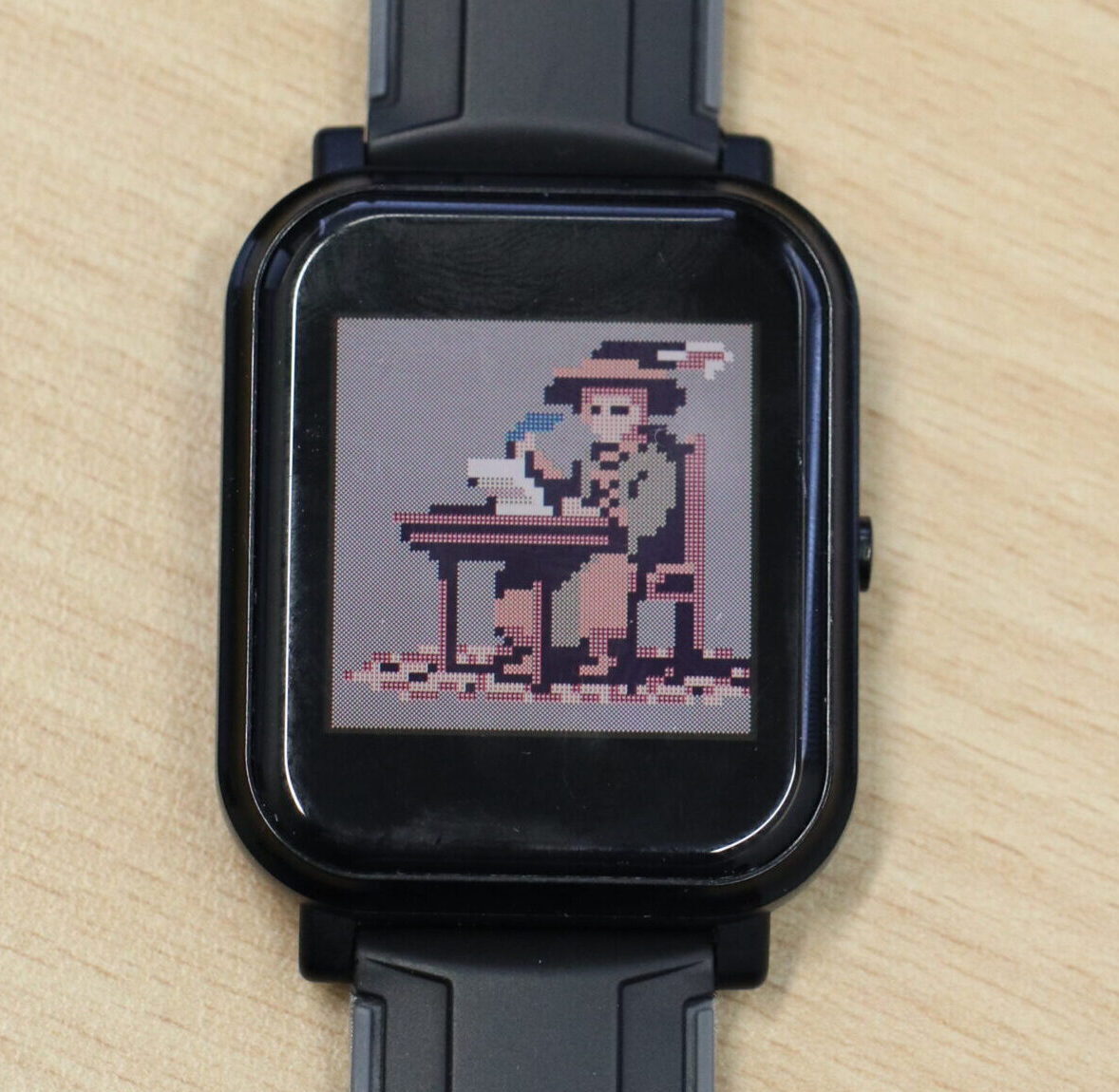
Gathering data in the wild with wearables made easy. Michael Brilka and Kristof van Laerhoven published their open source Historiographer application for the Bangle.js 2 Smartwatch at Ubicomp’24 in Melbourne, Australia. Interested?
Data collection is a core principle in the scientific and medical environment. To record study participants in daily life situations, wearables can be used. These should be small enough to not disrupt the lifestyle of the participants, while delivering sensor data in an accurate and efficient way. This ensures a long recording time for these battery-powered devices. Current purchasable wearable devices, would lend themselves well for wearable studies. Simpler devices have many drawbacks: Low sampling rate, for energy efficiency and little support are some drawbacks. More advanced devices have a high-frequent sampling rate of sensor data. These, however, have a higher price and a limited support time.
Our work introduces an open-source app for cost-effective, high-frequent, and long-term recording of sensor data. We based the development on the Bangle.js 2, which is a prevalent open-source smartwatch. The code has been optimized for efficiency, using sensor-specific properties to store sensor data in a compressed, loss-less, and time-stamped form to the local NAND-storage. We show in our experiments that we have the ability to record PPG-data at 50 Hertz for at least half a day. With other configurations, we can record multiple sensors with a high-frequent update interval for a full day.
Michael Brilka is a Research Associate in the project „P05 – Social Interaction in Semi-Automated Road Traffic“ at the Collaborative Research Centre 1187 –“Media of Cooperation”. Kristof van Laerhoven is professor for the Ubiquitous Computing at the University of Siegen and is principal investigator for the project „P05 – Social Interaction in Semi-Automated Road Traffic“ at the Collaborative Research Centre 1187 –“Media of Cooperation”.
Ubicomp is a premier venue for presenting research in the design, development, deployment, evaluation and understanding of ubiquitous computing systems. Ubicomp is an interdisciplinary field of research and development that utilizes and integrates pervasive, wireless, embedded, wearable and/or mobile technologies to bridge the gaps between the digital and physical worlds. Ubicomp will bring together top researchers and practitioners who are interested in both the technical and applied aspects of Ubiquitous Computing technologies, systems and applications. The Ubicomp program features keynotes, technical paper and notes sessions, specialized workshops, live demonstrations, posters, video presentations, and a Doctoral Colloquium.
Eine Informations- und Diskussionsveranstaltung zur elektronischen Patientenakte (ePA)
organisiert von Dennis Kirschsieper, Stephan Krayter und Claudia Müller (alle Universität Siegen)
In Kooperation mit dem Digitalen Facharzt- und Gesundheitszentrum (DFGZ) der Arztpraxis Spieren & Kollegen in Olpe (https://spieren.de/dfgz/) hat das Teilprojekt A05 „Kooperative Herstellung von Nutzerautonomie im Kontext der alternden Gesellschaft“ am 8. Januar 2025 eine Informations- und Diskussionsveranstaltung zu elektronischen Patientenakte in Olpe und Siegen organisiert.
Anlass ist die Einführung der neuen elektronischen Patientenakte (ePA) am 15. Januar 2025, mit der in Deutschland ein weiterer Schritt in Richtung eines stärker digitalisierten Gesundheitssystems vollzogen wird. Gesundheitsdaten können nun leichter gespeichert und verarbeitet werden, z.B. wird der Austausch von medizinischen Dokumenten zwischen Arztpraxen, Apotheken, Kliniken und den Patient*innen erleichtert, da Unterlagen digital vorhanden sind und nicht erst angefordert werden müssen. Die Einführung der ePA ist allerdings nicht nur mit Vorteilen und Erleichterungen, sondern auch mit Herausforderrungen, offenen Fragen und Bedenken verbunden, z.B. bezüglich des Datenschutzes.
Die Arztpraxis Spieren & Kollegen hatte ihre Patient*innen für den 8. Januar nach Olpe eingeladen, wo Expert*innen der Kassenärztlichen Vereinigung (KVWL) sowie Vertreter*innen der Krankenkassen Vorträge gehalten und Fragen beantwortet haben. Dies wurde live an die Universität Siegen übertragen, wo interessierte Forschende, Studierende und Bürger*innen sich zusammengefunden hatten, um online mitzudiskutieren.
Im Anschluss gab es in Siegen noch einen zweiten Teil. Die Digitalisierungsexpertin und Landtagsabgeordnete Julia Eisentraut (Bündnis 90/Die Grünen, https://julia-eisentraut.de/) stand hier zur Verfügung, um politische Sichtweisen auf das Thema einzubringen und zu diskutieren. Bei der Vorbereitung des Events war auch Bernd Mäckeler von den Grünen Alten in Siegen beteiligt, der sich mit seinen Kolleg*innen von den Grünen Alten und mit Unterstützung durch das Teilprojekt A05 engagiert dafür einsetzt, die Digitalkompetenzen älterer Menschen in Siegen und Umgebung zu fördern. Des Weiteren waren die Teilvorhaben „Gesundheit & Altern“ sowie „Soziales & Inklusion“ des Projektes FUSION (https://fusion.uni-siegen.de), vertreten durch Stephan Krayter, in der Organisation und Durchführung des Events eingebunden.
Für die Zukunft sind weitere Kooperationsveranstaltungen zur Digitalisierung des Gesundheitssystems geplant, um Bürger*innen an der Forschung zu beteiligen und um gemeinsam die medizinische und soziale Versorgung in der Region zu verbessern.
Über die Forschenden
Dennis Kirschsieper ist wissenschaftlicher Mitarbeiter im Teilprojekt A05 Kooperative Herstellung von Nutzerautonomie im Kontext der alternden Gesellschaft des Sonderforschungsbereichs 1187 Medien der Kooperation und promoviert zum Thema Privatsphäre und Datenschutz. Seine Forschungsinteressen umfassen Telecare, Telemedizin, Caring Communities und Digitalkompetenzen älterer Menschen.
Stephan Krayter ist wissenschaftlicher Mitarbeiter im Projekt FUSION. Seine Forschungsinteressen liegen an der Schnittstelle von Gesundheitssoziologie, Sozio-Informatik, Digitalisierung und Nutzungsakzeptanz. Er beschäftigt sich insbesondere mit der Frage, wie digitale Entwicklungen sozialverträglich ausgestaltet werden können und wie die Gesundheitsversorgung durch Digitalisierung verbessert werden kann.
Claudia Müller ist Professorin für Wirtschaftsinformatik, insbesondere IT für die alternde Gesellschaft an der Universität Siegen und leitet das Teilprojekt A05 Kooperative Herstellung von Nutzerautonomie im Kontext der alternden Gesellschaft am Sonderforschungsbereich 1187 Medien der Kooperation.
2 / 7