„The project investigates cooperative mobility practices of cycling. It contributes to a media-scientific concept of mobility against the background of the cooperative and sensory design of public spheres.“
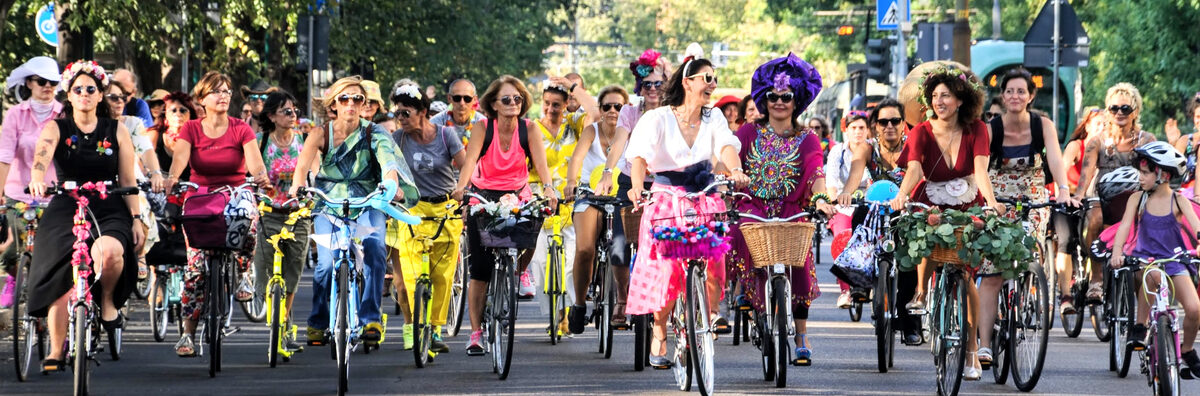
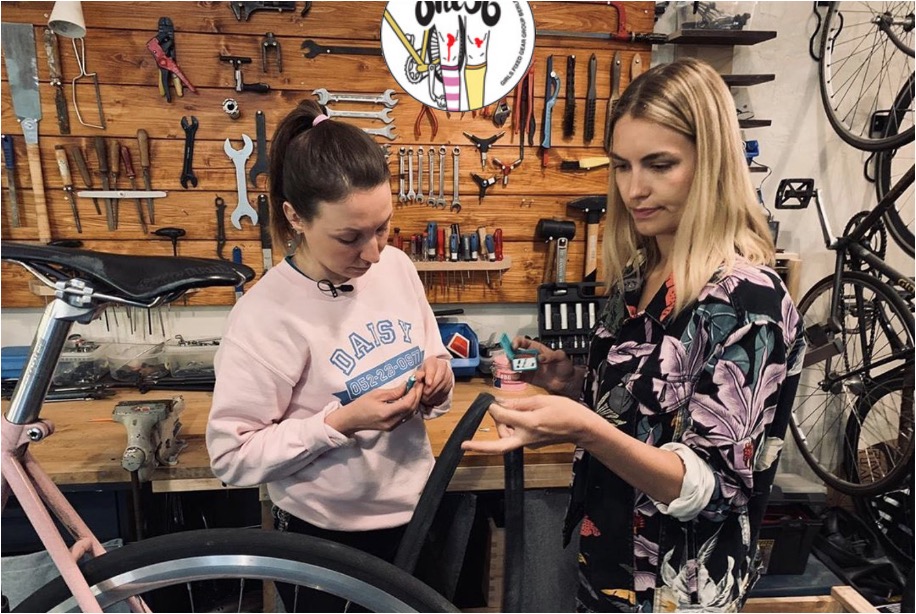
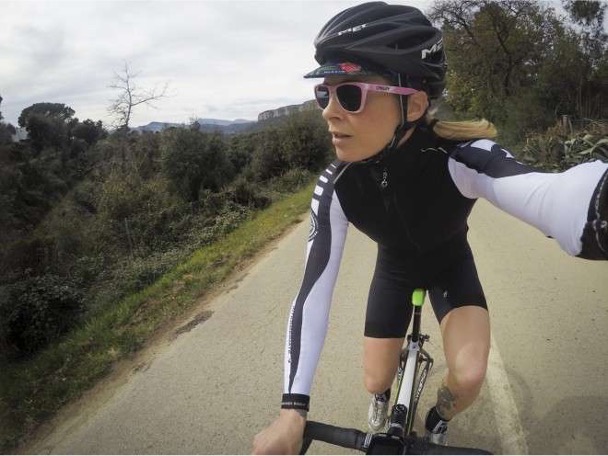
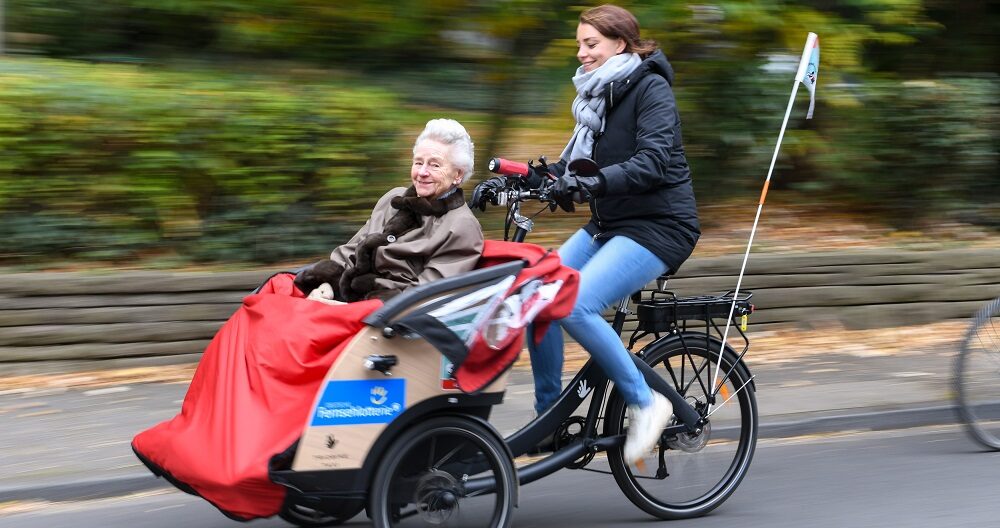
“Bicycle feminism refers to feminist perspectives on bicycle mobility, transportation infrastructure, and bicycle culture. Bicycle feminist perspectives view the bicycle and cycling as a means of feminist self-empowerment. They focus in particular on gender-specific experiences related to issues of safety and freedom of movement in road traffic, as well as the historical overlap between bicycles (and cycling) and feminism.”
If you’re interested in learning more about this topic, we recommend attending the project’s annual conference on September 17 and 18 in Bochum. More information can be found here.
The SFB cordially invites you to the conference of the project B09 “Bicycle Media. Cooperative Media of Mobility” on September 17 & 18 in Bochum. The conference is titled “Mediated Mobility: Bicycle Media, Collectives, and Infrastructures in Motion” and will feature discussions on current research findings, perspectives, and issues related to bicycle media and mobility.
Mobility is a cooperative process shaped by diverse media, social, and infrastructural practices. Cycling, too, is conditioned by the interplay of diverse technologies, infrastructures, bodies, images, and public spheres. At the same time, bicycle mobility is neither neutral nor equally accessible to everyone: it is shaped by social power relations and diverse experiential worlds.
Against this backdrop, the annual conference of the research project “Bicycle Media—Cooperative Practices of Mobility” (SFB 1187 “Media of Cooperation”) examines the bicycle itself as a medium of public sphere and participation: as a form of mobility that connects people, places, perspectives, and knowledge, thereby enabling a specific appropriation of space. The conference takes as its starting point an expanded concept of media that encompasses not only audiovisual and digital formats but also understands (care) practices such as repair, activism, or collective cycling as forms of mediation.
Our perspective on cycling is shaped by media. Conversely, cycling also shapes media spaces. In this context, the papers presented at the annual conference examine the bicycle (and cycling) as a medium of embodied experience and perception, particularly in relation to public discourses, affects, bodies, and infrastructures. The conference will discuss diversity-sensitive and intersectional perspectives on bicycle mobility, for example with regard to mobility conflicts, gender and class relations, as well as unequal conditions of access and representations.
What does the media have to do with extractivism? What ecological disasters and social upheavals does extractivism cause? And what can we do to stop the exploitation of entire regions for the sake of media technologies? Over 100 participants addressed these questions at the Spring School Media:Extractivism, held April 17–19, 2026, in Bochum.
As part of this year’s Spring School, students, civil society representatives, and scholars worked together for two and a half days to explore conflicts surrounding the topic of extractivism using creative methods such as waterscaping, collages, and mapping. In addition to local extraction sites and stories from the Ruhr region, this year’s event addressed international extraction regions and practices “above and below ground.” Understood as a system of exploitation, extractivism leaves the Earth with no means of regeneration and brings with it social upheaval and conflicts, including human rights violations. Extractivism is one of the greatest transformers of the Earth through mining, but also through extractive infrastructure. Extractivism is also largely responsible for the climate crisis. A focus was placed on developments in the field of artificial intelligence, which will massively exacerbate the consequences of extraction in the future.
Extractivism and AI
The presentations by international guests focused on fossil fuels, which still shape the Ruhr region today—but also on minerals and rare earths used in digital technologies. In addition to rare earths for batteries, chips, and other devices, the discussion also critically examined AI infrastructure, such as data centers. Due to the implementation of AI bots and geopolitical conflicts worldwide, AI is an urgent issue not only socially but also ecologically. The enormous consumption of water and energy by the data centers that form the basis of artificial intelligence, as well as the contested minerals required to manufacture the necessary computing chips, make AI one of the fastest-growing consumers of resources worldwide. Speakers and participants critically discussed both the perspective of global extractivism and the local impacts of such tech infrastructures. Data centers, which have a massive impact on water consumption, and so-called click-work centers, where content moderation, data labeling, and other low-paid tasks are carried out, are often outsourced to the Global South, but can also be found in Germany and the Ruhr region. Globally, they contribute to local extractive structures. Postcolonial and feminist perspectives on mining, labor, resources, and sacrifice zones are therefore indispensable for understanding the issue of extractivism through AI infrastructure.
Through this broad perspective on the practices of extractivism, the many social sectors affected by the consequences of extractivism were able to be connected with one another in the workshops. Media studies, through this climate-just and extractivism-critical perspective, is also brought back to its material foundations in the sense of the media geology of theorist Jussi Parikka (see also Noam Gramlich’s work on this).
The Program
The first evening opened with an introduction to the topic of extractivism and media, followed by three keynote speeches and a panel discussion on the topics of “Revier Noir” by Frederike Lange from the German Mining Museum, “Queerness in Historical Mining between the Ruhr Region and Upper Silesia” by Bochum-based artist Julia Nitzschke, and “Air and Extractivism” by cultural studies scholar and filmmaker Marietta Kesting. In the subsequent panel discussion with the speakers, moderated by media scholar Oliver Leistert, the focus was on the damage caused by data centers, for example, and on how local populations—such as those in the U.S.—are already fighting back against them today.
On the second day, the program continued with hands-on practical workshops: one on the Emscher River led by Natalie Pielok; one on film and climate catastrophe led by Matthias Grotkopp and Maike Reinerth; one on waterscaping led by Rémi Willemin and Alisa Kronberger; and one on the infrastructures of extractivism led by Petra Löffler, Marlene Helling, and Jakob Claus. It became clear in many presentations that extractivism entails long-term costs that still require complex solutions in the Ruhr region as well, such as the disposal of toxic mining residues or the long-term pumping of water from former coal mines.
In addition to academic contributions, artistic explorations were also central, such as in Azadeh Ganjeh’s lecture-performance on gold extractivism and the associated social conflicts as well as political (online) protests in Iran. A photo exhibition in the Quartiershalle by Sara Bahadori raised participants’ awareness of exclusion and marginalization within the climate movement. In a workshop on the “white gaze” on climate issues, the speaker explored the topic in greater depth with a critical and reflective approach.
Impressions from the Spring School
Around 100 participants actively took part in workshops on water, AI, and mining history, as well as in a decolonial city tour of Bochum, led by Marie Sprenger and Florian Trompke. Finally, in a workshop on climate-just teaching on Sunday morning, faculty and students developed content and methods for a future inter-university curriculum on the topic.
The Spring School is an event of the “Public Sphere” project within the SFB Media of Cooperation and creates a public sphere comprising artists, scholars, journalists, and engaged civil society around the contentious issue of the climate catastrophe.
The third Spring School of the MediaClimateJustice working group was organized by Julia Bee, Gerko Egert, Alisa Kronberger, and Julia Reinermann and was made possible, among other things, through funding from the SFB Medien der Kooperation and Ruhr University Bochum. The goal of the Spring Schools on Media and Climate is to anchor the topic of climate more firmly in media studies and society.
The Collaborative Research Centre (CRC 1187) “Media of Cooperation” welcomes four new Mercator Fellows: Azadeh Ganjeh, Olga Goriunova, Maija Hirvonen, Christopher Salter and Jürgen Streeck. These outstanding researchers will bring their academic expertise and innovative research approaches to CRC 1187 this year.
About the Mercator Fellowship at CRC 1187
To strengthen academic collaboration within the research network, CRC 1187 awards Mercator Fellowships to outstanding researchers from Germany and abroad. Mercator Fellows conduct research for an extended period in close collaboration with one or more of the sub-projects involved in CRC 1187, addressing questions relating to digital, data-intensive media. Together with the regular members, our Mercator Fellows pursue the shared goal of further developing interdisciplinary approaches and helping to shape the CRC’s research programme. The inclusion of these renowned researchers not only strengthens the international network of CRC 1187, but also promotes the transfer of knowledge and ideas that is of central importance to the CRC’s research into the digital present.
The Mercator Fellowship is a module within the funding programmes of the German Research Foundation and serves to enable intensive and long-term research exchange.
Azadeh Ganjeh is a performance artist, scholar, dramaturg and activist, and a member of the collective Rebel-Ist-hah!. Born in Tehran, Iran, she holds a Master’s degree in theatre directing from Tehran Art University and received her doctorate in 2017 in philosophy with a focus on theatre studies from the University of Bern.
Azadeh specialises in socially engaged and site-specific performances, participatory productions, performative interventions in urban space, and community theatre for socio-political empowerment. Her research interests include narratives and politics of the stage, the performativity of public events, the performative interaction of body and space, emancipation through the performing arts, aesthetics of performativity and space, and activism in performance art.
After working as a professor at the University of Tehran, she taught at numerous European universities and has been working since April 2022 as a researcher and lecturer at the Institute for Media, Theatre and Popular Culture at the University of Hildesheim. In October 2024, she took up the professorship for Performative Arts in Society at the University of the Arts in Society in Ottersberg, where she combines artistic practice with critical research on performance and social change.
Olga Goriunova is Professor of Media Arts at Royal Holloway, University of London. She is a cultural theorist, working across technology, philosophy and aesthetics. Her latest book, Ideal Subjects. The Abstract People of AI (2025) explores how data and artificial intelligence abstract people into new kinds of subjects. The questions of subjectivation in relation to art and technology have been central to her work. Her previous book, Bleak Joys. Aesthetics of Ecology and Impossibility (co-authored, 2019) explores aesthetics, ethics and ecology during times of multiple crises. This work traces connections between large scale systems such as ecologies, technical infrastructures or mechanisms of calculation and processes of subjectivation. Her first book Art Platforms and Cultural Production on the Internet (2012) conceptualises aesthetic and political engagements with technology at the dawn of the World Wide Web, proposing the concepts of organisational aesthetics and art platforms to understand collective art practices and art movements of the 1990s and early 2000s. This book is based on her work as a co-organiser of software art repository Runme.org and a co-curator of software art festivals (four editions of the Readme festival between 2002 and 2005 in Moscow, Helsinki, Aarhus and Dortmund) and other exhibitions. She edited or co-edited four Readme publications, the most significant of which is Readme. Software Arts and Cultures (Aarhus University Press, 2004). She is also the editor of Fun and Software: Exploring Pleasure, Pain and Paradox in Computing (2014) and a co-founder and co-editor of Computational Culture, a Journal of Software Studies.
Prof.‘in Dr. Maija Hirvonen
Professor for German language, culture and translation
Faculty of Information Technology and Communication Sciences | Language Studies | German
Maija Hirvonen is a full professor in German language, culture and translation at the Languages Unit of the Faculty of Information Technology and Communication Sciences of Tampere University. She leads BA, MA and PhD studies in German linguistics and translation. She is director of Langnet, the Network of Doctoral Programmes in Language Sciences in Finland, and sits on the steering board for Plural (the multidisciplinary research centre for languages and cultures). She co-leads the Tampere Accessibility Unit and the Multimodality in Translation and Interpreting research group.
Her research specialisms include:
accessibility (esp. audio description)
multimodal and intermodal translation and interpreting
blind-sighted and other asymmetrical interaction
teamwork
distributed/interactive intelligence and the interface of cognition and interaction
Jürgen Streeck conducts research in the field of multimodal interaction, focusing in particular on the coordination of language, gesture and gaze, as well as the social meaning of actions in communication. He has contributed to the development of multimodal interaction research and engages with the connections between language, music and orality, particularly in hip-hop. His academic work has been recognised with several awards, including the Georg-Gottfried-Gervinus Fellowship (2013–2014). He was a Fellow at the Freiburg Institute for Advanced Studies and at the Centre for Interdisciplinary Research (ZiF) in Bielefeld.
Streeck received his doctorate in 1981 from the Free University of Berlin in linguistics and has been Professor of Communication Studies in the Department of Communication Studies at the University of Texas at Austin since 2013. Previously he was Associate Professor in the same department and also held a professorship in linguistics at the Free University of Berlin. In addition, he has held visiting professorships and fellowships at universities including the University of Oldenburg, the University of Vienna and the University of Utrecht.
Among his major publications is the 2009 book Gesturecraft: The Manu-facture of Meaning, in which Streeck examines how hand gestures in communication represent and interpret the world, drawing on microethnographic research and theories of cognition and interaction. In the 2017 volume Self-Making Man: A Day of Action, Life, and Language, Jürgen Streeck analyses how a car mechanic in Texas constructs his social world and identity through gestures, language and actions in communication.
Prof. Dr. Christopher Salter
University Research Chair in New Media, Technology and the Senses
Chris Salter is an artist, University Research Chair in New Media, Technology and the Senses, Professor of Computation Arts in the Department of Design and Computation Arts, Co-Director of the Hexagram Network for Research-Creation in Media Art, Design, Digital Culture and Technology, Director of Hexagram Concordia and Associate Director, Milieux Institute for Arts,Culture and Technology.
Salter studied economics and philosophy at Emory University and received his Ph.D. in theater directing and dramatic theory/criticism at Stanford University where he also worked and researched at CCRMA (Center for Computer Research in Music and Acoustics). At Stanford, Salter studied with former Brecht assistant Carl Weber as well as pioneers of digital synthesis John Chowning, Max Matthews and Chris Chafe. In the 1990s, he collaborated with theater director Peter Sellars and choreographer William Forsythe/Frankfurt Ballet. He was visiting professor in music, graduate studies and digital media at Brown University and the Rhode Island School of Design (RISD) before joining Concordia University’s Faculty of Fine Arts in 2005. He was also Guest Professor at the KhM in Cologne in 2010 and is continuing Guest Faculty at the Masters program in Media Arts History, Institute für Bildwissenschaften,Donau University, Krems, Austria.
Salter’s large scale installations, performative environments and research focuses on and challenges human perception, merging haptic, visual, acoustic and other sensory phenomena. Exploring the borders between the senses, art, design and new technologies, his immersive and physically experiential works are informed by theater, architecture, visual art, computer music, perceptual psychology, cultural theory and engineering and are developed in collaboration with anthropologists, historians, philosophers, engineers,artists and designers.
His work has been shown at major international exhibitions and festivals in over a dozen countries including the 2008 Venice Architecture Biennale (Venice), Wiener Festwochen (Vienna), Berliner Festspiele/Martin Gropius Bau (Berlin), Musée d’Art Contemporain (Montréal),National Art Museum of China (Beijing), Lille 3000 (Lille), Chronus Art Centre (Shanghai), Fondarie Darling (International Biennale of Electronics Arts – Montreal),HAU3 (Berlin), Laboral Centro de Arte y Creacion Industriel (Gijon, Spain),Nuit Blanche (Paris), Vitra Design Museum (Germany), EXIT Festival (Maison des Arts, Creteil-Paris), STRP Biennale (Eindhoven), Ars Electronica (Linz), Pact Zollverein (Essen, Germany), CTM (Berlin), Villette Numerique (Paris),TodaysArt (the Hague), Todays Art.jp (Tokyo), Meta.Morf (Norway), MoisMulti(Quebec), Transmediale (Berlin), Place des Arts (Montréal), Elektra(Montréal),the Banff Center (Banff), Dance Theater Workshop (New York), V2(Rotterdam), SIGGRAPH 2001 (New Orleans), Mediaterra (Athens) and the Exploratorium (SanFrancisco), among others.
Salter is a regular presenter at national and international conferences, has given over 100 invited talks at universities and festivals worldwide and has sat on many juries including the Prix Ars Electronica among others. In addition to his artistic work, he is the author of the seminal book Entangled: Technology and the Transformation of Performance (MIT Press, 2010) and Alien Agency: Experimental Encounters with Art in the Making (MIT Press, 2015).
Executive Summary
In view of anthropogenic climate change, the issue of mobility and thus also cycling has taken on an increasingly prominent role in public debates in recent years. The mobility sector causes almost a quarter of greenhouse gas emissions in the EU. Of these, road transport is the largest emitter, which is largely attributable to passenger cars. In addition, war-related resource problems are increasing the pressure to develop alternatives to petrol-based mobility like cycling. This also causes controversies about forms of mobility, giving rise to issue publics.
Against this background, the subproject investigates how bicycle mobility is cooperatively generated. This finds expression in cooperatively constituted bicycle media that help shape publics in relation to sustainable mobility. The project is based on the working hypothesis that bicycle mobility cannot be reduced to mere movement from A to B. It is shaped by various (moving) image, data, and media practices in which sensory, bodily, and digital aesthetics become entangled and from which mobile publics of cycling emerge.
The objective of this project is to provide (1) a systematically designed empirical analysis of cooperative media practices of bicycle mobility and (2) a theoretical conceptualization of bicycle media as cooperative media of mobility. The project explores cooperative practices of bicycle mobility at two levels: (1) bicycle collectives and their cooperative media practices, and (2) audiovisual practices such as vlogs, films, and community apps.
We employ a multidimensional methodological approach that combines media-aesthetic analysis with participatory observations and interviews with selected bicycle groups (bicycle collectives). Furthermore, the project will create public science formats in order to build a cooperative research design that systematically integrates civil society initiatives into the research process. How (moving) images, apps, sensors, and body technologies work together to generate cycling and forms of a mobile public remains a gap in research that this project seeks to fill. The project will thereby make a systematic and conceptual contribution to bicycle mobility research by investigating the cooperative practices of generating bicycle mobility and the publics associated with it.
The bicycle is a medium of social change. Its diverse utopian potential results not least from its equally diverse and often overlooked medial qualities: it mediates, it connects, it translates; it modifies the perception and organization of space and time, of bodies and of sociality. Conversely, media-scientific thinking can also be changed by bicycle media. The bicycle is not only a medium of social and ecological change: cycling opens up perspectives, changes spaces, creates new relations and redistributes agency.
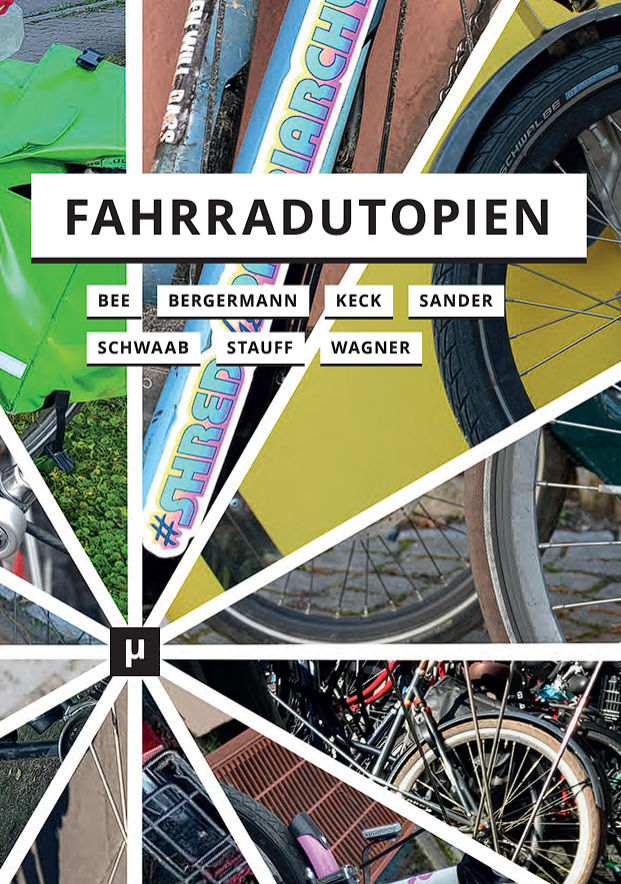
Fahrradutopien thinks from the bicycle and complements existing approaches to mobility research with perspectives from media culture studies. The contributions combine media studies and research on bicycle activism with a love of cycling. The focus is on bicycle films and vlogs, traffic and infrastructures, virtual reality and bicycles, bicycle collectives and bicycle feminism.
Open Access: https://meson.press/books/fahrradutopien/.
Bee, Julia, Jennifer Eickelmann, Jasmin Degeling, and Katrin Köppert, eds. 2026. Digitale Gewalt. Politisierungen affektiver Öffentlichkeiten. Digitale Gewalt. Politisierungen affektiver Öffentlichkeiten. Lüneburg: meson press. https://doi.org/10.14619/2751.
Schmedes, Hannah. 2026. “Das Formale queeren. Susan Leigh Stars feministische Infrastrukturkritik”. Edited by Bernhard Siegert Friedrich Balke. Archiv für Mediengeschichte 21.
2025
Bee, Julia. 2025. “Feministischer Fahrradaktivismus, Fahrradmedien und das Recht auf Stadt”. In digital:gender – de:mapping affect Eine spekulative Kartografie, edited by Irina Gradinari und Katrin Köppert. Leipzig: Spector Books. Julia Bee. Leipzig: Spector Books. ISBN: 9783959056731. https://www.spectorbooks.com/book/digital-gender-de-mapping-affect.
Bee, Julia, Katrin Köppert, and Irina Gradinari, eds. 2025. digital:gender – de:mapping affect: Eine spekulative Kartografie. Leipzig: Spector Books. ISBN: 978-3-95905-673-1.
2024
Angerer, Marie-Luise, Ingrid Richardson, Hannah Schmedes, and Zoë Sofoulis. 2024. Technologies of Containment: Holding, Filtering, Leaking. Lüneburg: meson press. https://meson.press/books/containment/.
Bee, Julia, and Miglė Bareikytė. 2024. “Liefern. Logistiken, Daten und Politiken”. Navigationen Special Issue 24 (2). http://dx.doi.org/10.25819/ubsi/10577.
Schmedes, Hannah. 2024. “-1.153 Characters. Towards a Queerfeminist Infrastructural Critique of Wikipedia”. FKW // Zeitschrift für Geschlechterforschung und Visuelle Kultur 74: 153-66. https://doi.org/10.57871/fkw7420241712 .
2022
Bee, Julia. 2022. “Radvlogging und Radcommunities. Ästhetik des Radfahrens zwischen Alltag und (digitalen) Medien”. In Fahrradutopien: Medien, Ästhetiken und Aktivismen, edited by Julia Bee, Ulrike Bergermann, Linda Keck, Sarah Sander, Herbert Schwaab, Markus Stauff, and Franzi Wagner, 39-76. Lüneburg: Meson Press. https://doi.org/10.14619/1952.
Bee, Julia. 2022. “‚Das braucht ein Gesicht!‘ Medialität und Praxis des (Beinahe-)Unfalls”. Edited by Dominik Maeder. Navigationen. Zeitschrift für Medien- und Kulturwissenschaften. Unfälle. Kulturen und Medien der Akzidenz 22 (2): 59-77. https://dx.doi.org/10.25969/mediarep/19025.
Bee, Julia, Ulrike Bergermann, Linda Keck, Sarah Sander, Herbert Schwaab, Markus Stauff, and Franzi Wagner, eds. 2022. Fahrradutopien: Medien, Ästhetiken und Aktivismus. Lüneburg: Meson Press. https://doi.org/10.14619/1952 .
Bee, Julia, and Isabell Eberlein. 2022. “Fahrradfahren ist politisch! Gespräch mit Isabell Eberlein von Changing Cities”. In Fahrradutopien. Medien, Ästhetiken und Aktivismen, edited by Julia Bee, Ulrike Bergermann, Linda Keck, Sarah Sander, Herbert Schwaab, Markus Stauff, and Franzi Wagner, 107-25. Lüneburg: Meson Press. https://doi.org/10.14619/1952.
Julia Bee. 2022. “Cycling Media and Collectives. Cycling Vlogs and Mobile Infrastructures”. Eracle. Journal of Sport and Social Sciences 1 (5): 94-109. https://doi.org/10.6093/2611-6693/9629.
Pinzuti, Pinar, and Julia Bee. 2022. “Fancy Women Bike Ride, Gespräch über Feminismus und Fahrradaktivismus mit Pinar Pinzuti”. In Fahrradutopien: Medien, Ästhetiken und Aktivismen, edited by Julia Bee, Ulrike Bergermann, Linda Keck, Sarah Sander, Herbert Schwaab, Markus Stauff, and Franzi Wagner, 173-84. https://doi.org/10.14619/1952.