„Mit der Untersuchung der Sinnespraktiken in digitalen Kindheiten leistet das Projekt einen grundlegenden Beitrag zum Verständnis der kooperativen Verfasstheit des menschlichen und technischen Sensoriums.“
Der SFB lädt herzlich zur mündlichen Prüfung im Promotionsverfahren von Hoa Mai Trần ein. Die Disputation findet am Dienstag, den 20.10.2026, von 10:00 bis 12:00 Uhr im Raum AR-E 4112 (OASE Lernwerkstatt) in der Adolf-Reichwein-Str. 2, 57068 Siegen statt.
Im Rahmen der Disputation werden die Ergebnisse der Dissertation von Hoa Mai Trần vor der Prüfungskommission präsentiert und wissenschaftlich verteidigt. Der Titel ihrer Dissertation lautet: „Das virtuelle Selbst im Zwischenraum: Eine ethnografische Kindheitsforschung zu Existenzweisen von Kindern im digitalen Spiel“.
Wo beginnt „das Kind“ im digitalen Spiel und wo hört es auf? In ihrer dreijährigen ethnografischen Feldforschung mit drei Familien aus Deutschland untersucht Hoa Mai Trần die Erlebnisse von Kindern während des digitalen Spiels. Die erziehungswissenschaftliche Studie fragt wie sich im Spiel die Grenzen zwischen „Ich“ und „Nicht-Ich“ verschieben.
Im Zentrum steht die Forschungsfrage: Wie wird hybrides Da-Sein von Kindern beim digitalen Spielen hervorgebracht? Die These der Arbeit lautet, dass Kinder über ihre fleischlich-physischen Körpergrenzen hinaus da-sein bzw. existieren können. Zwischen Fühlen, Werden und Sterben entfaltet sich im Spiel ein Zwischenraum, in dem sich hybride, lebendige Existenzweisen von Kindern zeigen. Das Spiel von Kindern wird zu einer bedeutsamen, spürbaren und dynamischen (Zwischen)Realität. Die durch Kind und Spiel wechselseitig erzeugten Entgrenzungsphänomene ermöglichen, je nach Spielsituation, temporäre bzw. aktualisierbare Selbst- und Weltentfaltungsweisen und tragen zur Genese des virtuellen Selbst bei. Das virtuelle Selbst ist kein digitales Abbild des Kindes im Spiel, sondern die im Spiel hervorgebrachte, digital materialisierbare und mehr oder weniger personalisierbare Vorstellung, etwas bzw. jemand zu sein oder werden zu können. Digitale Spiele sind bewohnbare Orte von Kindheit, die individuelle, soziale, bildungspolitische und ökonomische Tragweite für Kinder und Gesellschaft haben.
Das Dissertationsprojekt ist im Teilprojekt B05: (Frühe) Kindheit und Smartphone angesiedelt. Die Prüfung wird auf deutsch gehalten und von Prof. Dr. Jutta Wiesemann (Erstgutachterin), Prof. Dr. Jochen Lange (Zweitgutachter) und Prof. Dr. Chantal Munsch (Prüfungskommissionsmitglied) abgenommen.
Der Sonderforschungsbereich (SFB 1187) „Medien der Kooperation“ begrüßt vier neue Mercator Fellows: Azadeh Ganjeh, Olga Gorinuova, Maija Hirvonen, Christopher Salter und Jürgen Streeck. Diese herausragenden Wissenschaftler*innen werden dieses Jahr ihre wissenschaftliche Expertise und innovativen Forschungsansätze in den SFB 1187 einbringen.
Über das Mercator Fellowship am SFB 1187
Um die wissenschaftliche Zusammenarbeit im Forschungsverbund zu stärken, vergibt der SFB 1187 Mercator Fellowships an herausragende Wissenschaftler*innen aus dem In- und Ausland. Mercator Fellows forschen für eine längere Zeit und enger Zusammenarbeit mit einem oder mehreren der am SFB 1187 beteiligten Teilprojekte zu Fragestellungen rund um digitaler, datenintensiver Medien. Zusammen mit den regulären Mitglieder verfolgen unsere Mercator Fellows das gemeinsame Ziel, interdisziplinäre Ansätze weiterzuentwickeln und das Forschungsprogramm des SFB mitzugestalten. Die Aufnahme dieser renommierten Forschenden stärkt nicht nur das internationale Netzwerk des SFB 1187, sondern fördert auch den Wissens- und Ideentransfer, der für die digitale Gegenwartsforschung am SFB von zentraler Bedeutung ist.
Das Mercator Fellowship ist ein Modul im Rahmen der Förderprogramme der Deutschen Forschungsgemeinschaft und dient dazu, einen intensiven und langfristigen Forschungsaustausch zu ermöglichen.
Azadeh Ganjeh is a performance artist, scholar, dramaturg and activist, and a member of the collective Rebel-Ist-hah!. Born in Tehran, Iran, she holds a Master’s degree in theatre directing from Tehran Art University and received her doctorate in 2017 in philosophy with a focus on theatre studies from the University of Bern.
Azadeh specialises in socially engaged and site-specific performances, participatory productions, performative interventions in urban space, and community theatre for socio-political empowerment. Her research interests include narratives and politics of the stage, the performativity of public events, the performative interaction of body and space, emancipation through the performing arts, aesthetics of performativity and space, and activism in performance art.
After working as a professor at the University of Tehran, she taught at numerous European universities and has been working since April 2022 as a researcher and lecturer at the Institute for Media, Theatre and Popular Culture at the University of Hildesheim. In October 2024, she took up the professorship for Performative Arts in Society at the University of the Arts in Society in Ottersberg, where she combines artistic practice with critical research on performance and social change.
Olga Goriunova is Professor of Media Arts at Royal Holloway, University of London. She is a cultural theorist, working across technology, philosophy and aesthetics. Her latest book, Ideal Subjects. The Abstract People of AI (2025) explores how data and artificial intelligence abstract people into new kinds of subjects. The questions of subjectivation in relation to art and technology have been central to her work. Her previous book, Bleak Joys. Aesthetics of Ecology and Impossibility (co-authored, 2019) explores aesthetics, ethics and ecology during times of multiple crises. This work traces connections between large scale systems such as ecologies, technical infrastructures or mechanisms of calculation and processes of subjectivation. Her first book Art Platforms and Cultural Production on the Internet (2012) conceptualises aesthetic and political engagements with technology at the dawn of the World Wide Web, proposing the concepts of organisational aesthetics and art platforms to understand collective art practices and art movements of the 1990s and early 2000s. This book is based on her work as a co-organiser of software art repository Runme.org and a co-curator of software art festivals (four editions of the Readme festival between 2002 and 2005 in Moscow, Helsinki, Aarhus and Dortmund) and other exhibitions. She edited or co-edited four Readme publications, the most significant of which is Readme. Software Arts and Cultures (Aarhus University Press, 2004). She is also the editor of Fun and Software: Exploring Pleasure, Pain and Paradox in Computing (2014) and a co-founder and co-editor of Computational Culture, a Journal of Software Studies.
Prof.‘in Dr. Maija Hirvonen
Professor for German language, culture and translation
Faculty of Information Technology and Communication Sciences | Language Studies | German
Maija Hirvonen is a full professor in German language, culture and translation at the Languages Unit of the Faculty of Information Technology and Communication Sciences of Tampere University. She leads BA, MA and PhD studies in German linguistics and translation. She is director of Langnet, the Network of Doctoral Programmes in Language Sciences in Finland, and sits on the steering board for Plural (the multidisciplinary research centre for languages and cultures). She co-leads the Tampere Accessibility Unit and the Multimodality in Translation and Interpreting research group.
Her research specialisms include:
accessibility (esp. audio description)
multimodal and intermodal translation and interpreting
blind-sighted and other asymmetrical interaction
teamwork
distributed/interactive intelligence and the interface of cognition and interaction
Jürgen Streeck conducts research in the field of multimodal interaction, focusing in particular on the coordination of language, gesture and gaze, as well as the social meaning of actions in communication. He has contributed to the development of multimodal interaction research and engages with the connections between language, music and orality, particularly in hip-hop. His academic work has been recognised with several awards, including the Georg-Gottfried-Gervinus Fellowship (2013–2014). He was a Fellow at the Freiburg Institute for Advanced Studies and at the Centre for Interdisciplinary Research (ZiF) in Bielefeld.
Streeck received his doctorate in 1981 from the Free University of Berlin in linguistics and has been Professor of Communication Studies in the Department of Communication Studies at the University of Texas at Austin since 2013. Previously he was Associate Professor in the same department and also held a professorship in linguistics at the Free University of Berlin. In addition, he has held visiting professorships and fellowships at universities including the University of Oldenburg, the University of Vienna and the University of Utrecht.
Among his major publications is the 2009 book Gesturecraft: The Manu-facture of Meaning, in which Streeck examines how hand gestures in communication represent and interpret the world, drawing on microethnographic research and theories of cognition and interaction. In the 2017 volume Self-Making Man: A Day of Action, Life, and Language, Jürgen Streeck analyses how a car mechanic in Texas constructs his social world and identity through gestures, language and actions in communication.
Prof. Dr. Christopher Salter
University Research Chair in New Media, Technology and the Senses
Chris Salter is an artist, University Research Chair in New Media, Technology and the Senses, Professor of Computation Arts in the Department of Design and Computation Arts, Co-Director of the Hexagram Network for Research-Creation in Media Art, Design, Digital Culture and Technology, Director of Hexagram Concordia and Associate Director, Milieux Institute for Arts,Culture and Technology.
Salter studied economics and philosophy at Emory University and received his Ph.D. in theater directing and dramatic theory/criticism at Stanford University where he also worked and researched at CCRMA (Center for Computer Research in Music and Acoustics). At Stanford, Salter studied with former Brecht assistant Carl Weber as well as pioneers of digital synthesis John Chowning, Max Matthews and Chris Chafe. In the 1990s, he collaborated with theater director Peter Sellars and choreographer William Forsythe/Frankfurt Ballet. He was visiting professor in music, graduate studies and digital media at Brown University and the Rhode Island School of Design (RISD) before joining Concordia University’s Faculty of Fine Arts in 2005. He was also Guest Professor at the KhM in Cologne in 2010 and is continuing Guest Faculty at the Masters program in Media Arts History, Institute für Bildwissenschaften,Donau University, Krems, Austria.
Salter’s large scale installations, performative environments and research focuses on and challenges human perception, merging haptic, visual, acoustic and other sensory phenomena. Exploring the borders between the senses, art, design and new technologies, his immersive and physically experiential works are informed by theater, architecture, visual art, computer music, perceptual psychology, cultural theory and engineering and are developed in collaboration with anthropologists, historians, philosophers, engineers,artists and designers.
His work has been shown at major international exhibitions and festivals in over a dozen countries including the 2008 Venice Architecture Biennale (Venice), Wiener Festwochen (Vienna), Berliner Festspiele/Martin Gropius Bau (Berlin), Musée d’Art Contemporain (Montréal),National Art Museum of China (Beijing), Lille 3000 (Lille), Chronus Art Centre (Shanghai), Fondarie Darling (International Biennale of Electronics Arts – Montreal),HAU3 (Berlin), Laboral Centro de Arte y Creacion Industriel (Gijon, Spain),Nuit Blanche (Paris), Vitra Design Museum (Germany), EXIT Festival (Maison des Arts, Creteil-Paris), STRP Biennale (Eindhoven), Ars Electronica (Linz), Pact Zollverein (Essen, Germany), CTM (Berlin), Villette Numerique (Paris),TodaysArt (the Hague), Todays Art.jp (Tokyo), Meta.Morf (Norway), MoisMulti(Quebec), Transmediale (Berlin), Place des Arts (Montréal), Elektra(Montréal),the Banff Center (Banff), Dance Theater Workshop (New York), V2(Rotterdam), SIGGRAPH 2001 (New Orleans), Mediaterra (Athens) and the Exploratorium (SanFrancisco), among others.
Salter is a regular presenter at national and international conferences, has given over 100 invited talks at universities and festivals worldwide and has sat on many juries including the Prix Ars Electronica among others. In addition to his artistic work, he is the author of the seminal book Entangled: Technology and the Transformation of Performance (MIT Press, 2010) and Alien Agency: Experimental Encounters with Art in the Making (MIT Press, 2015).
Zur praxeologischen Konturierung semantischer Felder am Beispiel eines kamera-ethnographischen Forschungstools
Von Bina Elisabeth Mohn (Universität Siegen, SFB)
In dem neusten Working Paper (No.38) zum Bundle Explorer: Berühren stellt Bina Elisabeth Mohn die Entwicklung und Erprobung eines Prototyps einer praxeologischen Forschungsplattform vor. Im Zentrum stehen Fragen nach der sprachspielanalytischen Erschließung von Praktiken, ihrer bündeltheoretischen Verortung sowie nach dem Verhältnis einer flachen Ontologie zu Wittgensteins Konzept der grammatischen Betrachtung.
Beim Bundle Explorer: Berühren handelt es sich um den Prototyp einer praxeologischen Forschungsplattform zur Untersuchung situierter Praktiken, die sich an Wittgenstein und seiner Methode der grammatischen Betrachtung orientiert. An zahlreichen filmischen Präparaten aus dem Forschungsprojekt (Frühe) Kindheit und Smartphone ermöglicht das Tool ein vergleichendes, prüfendes und konturierendes Vorgehen, das eine Neubetrachtung von Berührungspraktiken im digitalisierten Alltag anbahnt. Der Beitrag rekonstruiert die Entstehung, Rahmung und Handhabung des Bundle Explorers: Berühren und entwickelt aus einer Zusammenschau von grammatischer Betrachtung (Wittgenstein), praxeologischer Bündeltheorie (Bezugnahme auf Schatzki) und Kamera-Ethnographie methodologische Impulse zu den Fragen: Wie lassen sich nonverbale Praktiken sprachspielanalytisch untersuchen und wie kann die Situierung von Praktiken bündeltheoretisch bestimmt werden? Wie lässt sich flache Ontologie (Schatzki) mit Wittgenstein denken und inwiefern sind übersichtliche Darstellungen (Wittgenstein) Experimentierfelder über mediale und kulturelle Grenzen hinweg? Wie gelingt eine zeigende Grammatik? Dabei steht der Begriff ‚Berührung‘ stellvertretend für sich wandelnde semantische Felder in sich wandelnden Lebenswelten.
Über die Autorin
Bina Elisabeth Mohn(Dr. phil., Berlin) ist Kulturanthropologin und Begründerin der Kamera-Ethnographie, einem filmischen Forschungsansatz, der auf das Sichtbarmachen epistemischer Dinge zielt. Im Zentrum ihrer Arbeiten stehen nonverbale Praktiken und (medien-)ethnographische Methodologie. Als Forscherin hat sie von 2016-2023 am SFB-Medien der Kooperation mitgewirkt. 2023 erschien ihr Buch Kamera-Ethnographie. Ethnographische Forschung im Modus des Zeigens. Programmatik und Praxis. Bina Elisabeth Mohn war Projektmitarbeiterin beim Projekt B05 bis Ende 2023.
Über die Working Paper Reihe
Die Working Paper Series des SFB 1187 „Medien der Kooperation“ versammelt aktuelle Beiträge aus dem Umfeld der inter- und transdisziplinären Medienforschung. Die SFBWorking Paper Series bietet die Möglichkeit einer Vorveröffentlichung und schnellen Verbreitung von am SFB laufenden oder ihm nahestehenden Forschungsarbeiten. Ziel der Reihe ist es, die SFB-Forschung einer breiteren Forschungsgemeinschaft zugänglich zu machen. Die Veröffentlichung in der Working Paper Series schließt die Publikation überarbeiteter Versionen desselben Beitrags in anderen Zeitschriften nicht aus. Beiträge von Postdocs und etablierten Wissenschaftlicher*innen werden begrüßt. Die Reihe versteht sich als Publikationsforum für die im SFB vertretenen Wissenschaftler*innen, Projekte und ihre laufende Forschung. Die Beiträge erscheinen im Open Access und in limitierter Printauflage. Wenn Sie einen Beitrag in der Working Paper Series veröffentlichen möchten, reichen Sie bitte Ihren Themenvorschlag in Form eines Abstracts (max. 300 Wörter) zusammen mit einer Kurzvita (max. 50 Wörter) ein. Für die Manuskripteinreichung beachten Sie bitte unser Styleguide.
Gefördert durch die Deutsche Forschungsgemeinschaft (DFG) – Projektnummer 262513311 – SFB 1187. Redaktionelle Verantwortung: Karina Kirsten, Universität Siegen & SFB 1187 Medien der Kooperation.
Streifzüge durch das neue multimediale Forschungstool „Bundle Explorer: Berühren“
mit Bina E. Mohn (Zentrum für Kamera-Ethnographie, Berlin) und Astrid Vogelpohl (Universität Siegen)
Die SFB-Forscherinnen vom Teilprojekt B05 stellten im Dezember letzten Jahres ihre selbstentwickelte, neue Forschungsplattform, den „Bundle Explorer“, der Forschungsöffentlichkeit vor. Im Rahmen eines eintägigen Workshops diskutierten sie den Umgang mit diesem Tool und erprobten neue Erkundungspfade und Denkwege. Mit dem Bundle Explorer leisten die Forscherinnen einen wichtigen Beitrag zu einer praxistheoretischen Methodenentwicklung am SFB.
Über die Forschungsplattform Bundle Explorer
Der Bundle Explorer ist eine von Bina E. Mohn, Astrid Vogelpohl und Pip Hare entwickelte multimediale Forschungsplattform. Mit dem Forschungstool möchte das Team zum Verständnis situierter Sinnespraktiken in digitalisierten Alltagswelten beitragen.
Die Forscherinnen entwickelten die Plattform im Rahmen ihrer kamera-ethnographischen Forschungen zu Sinnespraktiken in der digitalen Kindheit. Dabei orientierten sie sich methodisch an Ludwig Wittgenstein und seinem Sprachspiel-Ansatz. Mit dem Bundle Explorer lassen sich kurze Filme wiedergeben und die sich darin zeigenden Sinnespraktiken genauer untersuchen. Der Name Bundle Explorer verweist auf Theo Schatzkis Theorie (2016), dass sich menschliche Handlungs- und Sinnespraktiken und die Umgebungen, in denen sie stattfinden, zu Bündeln formieren. Mit dem Bundle Explorer lassen sich, wie von Schatzki vorgeschlagen, diese Bündel genauer untersuchen und besser verstehen.
Der im Blicklabor „Berührung“ vorgestellte „Bundle Explorer: Berühren“ ist der Prototyp des neuen Forschungstools. Mit diesem Prototyp können wir Forscherinnen Situationen und Weisen des Berührens in der digitalen Kindheit auf vielfältige Weise entdecken und beforschen.
Grundlage des „Bundle Explorers: Berühren“ sind 60 kurze Filme aus sechs Jahren kamera-ethnographischer Forschungsbeobachtungen zum Familienalltag junger Kinder. Die Filme wurden aus vielen Stunden Videomaterial ‚herauspräpariert‘ und zeigen insbesondere Momente der Berührung. Im Bundle Explorer sind diese Filme in sechs Berührungskategorien gegliedert, die die Vielfältigkeit von Berührungsformen im digitalen Alltag junger Kinder nachbilden:
Diese Kategorien erlauben Nutzer*innen des Bundle Explorer, die Filme über eigene Wege zu erschließen.
Über das Blicklabor „Berührung“
Als Blicklabore bezeichnet die Kamera-Ethnographie Zusammentreffen, „Blicke als Blicke zu reflektieren und in konkreten Forschungszusammenhängen damit zu experimentieren “ (Mohn 2023, S. 198).
Zum Blicklabor „Berührung“ lud das Projektteam von B05 neben einer interessierten Fachöffentlichkeit die Wittgenstein-Expertin Birgit Griesecke, den Wissenschaftssoziologen Klaus Amann und den Erziehungswissenschaftler Jochen Lange. Das Blicklabor fand am 13. Dezember an der Universität Siegen statt (→ zur Veranstaltung) und bot Gelegenheit, den „Bundle Explorer: Berührung“ genauer kennenzulernen und in einer Werkstattphase auszuprobieren. Die Teilnehmer*innen waren bei der Erkundung des Bundle Explorers angehalten, die Filme zu schauen, Sinnespraktiken von Kindern aufzuspüren, zu verglichen und zuzuordnen sowie Einordnungen, Varianten und Grenzfälle zu prüfen. Anschließend diskutierten die Teilnehmer*innen ihre individuellen Erkundungen und Eindrücke.
Über den „Bundle Explorer: Berühren“ am Beispiel der Kategorie „akustische Berührung“
Die Kategorie „akustische Berührung“ bildet eine von sechs Berührungskategorien, die im „Bundle Explorer: Berühren“ Videomaterial sondiert. In den Filmen der Kategorie akustische Berührung spielt das Akustische von Berührungen eine besondere Rolle. Für Forscherinnen war bei der Auswahl und Zusammenstellung der Filme die Frage, wie sie akustische Berührung anwenden und konturieren lässt.
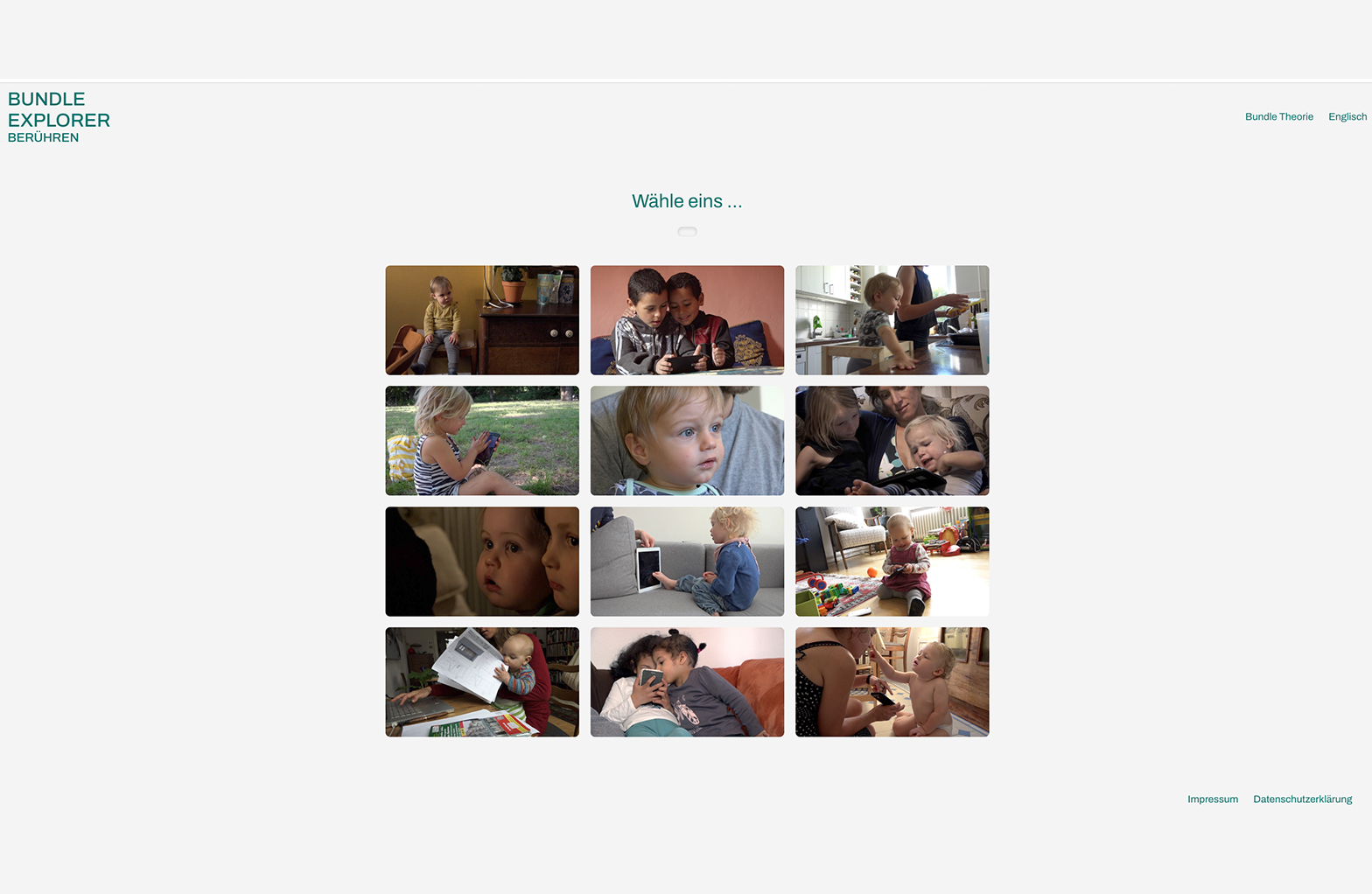
Bild 1: Bundle-Explorer Starttableau
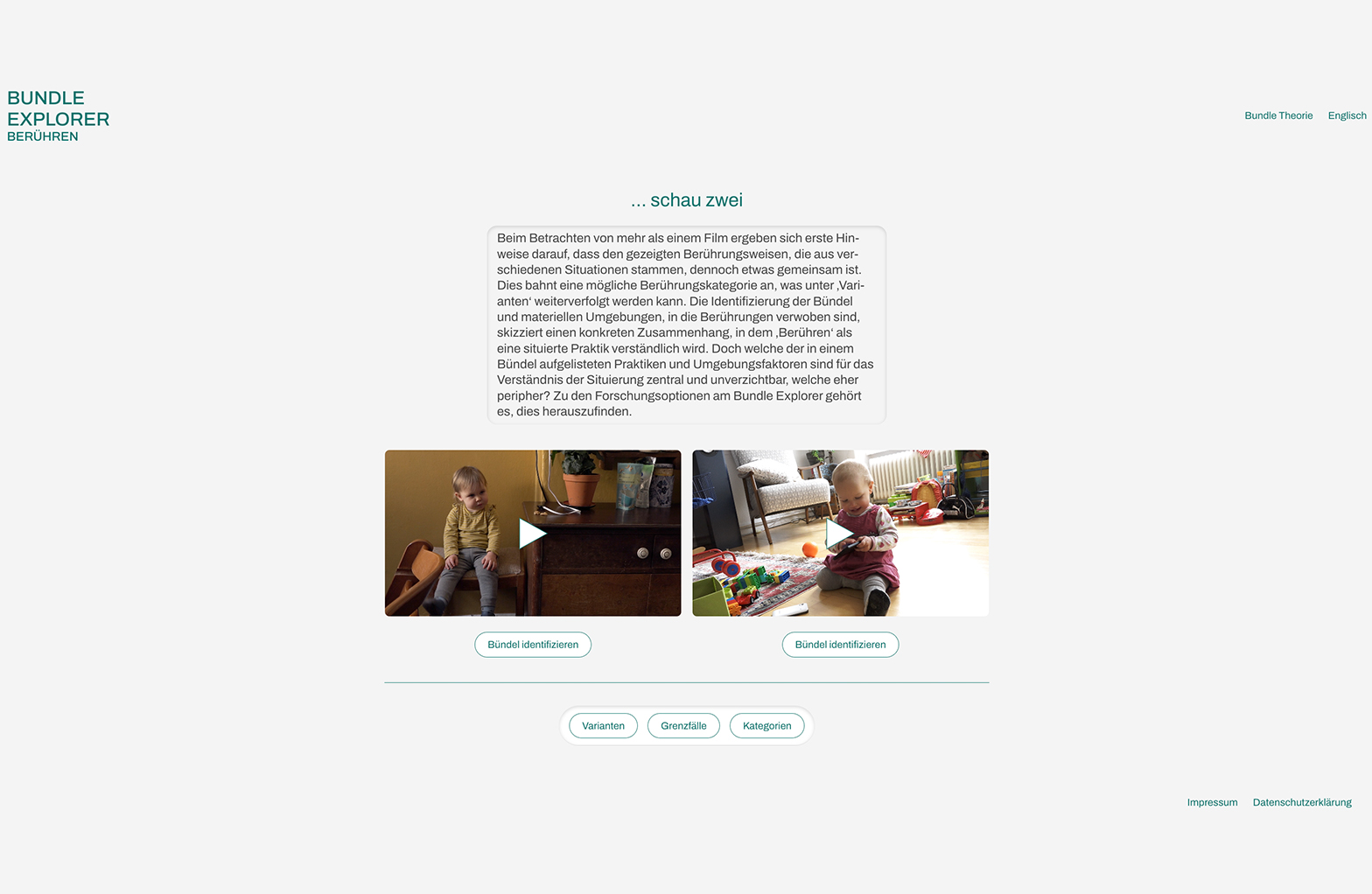
Bild 2: Bundle Explorer Startfilme
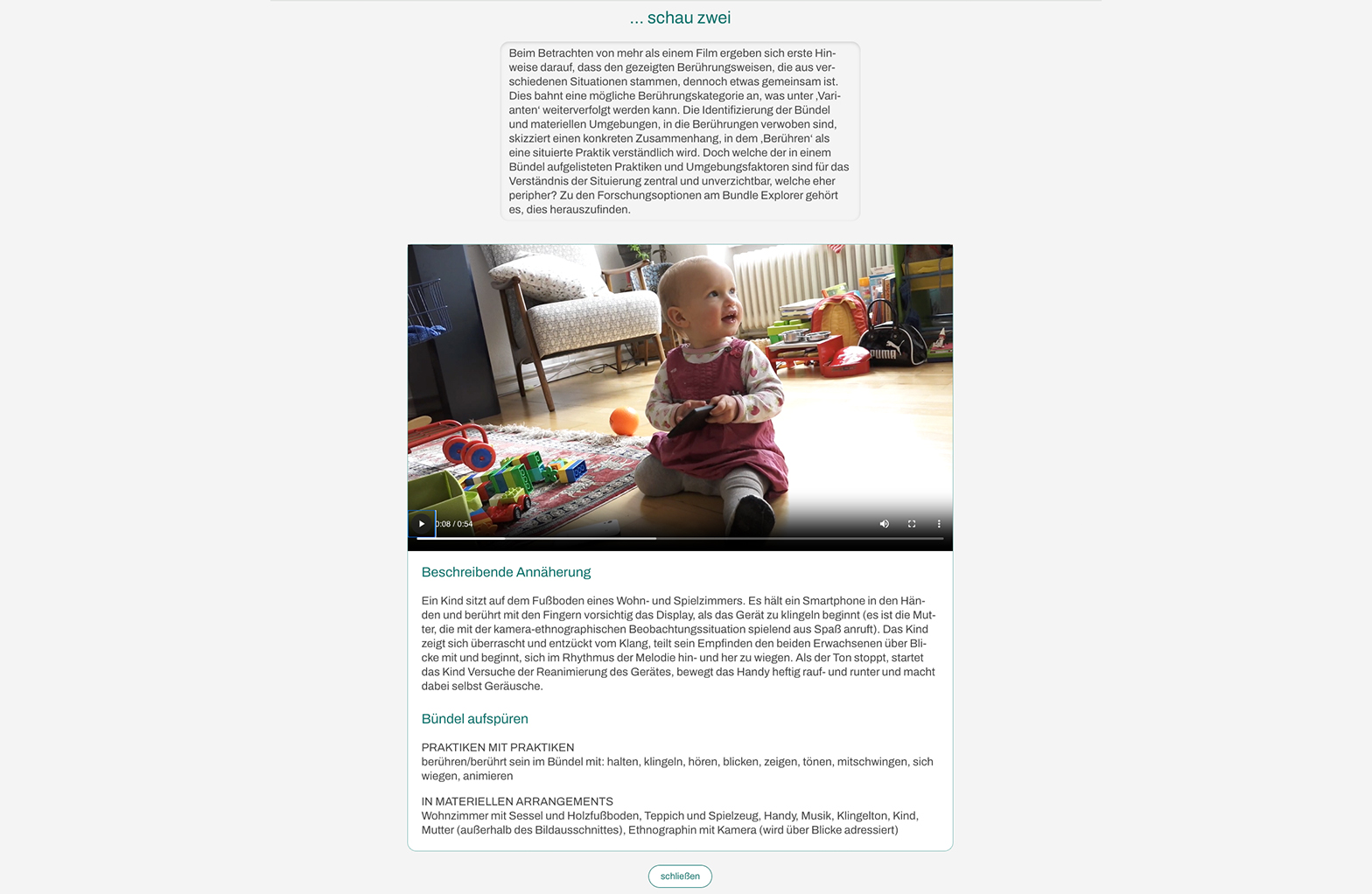
Bild 3: Bundle Explorer Praktikenbuendel
Bild 4: Bundle Explorer Varianten
Bild 5: Bundle Explorer Grenzfall
Nutzer*innen landen eher zufällig in dieser Kategorie: Nachdem sie im Starttableau (Bild 1) ein Video auswählen, bietet ihnen das Tool eine Zusammenstellung von zwei Filmszenen (Bild 2) an, die noch nach keiner Kategorie benannt sind: Im ersten Video hört ein 2-jähriges Kind Musik mit einem MP3-Player; im zweiten Video erkundet ein Kleinkind ein Smartphone und wird von der Klingelton-Melodie überrascht. Über beschreibende Annäherungen ergeben sich aufgespürte Praktikenbündel sowie ihre materiellen Arrangements (Bild 3) und entsteht die Frage, was diesen Filmen gemeinsam ist.
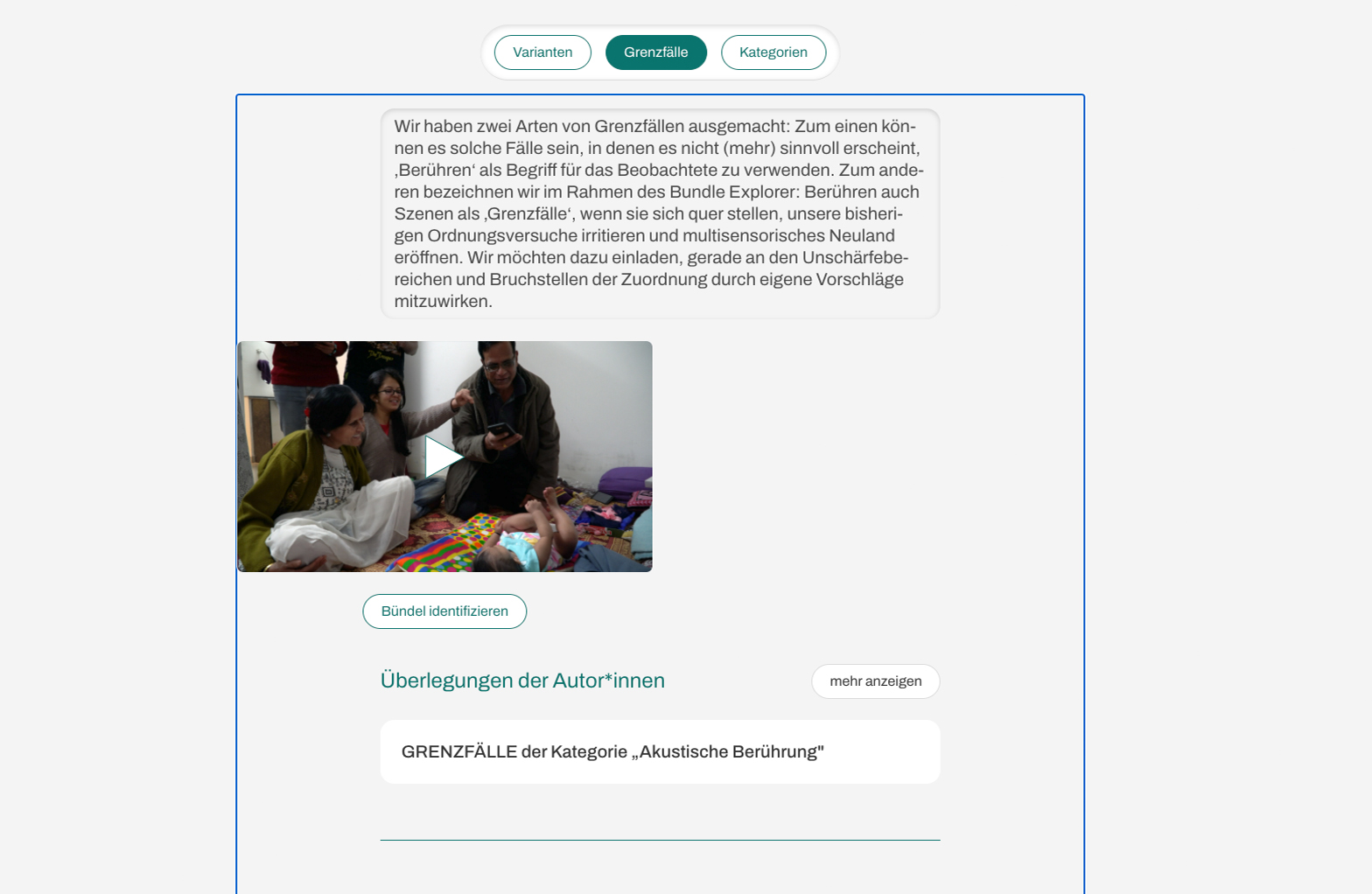
Anschließend lädt der Bundle Explorer die Nutzer*innen dazu ein, weitere „Varianten“ (Bild 4) und „Grenzfälle“ (Bild 5) akustischer Berührungen zu erkunden. Zu den Varianten zählen u.a. Videos, in denen ein Kind mit einem Luftballon ein quietschendes Geräusch erzeugt, ein anderes seine Stimme zum Vibrieren bringt und ein weiteres mit seiner Großmutter am Handy singt (Bild 4). Als Grenzfälle bietet der Bundle Explorer Videos an, bei denen Berührungen nicht klar erkennbar sind. So im Video, im dem zwar Erwachsende zwar akustisch agieren, aber das Kind nicht darauf reagiert (Bild 5).
All diese Fälle dienen dazu akustische Berührungen bei Kindern besser zu verstehen. Die Forscherinnen interessiert insbesondere, wie Kinder sich von den jeweiligen Klängen berührt zeigen. Anhand der Videos haben die Forscherinnen drei Arten akustischer Berührungen identifiziert, in denen sich Berühren und Berührtsein zeigt durch:
Musik, Bewegung und Tanz
Stimmen, Gespräch und Gesang
Geräusch, Experiment und Improvisation
Das Videomaterial im Bundle Explorer lädt aber nicht nur zur Auseinandersetzung mit Fragen, wie sich akustische Berührungen bei Kindern zeigen und wodurch sie ausgelöst werden. Die Videos fordern auch dazu auf, sich weitere Berührungsformen vorzustellen, die bisher nicht gefilmt wurde.
Über die Fachbeiträge
Die geladenen Expert*innen betonten den innovativen Gehalt der Forschungsplattform, die neue Zugänge zu sinnlichen Erfahrungen erlaube und eine tiefgehende Auseinandersetzung mit Forschungsfragen rund um menschliche Sinnes- und Handlungspraktiken ermögliche.
Mit dem Bundle Explorer liege für die praxeologische Forschung ein wichtiges Tool vor, um nonverbale Gesten und Handlungen aus der Anschauung heraus untersuchen zu können. Mit dem Blicklabor habe das Forschungsteam zudem ein überzeugendes Veranstaltungsformat geschaffen, das eine kritische Auseinandersetzung mit nonverbalen Sinnespraktiken gestattet und forschende Blicke und Blickdifferenzen zum Tragen bringt.
Ähnlich eines Alpenföhns bringt, wie Birgit Griesecke betonte, der Bundle Explorer für einen begrenzten Zeitraum spektakuläre Fernsichten näher. Die spürbare Nähe – in ihrem Vergleich der Berge – bringe aber zugleich Euphorie, Kopfschmerzen und Schwindel (nach den Bergen) mit sich. Entscheidend in der Forschung zu Sinnespraktiken sei es ihrer Ansicht nach, die Erfahrungen derart präsent zu halten, dass sie in die Forschung integrierbar werden. Für die Weiterentwicklung schlägt sie vor, Berührung jenseits des digitalen Familienalltags in die Forschung einzubeziehen. Dies würde das Verhältnis Berührung und Digitalität noch detaillierter in den Fokus rücken.
Jochen Lange verglich den Bundle Explorer mit einer ‚Findemaschine‘ bzw. einem ‚Findespiel‘, der sich zwischen Publikation und Forschungstool bewegt. Für ihn stellen die Funktion und Bedeutung von Berührung alternative Zugänge dar, mit denen Sinnespraktiken mithilfe des Bundle Explorers weiter erkundet werden können.
Für Klaus Amann verfügt der Bunde Explorer über einen experimentellen Charakter, der reflexive Momente eröffnet und neue Erkenntnisse erlaubt. Entsprechend kritisch sei nach ihm auch Berührung unter den Bedingungen der digitalen Welt zu befragen.
Gemeinsam mit den Teilnehmer*innen brachten die Expert*innen zahlreiche Vorschläge ein, um die Forschung zu digitalen Sinnespraktiken und die weitere Arbeit am Bundle Explorer voranzubringen. Zu ihren Anregungen gehörten u.a. Sinnespraktiken im Kontext von „Atmosphären“ zu betrachten, visuelle Berührungen einzubeziehen, Resonanz zur Analyse von Berührung zu berücksichtigen und Berühren und Berührtsein nicht als notwendig aufeinander bezogene Merkmale von Berührung anzusehen.
Das Forschungsteam von B05 bedankt sich herzlich bei allen Teilnehmer*innen für den kritischen und inspirierenden Austausch!
Den Link zum „Bundle Explorer: Berühren“ als auch das Template zum Erstellen eigener Bundle Explorer (de/en) erhalten Sie auf Anfrage bei Astrid Vogelpohl.
Literatur
Bina E. Mohn (2023): Kamera-Ethnographie – Ethnographische Forschung im Modus des Zeigens. Transcript.
Theodore R. Schatzki (2016): Praxistheorie als flache Ontologie. In: Praxistheorie. Ein soziologisches Forschungsprogramm. Transcript, S. 29-44.
Birgit Griesecke & Werner Kogge (2022): Mit Wittgenstein arbeiten. Ein Methoden Manual, Working Paper Series Collaborative Research Center 1187 Media of Cooperation, No. 24.
Astrid Vogelpohl ist wissenschaftliche Mitarbeiterin und forscht kamera-ethnographisch zu Subjektivationspraktiken im digitalen Familienalltag.
Bina E. Mohn war bis Ende 2023 wissenschaftliche Mitarbeiter in B05. Sie forscht zu Reflexiver Ethnographie, Visueller Anthropologie und Medien. Sie ist Expertin für Kamera-Ethnographie: kamera-ethnographie.de
Zusammenfassung
Medienpraktiken bringen die Modi hervor, durch die die Welt in digitalen Kindheiten erfahrbar und verständlich wird und verbinden zugleich den Familienalltag mit gesellschaftlichen Digitalisierungsprozessen. Dies ist das Gesamtfazit der ersten beiden Phasen der Untersuchung medialisierter Formen alltäglicher familialer Interaktionen mit Kindern von null bis sechs Jahren. In dem Maße, in dem Möglichkeiten medialer Interaktion umfassender und selbstverständlich werden, entsteht dabei ein Paradox: Die „Akzente der Wirklichkeit“ (Schütz 1971) verschieben sich zwischen digital-medialer und ko-präsenter Interaktion. Während in der ersten Förderphase das Smartphone der frühen Kindheit als kooperativ erarbeitete Kooperationsbedingung im Familienalltag untersucht wurde, standen in der zweiten Förderphase Lernpraktiken im Fokus, die sich in Situationen mit Erwachsenen, Kindern und digitalen Medien entfalten. Die Beobachtungen und Analysen der Produktion und Evaluation von Familienfilmen, Selfies und Fotos haben virtuelle Welten als alltägliche familiale Orte und das Smartphone als Speicher von Erinnerungsdaten konturiert. Es wird deutlich wie Medienpraktiken den familial-biographischen Erlebniszusammenhang erweitern und verändern. Am Beispiel von Videointeraktionen zeigt das Projekt, wie neue Formen des In-Kontakt-Seins entstehen, ohne Dinge und Körper zu berühren. Die Grenzen von digital und analog, von berühren und berührt werden, verschieben und transformieren sich im Alltag von Kindern. Dies zeigt sich in unseren als Blicklabor konzipierten Publikation und Ausstellung „Berührung neu erfinden“, in der Berührung in digitalen Räumen als innovative und kooperative Sinnespraktiken (audio-)visuell arrangierend zur Darstellung gebracht wird.
Daran anschließend vertieft das Projekt die Analyse von Sinnes- und sensorischen Praktiken in der dritten Förderphase. Im Fokus steht die Frage nach der kooperativen Verfasstheit des menschlichen und technischen Sensoriums im Kontext der familiären und alltäglichen Interaktion mit digitalen Medien. Das Projekt setzt die kamera-ethnographische Langzeitstudie zu digitalen Medienpraktiken der frühen Kindheit fort und richtet den Forschungsschwerpunkt auf Sinnespraktiken. Es fragt, wie einerseits körperlich-analoge von digitalen Sinnespraktiken unterschieden werden und wie andererseits diese „Arten der Welterzeugung“ (WaysofWorldmaking, Goodman 1978) ineinanderwirken und neue Formen sinnlicher Erfahrung hervorbringen. Dazu führt das Teilprojekt zirkulär und kontrastiv angelegte Feldforschungsphasen in informellen (Familie, Peers) und formellen (Bildungsinstitutionen) Settings durch und nutzt gesicherte Familienkontakte und aufgebaute Kontakte zu Grundschulen und Kitas. Ausgehend von der Beobachtung temporärer Grenzverschiebungen zwischen analog/digital aber auch lebendig/nicht lebendig in den Medienpraktiken junger Kinder stehen diesmal auch digitale (Lern-)Spiele im Zentrum der geplanten Beobachtungen. Das Projekt entwickelt einen experimentierenden arrangierenden Forschungungsstil an audiovisuellen Materialien weiter, um neue Wege zu erproben, Praktiken aus der Anschauung heraus zu untersuchen. Damit eröffnet das Projekt einen innovativen methodologischen Zugang zum Situativen als einem dichten Handlungszusammenhang, bestehend aus sich wechselseitig bedingenden (Sinnes-)Praktiken.
Im Fokus des Projekts steht die Frage nach der kooperativen Verfasstheit des menschlichen und technischen Sensoriums im Kontext der familiären und alltäglichen Interaktion von Kindern und digitalen Medien.
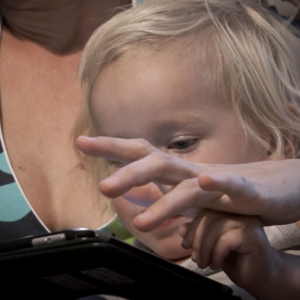
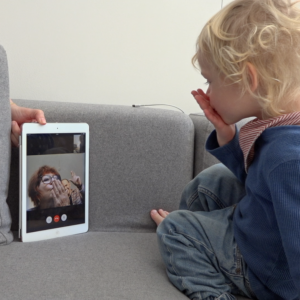
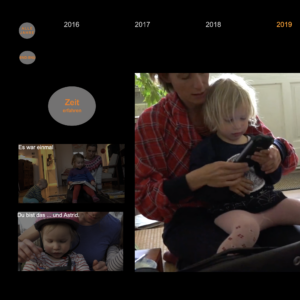
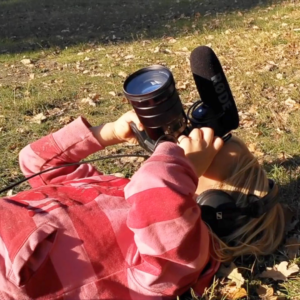
Das Projekt richtet den Forschungsschwerpunkt auf Sinnespraktiken, und fragt, wie diese sich beispielsweise beim Spielen am Smartphone, beim Anschauen von Familienvideos auf dem Tablet (Bild 1) oder beim sich Verabschieden von der Großmutter im Videotelefonat per Fernkuss (Bild 2) in ihrer analog-digitalen Verwobenheit und Alltäglichkeit zeigen.
Im Zentrum des methodischen Zugangs steht die Kamera-Ethnographie, die systematische Zugänge zu den digital-analogen, sinnlichen und sensorischen Phänomenen ermöglicht. Kamera-Ethnographie erweitert partizipatives ethnographisches Forschen um einen forschungsreflexiven Kooperationsbegriff, der Kooperation und (inter-) disziplinäre Positionierung kombiniert.
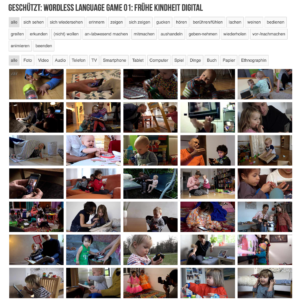
Das Projekt erprobt unterschiedliche visuelle Forschungsformate, die auf die Situiertheit von Praktiken verweisen und arrangierendes Forschen ermöglichen. So wurde das Forschungstool Wordless Language Game, ein nach Praktiken und Medien sortiertes interaktives Videoarchiv (Bild 3), entwickelt, und ein interaktives, nonlineares Filmprojekt mit der Video-Authoring Software Korsakow (Bild 4) erstellt.
Das zunehmende Alter der beteiligten Kinder legt aktuell außerdem eine multi-methodische Vorgehensweise nahe, die auch Interviews, Zeichnungen oder Erkundungen von digitalen Umgebungen einbezieht, und so die Erfahrungen von Kindern als Expert*innen ihrer Lebensrealität in den Forschungsmethoden verstärkt berücksichtigt.
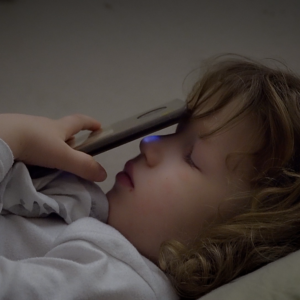
Seit 2016 untersucht die Langzeitstudie wie Kinder (3-10 J.) in Familien ‚analog-digitale‘ Welten als natürliche immer schon ‚hybride’ hervorbringen. Dies beobachten wir in alltäglichen Situationen wie beispielsweise beim Einschlafen (Bild 5) und bei der digital vermittelten Wahrnehmung von Welt (Bild 6).
Ab 2024 erschließt das Projekt schulische und außerschulische Einrichtungen sowie Kindergärten als neue Forschungsorte.
Die Ergebnisse der bis dahin 12-jährigen Langzeitstudie werden in einer multimedialen Publikation veröffentlicht und auf einer abschließenden Ausstellung mit Videoinstallationen präsentiert.
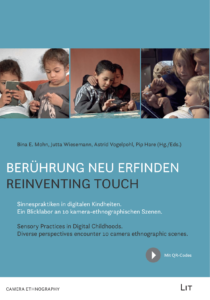
Berührung neu erfinden. Sinnespraktiken in digitalen Kindheiten. Ein Blicklabor an 10 kamera-ethnographischen Szenen
Reinventing Touch. Sensory Practices in Digital Childhoods. Diverse perspectives encounter 10 camera ethnographic scenes
Was wird aus dem Berühren beim Zusammensein in digitalen Räumen? Die vorliegende Publikation befragt das Klischee der Berührungsarmut in der digitalen Kindheit anhand unterschiedlicher Perspektiven und Ansätze. Dabei werden Sinnespraktiken in der frühen Kindheit als Medienpraktiken beschrieben, in denen Haut und Displays, Augen und Ohren synergetisch zusammenwirken und zu sensorischen Ereignissen werden. Im Zentrum der Publikation stehen 10 kurze Filme zum Berühren. In der Kombination von Texten und Filmen werden Zusammenhänge von Körperlichkeit, Materialität, Leiblichkeit und Virtualität in digitalen Kindheiten erkundet. (c) LIT Verlag Berlin-Münster-Wien-Zürich-London.
Im Erscheinen
Streeck, Jürgen, Astrid Vogelpohl, und Jutta Wiesemann. o. J. „Medienpraktiken des Animierens“.
Vogelpohl, Astrid. o. J. „Animal-like creatures and children in digital play – a certain kind of relationship“. Machine Body Space’ special issue SAGE series ‘New Media and Society’.
Vogelpohl, Astrid. o. J. „Sensory Practices in Digital Childhoods“. In Touching and Being Touched. Interactions at the Boundary of Other and Self, von Jürgen Streeck und Julia Katila. Oxford University Press.
2026
Amann, Klaus, und Jutta Wiesemann. 2026. „Berührung, Körper und smarte Geräte in digitalen Kindheiten“. In Kindheit als Praxis. Kulturanalytische Zugänge zur alltäglichen Herstellung von Kindheit(en), von Sabine Bollig, Marion Ott, und Friederike und Tervooren Schmidt, 16-38. Weinheim/Basel: Beltz Juventa.
Mohn, Bina Elisabeth. 2026. „Zur praxeologischen Konturierung semantischer Felder am Beispiel eines kamera-ethnographischen Forschungstools“. In Prototyp „Bundle Explorer: Berühren“. Working Paper Series Media of Cooperation 38. https://doi.org/10.25819/ubsi/10854.
Vogelpohl, Astrid. 2026. „Aufwachsen im digitalen Zeitalter: Kamera-ethnographische Beobachtungen zu Subjektivierungspraktiken junger Kinder“. In , 186. transcript Verlag. ISBN: 978-3-8376-8122-2.
Vogelpohl, Astrid, und Jutta Wiesemann. 2026. „Die eigene Biographie entwerfen – ‚Doing Biography‘ in digitalen Kindheiten. Mediale Praktiken biographischer Konstruktionen in familialen Alltagswelten kamera-ethnographisch erforschen“. In ZQF – Zeitschrift für Qualitative Forschung Jg. 27, 2026-1, 104-23. https://doi.org/10.3224/zqf.v27i1.08 .
2023
Hare, Pip. 2023. „Feeling touched while doing camera ethnographic research“. In Berührung neu erfinden. Sinnespraktiken in digitalen Kindheiten. Ein Blicklabor an 10 kamera-ethnographischen Szenen | Reinventing Touch. Sensory Practices in Digital Childhoods. Diverse perspectives encounter 10 camera ethnographic scenes., herausgegeben von Bina Elisabeth Mohn, Jutta Wiesemann, Pip Hare, und Astrid Vogelpohl, 215-25. Berlin, Münster, Wien, Zürich, London: LIT.
Hare, Pip. 2023. „Sich berührt fühlen beim kamera-ethnographischen Forschen“. In Berührung neu erfinden. Sinnespraktiken in digitalen Kindheiten. Ein Blicklabor an 10 kamera-ethnographischen Szenen | Reinventing Touch. Sensory Practices in Digital Childhoods. Diverse perspectives encounter 10 camera ethnographic scenes., 97-107. Berlin, Münster, Wien, Zürich, London: LIT.
Mohn, Bina Elisabeth. 2023. „Touch in view“. In Berührung neu erfinden. Sinnespraktiken in digitalen Kindheiten. Ein Blicklabor an 10 kamera-ethnographischen Szenen | Reinventing Touch. Sensory Practices in Digital Childhoods. Diverse perspectives encounter 10 camera ethnographic scenes., herausgegeben von Bina Elisabeth Mohn, Jutta Wiesemann, Pip Hare, und Astrid Vogelpohl. Berlin, Münster, Wien, Zürich, London: LIT.
Mohn, Bina Elisabeth. 2023. „Berührung im Blick“. In Berührung neu erfinden. Sinnespraktiken in digitalen Kindheiten. Ein Blicklabor an 10 kamera-ethnographischen Szenen | Reinventing Touch. Sensory Practices in Digital Childhoods. Diverse perspectives encounter 10 camera ethnographic scenes., 17-26. Berlin, Münster, Wien, Zürich, London: LIT.
Mohn, Bina Elisabeth, Jutta Wiesemann, Pip Hare, und Astrid Vogelpohl, Hrsg. 2023. Berührung neu erfinden. Sinnespraktiken in digitalen Kindheiten. Ein Blicklabor an 10 kamera-ethnographischen Szenen/ Reinventing Touch. Sensory Practices in Digital Childhoods. Diverse perspectives encounter 10 camera ethnographic scenes. Berlin, Münster, Wien, Zürich, London: LIT.
Vogelpohl, Astrid. 2023. „This is me. Getting in touch with oneself and time with media“. In Berührung neu erfinden. Sinnespraktiken in digitalen Kindheiten. Ein Blicklabor an 10 kamera-ethnographischen Szenen | Reinventing Touch. Sensory Practices in Digital Childhoods. Diverse perspectives encounter 10 camera ethnographic scenes., herausgegeben von Bina Elisabeth Mohn, Jutta Wiesemann, Pip Hare, und Astrid Vogelpohl. Berlin, Münster, Wien, Zürich, London: LIT.
Vogelpohl, Astrid, und Hoa Mai Trần. 2023. „Das bin ich. Medial vermittelt in Berührung mit sich und der Zeit treten“. In Berührung neu erfinden. Sinnespraktiken in digitalen Kindheiten. Ein Blicklabor an 10 kamera-ethnographischen Szenen | Reinventing Touch. Sensory Practices in Digital Childhoods. Diverse perspectives encounter 10 camera ethnographic scenes., 79-87. Berlin, Münster, Wien, Zürich, London: LIT.
Wiesemann, Jutta. 2023. „Reinventing touch. Introductory remarks“. In Berührung neu erfinden. Sinnespraktiken in digitalen Kindheiten. Ein Blicklabor an 10 kamera-ethnographischen Szenen | Reinventing Touch. Sensory Practices in Digital Childhoods. Diverse perspectives encounter 10 camera ethnographic scenes., herausgegeben von Bina Elisabeth Mohn, Jutta Wiesemann, Pip Hare, und Astrid Vogelpohl. Berlin, Münster, Wien, Zürich, London: LIT.
Wiesemann, Jutta. 2023. „Berührung als kooperative Praxis“. In Berührung neu erfinden. Sinnespraktiken in digitalen Kindheiten. Ein Blicklabor an 10 kamera-ethnographischen Szenen | Reinventing Touch. Sensory Practices in Digital Childhoods. Diverse perspectives encounter 10 camera ethnographic scenes., 9-16. Berlin, Münster, Wien, Zürich, London: LIT.
2022
Bennewitz, H. & Wiesemann. 2022. „Das Runde kommt in das Eckige?! Zur Körperlichkeit von Sitzkreisen und Video-Meetings“. In Teilhabe und Ausschluss von Kindern in der Gesellschaft. Perspektiven der Kindheitsforschung, Grundschulpädagogik und Lehrer:innenbildung, herausgegeben von I. Naumann & J. Storck-Odabasi, 138-50. Weinheim und Basel: Beltz Juventa. ISBN: 978-3-7799-6742-2.
Griesecke, Birgit, und Werner Kogge. 2022. „Mit Wittgenstein Arbeiten: Ein Methoden Manual“. Working Paper Series Media of Cooperation 24.
Mohn, Bina Elisabeth. 2022. „Camera Ethnography. Learning to see something ‘as something’ and maybe ‘as something else’ as well“. In Camera Work in Trading Zones. An Epistemological Journey Between Art and Ethnography, herausgegeben von Jürgen Krusche und Barbara Preisig, 34-49. Zürich: Institute for Contemporary Art Research IFCAR, Zürich University of the Arts. https://doi.org/10.5281/zenodo.5734214.
Mohn, Bina Elisabeth. 2022. „Zeigende Ethnographie – Kamera-Ethnographie“. In Handbuch soziologische Ethnographie, herausgegeben von Angelika Poferl und Norbert Schröer, 575-91. Wiesbaden: Springer VS. https://doi.org/10.1007/978-3-658-26405-5_37.
Wiesemann, Jutta. 2022. „Rezension: Handbuch von Rita Braches-Chyrek, Charlotte Röhner, Jo Moran Ellis und Heinz Sünker (2022) Kindheit, Technik und das Digitale“. Zeitschrift für Soziologie der Erziehung und Sozialisation 2: 201-6. https://doi.org/10.3262/ZSE2202201.
2021
Mohn, Bina Elisabeth. 2021. „Kamera-Ethnographie. Schauen, Sehen und Wissen filmisch gestalten“. In Handbuch Filmsoziologie, herausgegeben von Alexander Geimer, Carsten Heinze, und Rainer Winter, 591-611. Wiesbaden: Springer VS. https://doi.org/10.1007/978-3-658-10947-9_69-2.
Wiesemann, Jutta. 2021. „Medienpraktiken der frühen Kindheit. Der familiäre Alltag des Smartphones“. ZSE Zeitschrift für Soziologie der Erziehung und Sozialisation, 2021. 10.3262/ZSE2103264.
2020
Eisenmann, Clemens. 2020. „Soziotechnische Intimität und wechselseitige Wahrnehmung bei Verabschiedungen in der familialen Videotelefonie mit Kindern“. In Digitale Kindheiten, herausgegeben von Jutta Wiesemann, Clemens Eisenmann, Inka Fürtig, Jochen Lange, und Bina Elisabeth Mohn. Media of Cooperation. Wiesbaden: Springer VS. https://doi.org/10.1007/978-3-658-31725-6_5 .
Flügel, Alexandra, Detlef Pech, und Jutta Wiesemann. 2020. „ Kinder am außerschulischen Lernort“. In Orte und Räume der Generationenvermittlung. Zur Praxis außerschulischen Lernens von Kindern., herausgegeben von Jutta Wiesemann, Alexandra Flügel, Swanntje Brill, und Irina Landrock. Bad Heilbrunn: Klinkhardt.
Hare, Pip. 2020. „Bilder hier und dort. Affektive und ethische Dimensionen meiner Forschung mit Kindern und Kameras“. In Digitale Kindheiten, herausgegeben von Jutta Wiesemann, Clemens Eisenmann, Inka Fürtig, und Jochen und Mohn Lange. Wiesbaden: Springer VS. https://doi.org/10.1007/978-3-658-31725-6_5 .
Inka, Fürtig. 2020. „Das Smartphone als Gegenstand sozialer Aushandlungen im Familienalltag von Kleinkindern“. In Digitale Kindheiten, herausgegeben von Jutta Wiesemann, Clemens Eisenmann, Inka Fürtig, Jochen Lange, und Bina Elisabeth Mohn. Wiesbaden: Springer VS. https://doi.org/10.1007/978-3-658-31725-6_7.
Lange, Jochen. 2020. „Die Materialisierung des ‚Kindlichen‘? Zu den Entwicklungspraktiken in der Bildungswirtschaft“. In Materialitäten der Kindheit. Körper, Räume, Dinge, herausgegeben von Sabine Bollig, Lars Alberth, und Larissa Schindler. Bd. 20. Kinder, Kindheiten, Kindheitsforschung. Wiesbaden: Springer VS Verlag für Sozialwissenschaften. https://doi.org/10.1007/978-3-658-25532-9_9 .
Lange, Jochen. 2020. „Un/Doing Digital. Eine Digital-Analogie“. In Digitale Kindheiten, herausgegeben von Jutta Wiesemann, Clemens Eisenmann, Inka Fürtig, Jochen Lange, und Bina Elisabeth Mohn. Wiesbaden: Springer VS. https://doi.org/10.1007/978-3-658-31725-6_3 .
Mohn, Bina E. 2020. „Unterscheiden, verbinden und teilen. Zur Resonanz und Differenz (digitaler) Medienpraktiken in der frühen Kindheit und beim Forschen“. In Digitale Kindheiten, herausgegeben von Jutta Wiesemann, Clemens Eisenmann, Inka Fürtig, Jochen Lange, und Bina Elisabeth Mohn. Wiesbaden: Springer VS. https://doi.org/10.1007/978-3-658-31725-6_9.
Vogelpohl, Astrid. 2020. „‚Willst du mit gucken?‘ Intervenieren, arrangieren, etwas sichtbar machen“. In Digitale Kindheiten, herausgegeben von Jutta Wiesemann, Clemens Eisenmann, Inka Fürtig, Jochen Lange, und Bina Elisabeth Mohn. Wiesbaden: Springer VS. https://doi.org/10.1007/978-3-658-31725-6_5.
Wiesemann, Jutta, Clemens Eisenmann, Inka Fürtig, Jochen Lange, und Bina Mohn. 2020. „Digitale Kindheiten. Kinder – Familien – Medien“. In Digitale Kindheiten, herausgegeben von Jutta Wiesemann, Clemens Eisenmann, Inka Fürtig, Jochen Lange, und Bina Mohn, 1-16. Wiesbaden: Springer. https://doi.org/10.1007/978-3-658-31725-6_1.
Wiesemann, Jutta, Clemens Eisenmann, Inka Fürtig, Jochen Lange, und Bina Mohn, Hrsg. 2020. Digitale Kindheiten. Media of Cooperation. Wiesbaden: Springer VS. https://doi.org/10.1007/978-3-658-31725-6.
Wiesemann, Jutta, Alexandra Flügel, Swanntje Brill, und Irina Landrock. 2020. Orte und Räume der Generationenvermittlung. Zur Praxis außerschulischen Lernens von Kindern.. Bad Heilbrunn: Klinkhardt.
2019
Eisenmann, Clemens, Jan Peter, und Erik Wittbusch. 2019. „Ethnomethodological Media Ethnography: Exploring Everyday Digital Practices in Families with Young Children“. Media in Action: An Interdisciplinary Journal on Cooperative Media, 2019. https://www001.zimt.uni-siegen.de/ojs/index.php/mia/article/view/50.
Mohn, Bina, Pip Hare, Astrid Vogelpohl, und Jutta Wiesemann. 2019. „Cooperation and Difference. Camera Ethnography in the Research Project ’Early Childhood and Smartphone’“. Media in Action: An Interdisciplinary Journal on Cooperative Media, 2019. https://www001.zimt.uni-siegen.de/ojs/index.php/mia/article/view/51.
Mohn, Bina, Pip Hare, Astrid Vogelpohl, und Jutta Wiesemann. 2019. Face to Face – Face to Screen. Frühe Kindheit und Medien / Early Childhood and Media. 24 kamera-ethnographische Miniaturen / 24 camera ethnographic miniatures. Berlin, Münster, Wien, Zürich, London: LIT.
2018
Mohn, Bina Elisabeth, Pip Hare, Astrid Vogelpohl, und Jutta Wiesemann. 2018. „‚Das bist du!‘ Frühe Kindheit digital“. Ausstellung. Siegerlandmuseum, Siegen.
Wiesemann, Jutta, und Klaus Amann. 2018. „Co-operation is a feature of sociality, not an attribute of people“. Media in Action: An Interdisciplinary Journal on Cooperative Media 1 (3): 203-16. http://dx.doi.org/10.25819/ubsi/8288.
Wiesemann, Jutta, und Inka Fürtig. 2018. „Kindheit zwischen Smartphone und pädagogischem Schulalltag“. In Institutionalisierungen von Kindheit. Childhood studies zwischen Soziologie und Erziehungswissenschaft., herausgegeben von Tanja Betz et. al., 196-212. „Kindheiten – Neue Folge“. Weinheim/München: Beltz Juventa.
2017
Fürtig, Inka, und Tanja Betz. 2017. „Bericht über die gemeinsame Jahrestagung ‚Materialitäten der Kindheit: Körper – Räume – Dinge‘ der DGS-Sektionen Soziologie der Kindheit und Soziologie des Körpers und des Sports“. In , 47:220-23. 2. Trier: Universität Trier.
2016
Lange, Jochen. 2016. „Medienkompetenzvermittlung in der Grundschule“. In Mediales Lernen. Beispiele für eine inklusive Mediendidaktik, herausgegeben von Markus Peschel, 7:105-14. Dimensionen des Sachunterrichts – Kinder. Sachen. Welten. Baltmannsweiler: Schneider Verlag Hohengehren.
2015
Wiesemann, Jutta. 2015. „Lernen ist eine soziale praktische Tätigkeit von Kindern“. In Lernprozessbegleitung und adaptive Lerngelegenheiten im Unterricht der Grundschule, herausgegeben von K. Liebers, B. Landwehr, A. Marquardt, und K. Schlotter, 33-46. 1. Wiesbaden: VS Verlag für Sozialwissenschaften. https://doi.org/10.1007/978-3-658-11346-9_3.
Wiesemann, Jutta, und Jochen Lange. 2015. „Schülerhandeln und die Dinge des Lernens. Zum Verhältnis von Sinn und Objektgebrauch“. In Bildungspraktiken. Körper – Räume – Artefakte, herausgegeben von H. Kalthoff, T. Alkemeyer, und M. Rieger-Ladich, 261-82. Weilerswist: Velbrück. https://doi.org/10.5771/9783845277349-261.